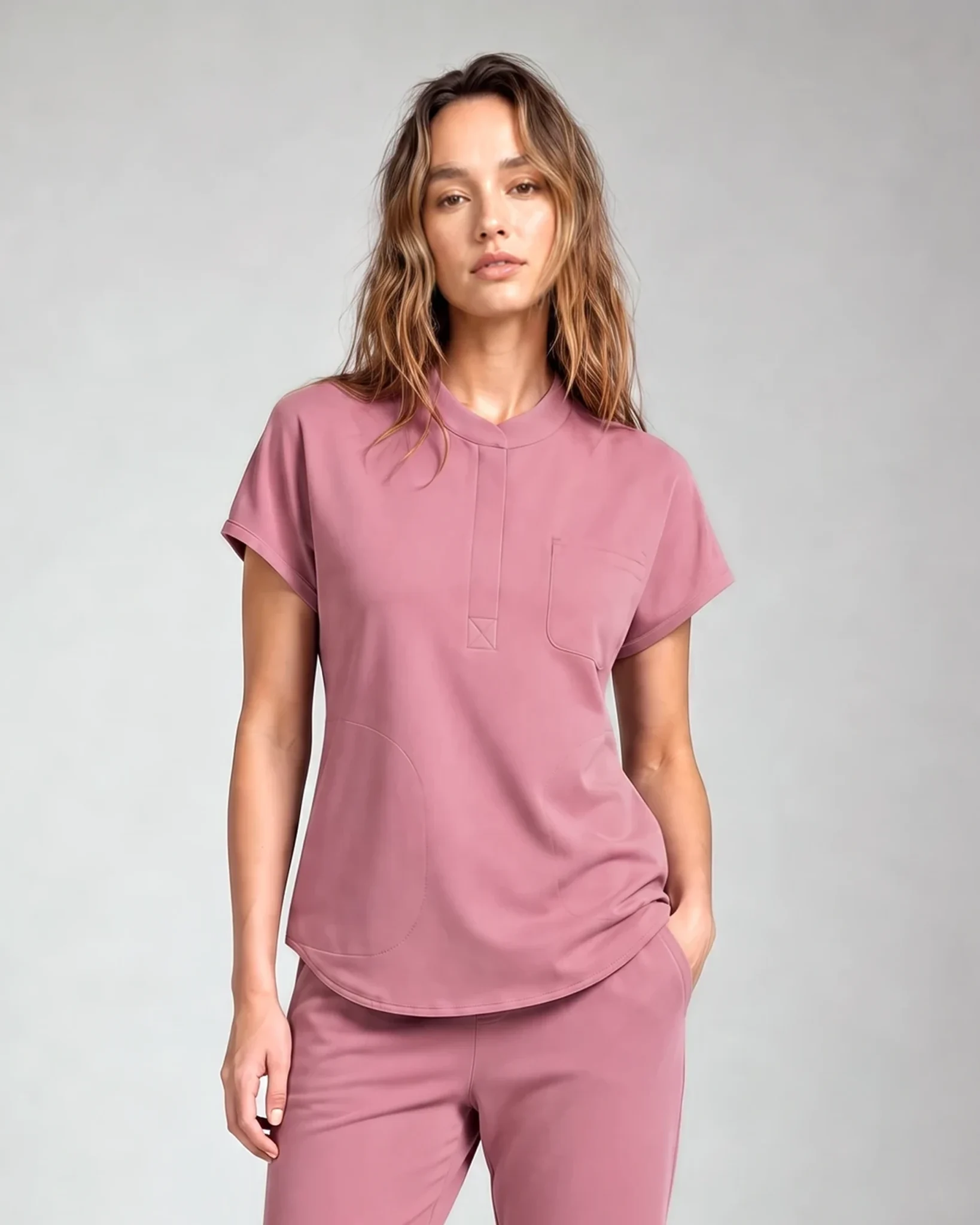

Dental assistant scrubs should pass seven practical checks: clinic policy, required layer rules, seated reach, pant fit, pocket position, measurements, and a clean tags-on trial. The point is not to find one “dental” look. It is to choose an outfit that fits the rules and lets you sit, stand, lean, and reach without constant adjustment.
LumiScrubs publishes this guide and sells the two products shown below. We have not run a dental-assistant wear trial, loaded-pocket test, comparative movement study, or required-layer compatibility study on them. Product and policy sources were checked on August 26, 2026.
Start with the decision, not the product adjective
A useful product page should help you answer a real work question. If it cannot, the adjective beside the style name is doing too much work.
| Decision | Verify before ordering | Check with tags attached |
|---|---|---|
| Office rules | Required color, matching rule, allowed pant shape, visible layers, logo or name requirement, and laundry process | Whether the exact top, pant, underlayer, and shoe combination follows those rules |
| Upper-body fit | Garment measurements, neckline shape, sleeve, body length, closure, and pocket placement | Neckline shift, upper-back pull, hem lift, and bunching during a seated reach |
| Pant fit | Waist, hip, rise, thigh, inseam, hem shape, and available cut | Waist pressure, back coverage, thigh pull, hem clearance, and need for readjustment |
| Storage | Pocket location, opening, closure, and dimensions if published | Access and pressure with safe stand-ins for the personal items your clinic permits |
| Reversibility | Return window, item condition, exclusions, and care label | Whether the clean indoor trial answers enough before washing or wearing at work |
This order matters. A pocket layout cannot rescue the wrong uniform color, and a fabric description cannot replace a movement check.
Get the required garment layers from the practice
The practice’s written procedures determine what must be worn for each task, when each layer is changed or removed, and what stays in the work area. Ask for those instructions before buying the uniform underneath.
A surface-finish statement, a high neckline, or a long sleeve does not replace an additional garment layer named in the workplace procedure. Shop the scrub for dress-code fit, movement, and storage; follow the task instructions separately.
A job title alone cannot answer which layers apply to a specific task. Confirm the exact setup with the practice, then include every permitted layer when you run the clean indoor fit test.
Seven checks for dental assistant scrubs
1. Confirm the complete dress code
Ask for the current rule rather than relying on a coworker’s older set. Confirm color, whether top and pant must match, jogger-cuff rules, visible underscrub limits, footwear, logo or name placement, and who launders each garment layer.
Separate task-specific garment layers from the uniform underneath. An instruction about one outer layer does not answer whether the scrub color, sleeve, or embroidery is also controlled by the practice.
Use the scrub color guide for a policy-first sequence and the embroidery guide before personalizing anything. Embroidery can change return eligibility and makes a role or employer name harder to reuse later.
2. Test the top in a seated reach
With tags attached, sit in a firm chair. Reach forward at chest height, then to each side and overhead. Cross your arms and hold the forward position for several seconds. Watch the neckline, shoulder, upper back, armhole, sleeve, hem, and lower-back coverage.
The useful question is not whether the shirt looks fitted in a mirror. It is whether the same size stays where you want it while your torso changes position. Note the exact location of pulling or excess fabric; “too tight” or “too loose” is too vague for a better second choice.
3. Check the pant through the chair-to-counter sequence
Put on the work shoes you expect to wear. Sit for several minutes, stand without pulling at the waistband, take two long steps, pivot, and perform a controlled squat. Check waist pressure, rise, back coverage, seat, thigh, knee, hem clearance, and cuff pressure.
Do not size up automatically to solve one pressure point. More width can also add length, shifting, or fabric at the waist. Compare the next size and another silhouette, then record which dimension actually changed.
The jogger-versus-straight-leg guide keeps that choice tied to dress code, footwear, hem preference, and fit instead of calling either shape more professional.
4. Judge pockets by position and access
Count tells you less than location. A chest pocket, front patch pocket, hip pocket, and thigh pocket interact differently with leaning and sitting. Use safe stand-ins for permitted personal items—never items already used at work—and test access in the position where you would actually reach.
Ask four questions: Can you reach it while seated? Does the object press into the body? Does its weight pull the neckline, waistband, or pant leg? Does it stay put when you lean? This is a garment check, not a recommendation to carry an item during patient care; clinic rules control that.
5. Include every permitted layer
An underscrub changes the neckline, sleeve, armhole, and heat experience. Any workplace-required garment layer changes the complete setup again. Run the fit test with the exact permitted base layer while following every written layer requirement.
Look for sleeve bunching, competing necklines, pressure under the arm, and extra fabric at the waist. The under-scrubs guide separates warmth, coverage, contact points, and local policy without presenting a base layer as a substitute for a workplace requirement.
6. Compare garments and body measurements separately
Body measurements help place you in a brand’s chart. Garment measurements help explain why an existing top or pant works. Use both when available: measure a clean, well-fitting garment flat, then compare chest width, body length, waist, rise, hip, thigh, and inseam with the new style.
Top and pant are two fit decisions. If a set permits separate sizes, measure both rather than forcing one letter across the outfit. Open Fit & Size Help beside the product page and use the current chart, not a saved screenshot from an earlier version.
7. Protect the clean trial
Before washing or wearing the set to work, repeat the seated reach, chair-to-counter sequence, layer check, shoe check, and pocket test indoors. Use bright front and back lighting. Keep packaging and tags in the condition required by the seller.
Then read the finished garment’s care label and the current policy. LumiScrubs’ Shipping & Returns currently gives eligible non-personalized items a 30-day window when they are unworn, unwashed, and in original packaging; personalization is final sale unless defective. Those conditions are more useful before the trial than after it.
Two current LumiScrubs paths for this checklist
The women’s Chairside Zip Top was listed at $34.90 when checked. It is a top-only product with a front zip, short sleeves, and the pocket layout shown in its gallery. Pants in the image are styling and are sold separately.
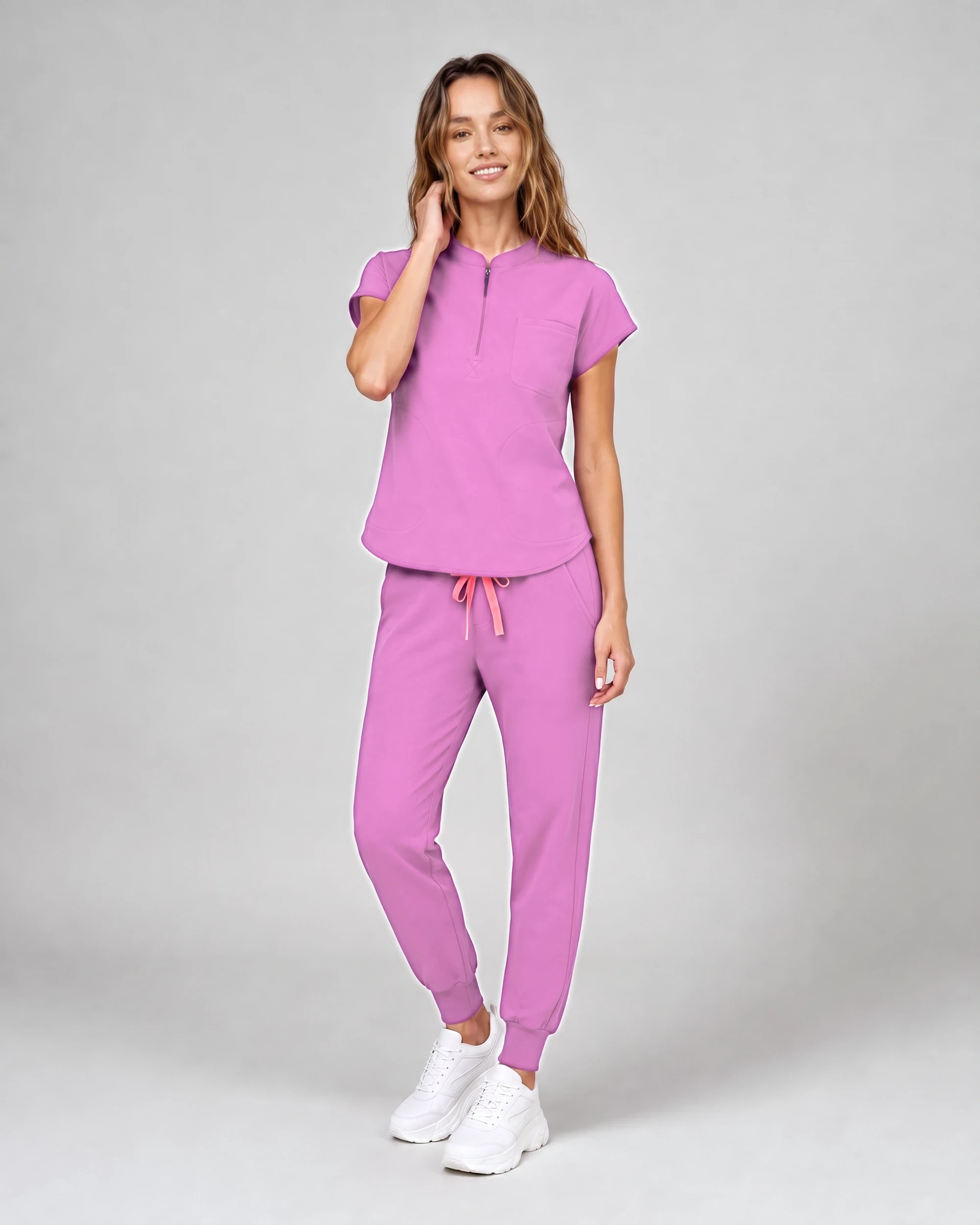
Chairside image: use it to inspect visible neckline, placket, sleeve, length, and pocket position. The pose does not prove chairside fit, pocket retention, or range of motion; the pants are not included.
The women’s Core Scrub Set was listed at $64.90 when checked. The current page describes a three-pocket V-neck top, a nine-pocket straight-leg pant, and separate top and pant size selection at the set price. Its published production specification is 72% polyester, 21% rayon, and 7% spandex. Composition and pocket count do not prove dental-role fit or loaded-pocket performance.
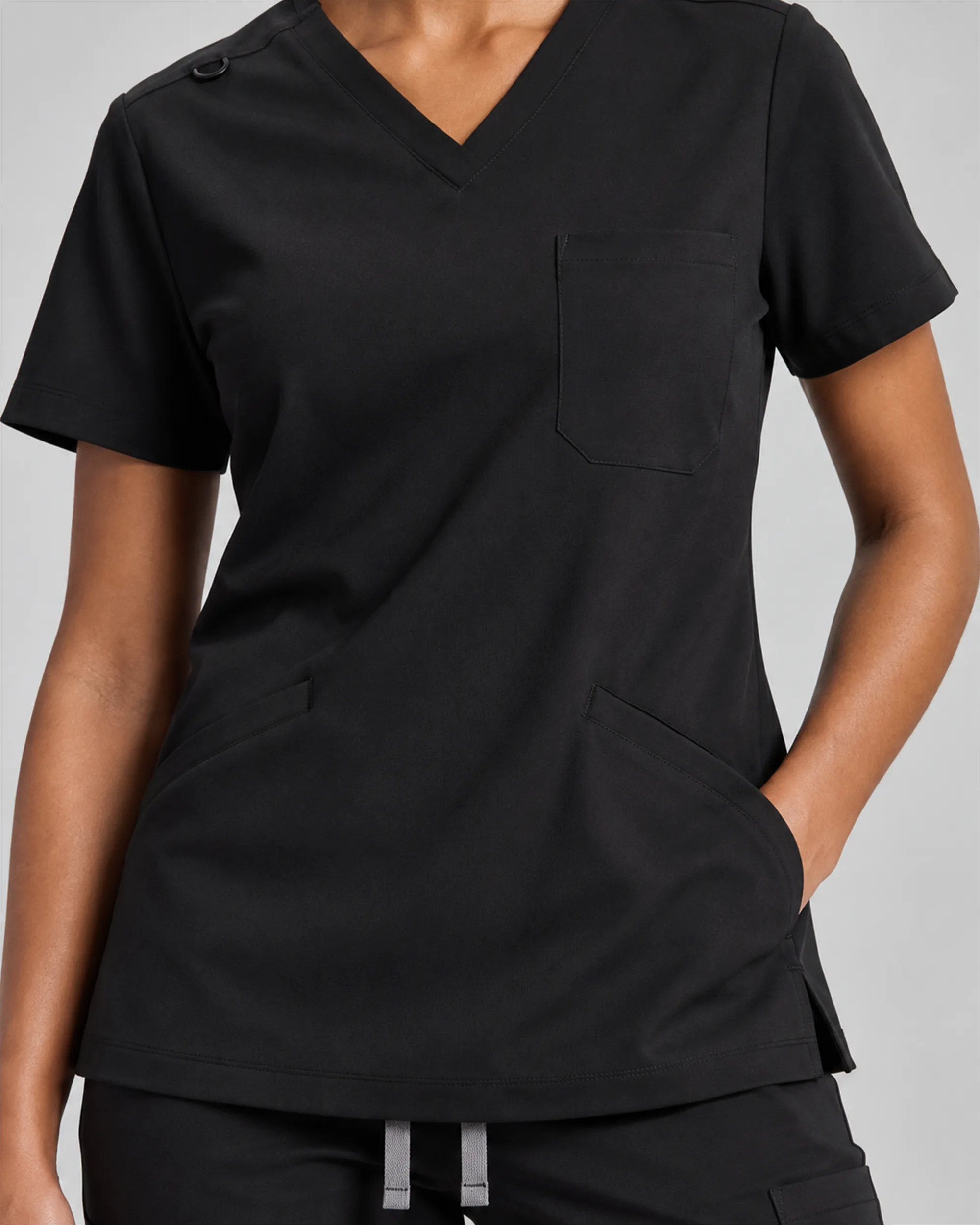
Core detail image: the crop helps locate the neckline and three top pockets. It cannot show seated coverage, pocket capacity, retention, or comfort.
If one of these constructions fits your measurements and office rules, compare it with the current dental styles in one place and order one reversible trial before building a rotation.
Keep one chairside test card
Write down enough detail to make an exchange or repeat purchase easier:
| Test | Record |
|---|---|
| Policy | Approved color, matching rule, pant shape, visible layer, and personalization requirement |
| Top | Style, size, neckline shift, upper-back pull, hem lift, and sleeve or armhole contact |
| Pant | Style, size, waist, rise, seat, thigh, inseam, hem, and shoe used |
| Position | Seated reach, side reach, stand, pivot, long step, and squat |
| Pockets | Location, safe stand-in, seated access, pressure, pulling, and retention |
| Layer system | Exact underscrub plus every workplace-required garment layer—not a claim that one garment replaces another |
| Decision | Keep, exchange size, change silhouette, or stop because the style conflicts with policy |
This record keeps the next decision specific. It also makes it easier to notice whether the problem is the size, the cut, the layer stack, the pocket location, or the office rule.
Dental hygienists have a different search task and a separate dental hygienist scrub guide. Use that page for hygienist-specific questions instead of treating every dental role as interchangeable.
Frequently asked questions
Can a scrub feature replace a workplace-required layer?
No. Follow the practice’s task-specific garment instructions. Choose the scrub for the dress code and fit test; do not treat a retail feature as a substitute for a workplace requirement.
How should dental assistant scrubs fit?
They should meet the office rule and maintain the coverage and movement you need through sitting, leaning, standing, reaching, and squatting. Use the exact chart and test the top and pant as separate fit decisions.
How many pockets do dental assistants need?
There is no universal number. Start with the permitted personal items you actually carry, then compare pocket location, access, pressure, garment pulling, and retention with safe stand-ins.
Are jogger or straight-leg pants better for dental assisting?
Neither shape is universally better. Confirm the dress code, then compare rise, seat, thigh, hem or cuff, footwear, and seated movement in the exact style.
What color scrubs should a dental assistant wear?
The color required by the current practice. If staff can choose, confirm whether top and pant must match and whether the selected shade is available across every required role and size before personalizing or ordering for a team.