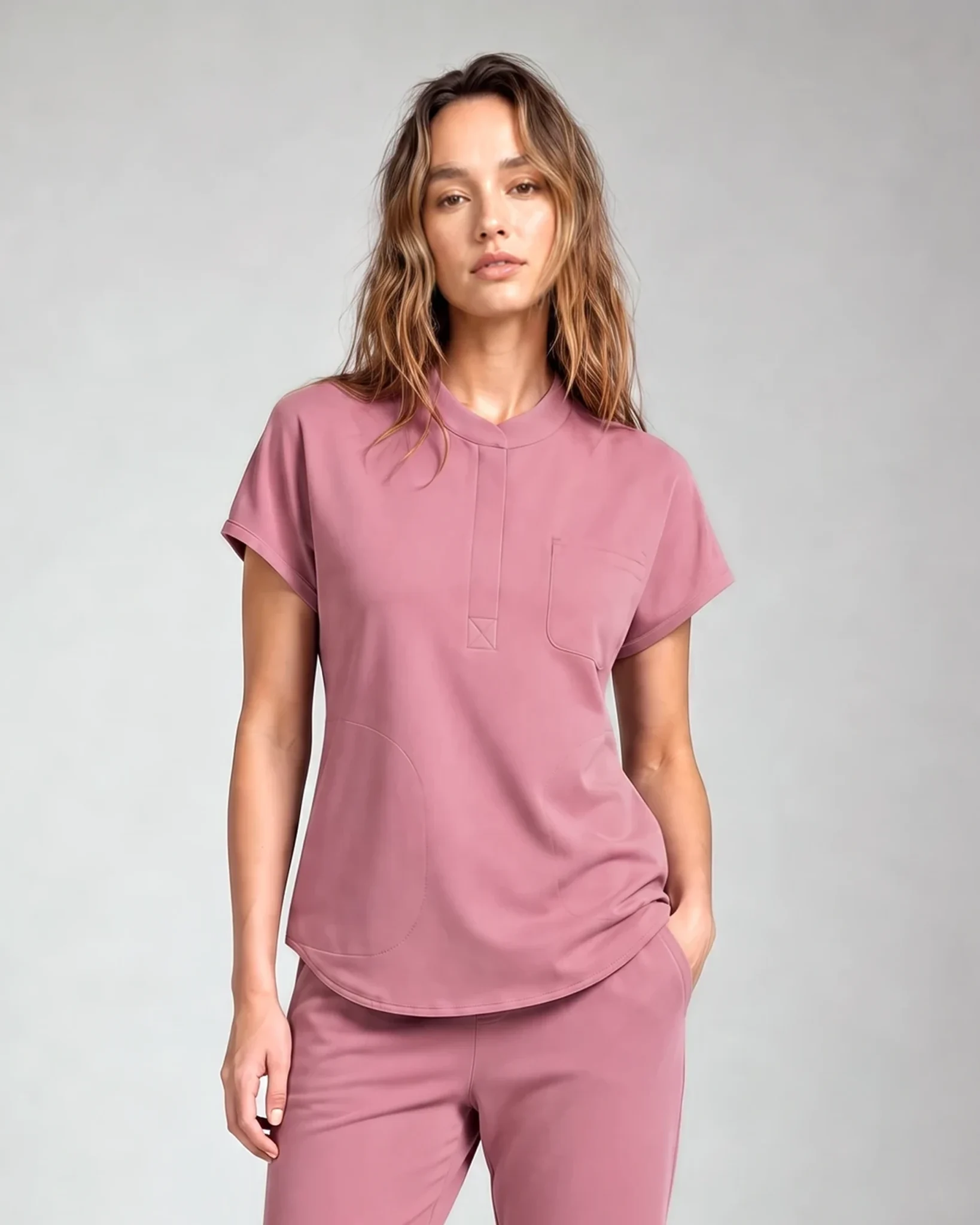

Embroidery on scrubs is usually a permanent uniform decision, not a last-minute decoration. Before any needle touches the garment, confirm who authorized the wording, the exact name or credential, the garment and size, placement, thread contrast, proof, schedule, and final-sale rule. Then ask the question most order forms miss: will the wearer still be able to use this garment after changing schools, jobs, units, or credentials?
A usable scrub top can lose its work value while the fabric is still sound simply because an organization-specific mark remains on it. Treat that loss of flexibility as part of the cost.
Use this pre-stitch check:
- Is the logo, name, title, or credential approved in writing?
- Is the garment already tried on in the correct size?
- Does the proof show the exact top, not a generic shirt template?
- Are spelling, capitalization, placement, scale, and thread color explicit?
- Does the quote separate artwork, stitching, personalization, revisions, and rush work?
- When does the schedule begin: order date, artwork approval, or final proof approval?
- Who pays when the approved file is wrong, the stitching differs from the proof, or a garment arrives damaged?
First decide whether the mark should be permanent
The first decision is not where to place the embroidery. It is whether the information belongs permanently on that garment.
| Mark | What it can communicate | Flexibility cost to check |
|---|---|---|
| Personal name | Identifies one wearer | Harder to reassign the garment |
| Credential or role | Helps clarify what the wearer does | Can become inaccurate after a role or credential change |
| Organization logo | Creates a consistent team identity | Can make the garment unusable after leaving the organization |
| Department or campus name | Distinguishes a unit or program | Can limit use after a transfer or graduation |
| Removable badge or patch | May preserve more reuse | Must be permitted and tested for retention, cleaning, visibility, and the work setting |
Stitch removal should not be treated as a reset button. Cutting out thread may leave needle holes, a visible outline, surface wear, or fabric distortion, and the result depends on the garment and stitch density. Order only if you would accept the garment remaining visibly altered.
For team programs, it can be sensible to keep organization-specific embroidery on tops only. Logo-free pants retain more possible uses when an employee changes roles or employers, even if the top no longer fits the next dress code.
Get authorization, names, and credentials in writing
Do not ask an embroidery vendor to infer a professional title, shorten a credential, or recreate a logo from a web screenshot. The organization should supply the approved artwork and wording. The wearer or an authorized program lead should confirm the name and credential exactly as they must appear.
A useful roster gives each garment its own row and records:
- wearer name as it should be stitched;
- approved credential or role;
- garment style, color, and size;
- logo or name placement;
- thread color;
- artwork and proof version;
- approver and approval date.
Read every name aloud and compare it with the original roster. Look specifically for transposed letters, punctuation, suffixes, repeated names, outdated titles, and rows copied from a prior employee. A clean master roster is cheaper than fixing a correct stitch made from incorrect data.
Students need one more check: confirm whether the school or placement site requires a specific logo, patch, vendor, placement, or garment. A similar-looking mark is not necessarily an approved substitute, and a site may impose rules beyond the school handbook.
Build the proof on the exact scrub top
Placement must respond to the actual garment. A pocket, zipper, princess seam, shoulder seam, badge reel, lanyard, collar, or wrap line can occupy the space that looked empty on a generic mockup.
The images below show blank current tops, not embroidered samples; they are useful only for checking how necklines, seams, pockets, and shoulder construction affect the available placement area.
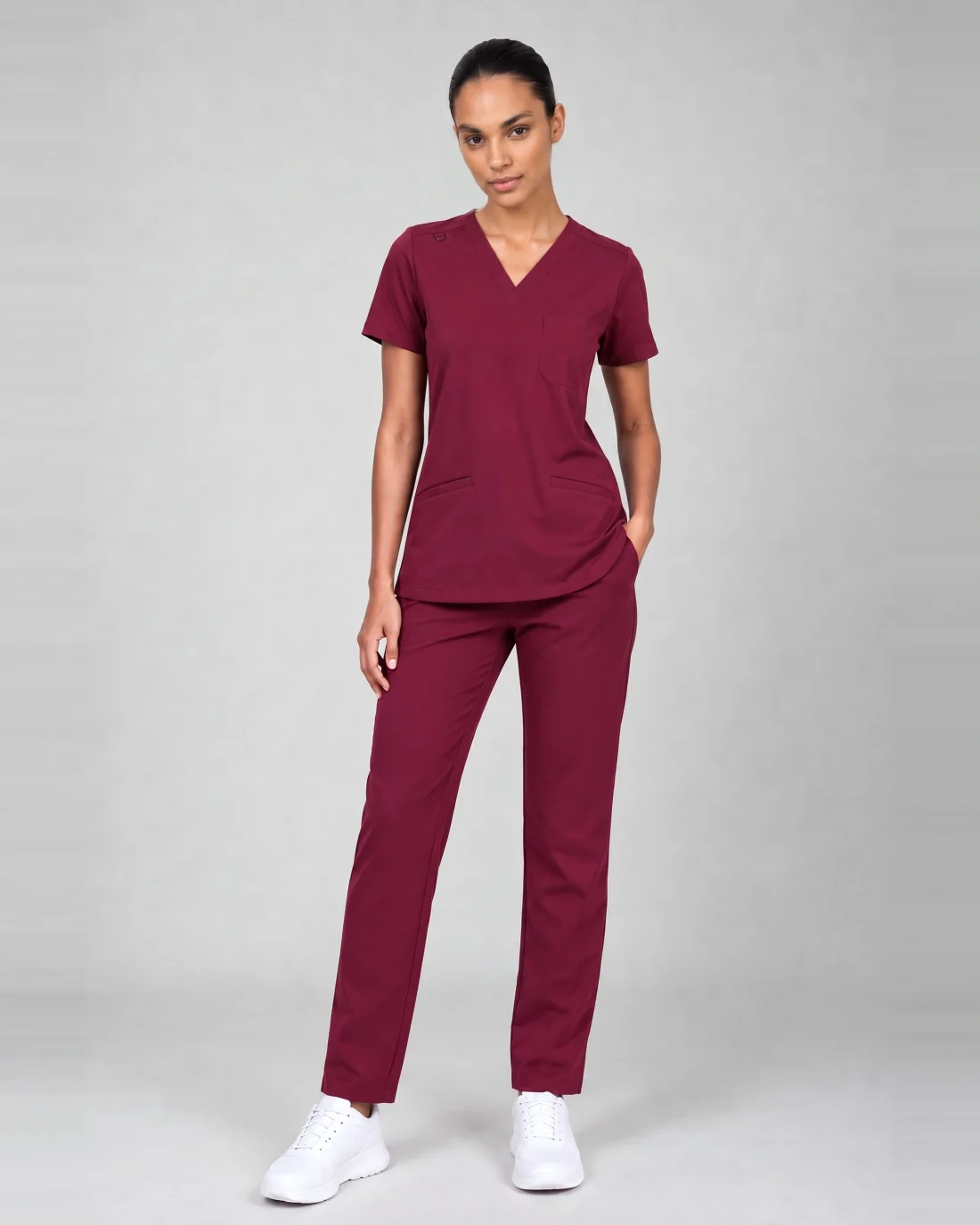
Front view of the blank Women’s Classic V-Neck Top. The image does not show an embroidery result.
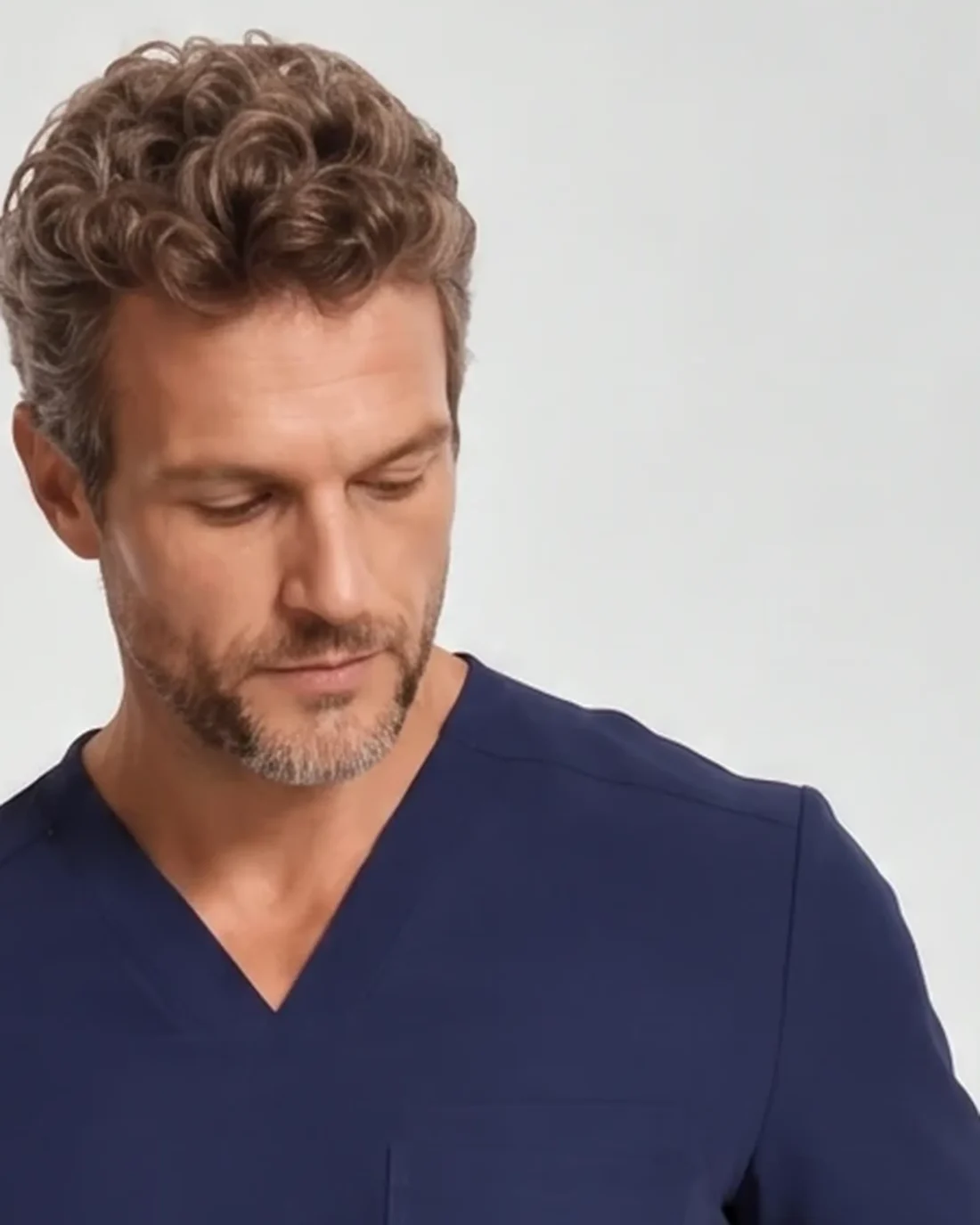
Shoulder view of the blank Men’s Classic V-Neck Top. The image does not show an embroidery result.
Ask for a proof that identifies the garment style and color and shows the mark in relation to nearby construction. Review it at normal viewing size rather than only enlarged on screen. Small letters that look crisp in a large PDF can lose clarity when translated into thread.
Thread contrast matters more than an abstract color match. Review the proposed thread against the actual garment color under ordinary indoor light. If a team uses several garment colors, approve the combination for each color rather than assuming one thread choice works across all of them.
Compare the quote by components, not one headline price
There is no useful universal price for embroidery on scrubs. The total can change with artwork preparation, stitch count, logo complexity, number of thread colors, number of positions, individualized names, quantity, sample method, revision policy, garment availability, rush handling, and shipping.
Ask each vendor to itemize the same scope:
- garment price and quantity;
- artwork setup or digitizing;
- one-position logo stitching;
- second placement, if any;
- individual names or credentials;
- proof and sample method;
- included revision rounds;
- remake and error terms;
- rush and delivery charges;
- reorder pricing and minimums.
Turnaround needs the same discipline. A promise such as “ships quickly” is incomplete unless it says when the clock starts and what can pause it. Garment stock, artwork cleanup, roster changes, proof revisions, sample approval, stitching, inspection, and delivery are separate stages. Put the required in-hand date on the quote, then work backward with room for corrections.
Turn the proof into a production record
A digital mockup is useful, but it may not show how thread density, small lettering, seams, or fabric movement will look on the finished garment. For a larger run, ask whether a stitched sample or stitched-out photograph is available before bulk production.
The final approval record should contain:
- the exact artwork file and version;
- garment style, color, and size scope;
- mark dimensions and placement reference;
- thread color reference;
- approved names and credentials;
- the final proof or sample image;
- the approver’s written sign-off;
- the terms for vendor error, approved-data error, damage, and shortage.
Save that record after delivery. A reorder should not depend on someone remembering “the same navy and the same logo as last time.” Reconfirm the current garment, color, artwork, placement, and terms before adding new pieces to an older uniform rotation.
Set return and error rules before stitching
Customization changes the risk because the garment may no longer be resellable. Before approving production, get answers to four separate questions:
- Can blank garments be tried on or exchanged before stitching?
- When does a personalized item become final sale?
- What happens when stitching does not match the approved proof?
- What happens when the proof was followed but the customer-approved name or size was wrong?
The current LumiScrubs embroidery service page states that embroidered, personalized, and named garments become final sale once stitching starts. Teams should still obtain the terms that apply to their specific quote in writing before approval.
Do not collapse “vendor error” and “customer-approved error” into one vague remake promise. The proof should establish which information came from the customer and which execution details remain the vendor’s responsibility.
Keep roles readable without relying on embroidery alone
Embroidery can add a name, credential, or organization mark, but it should not carry the whole identification system. Research published by the Pennsylvania Patient Safety Authority describes scrub color as a useful cue with limits under changing light, visual demand, and differences in color vision.
Use more than one readable signal where the workplace permits it: garment color, a visible name, a current credential or role, an ID badge, and unit signage. Check the full arrangement while standing, seated, leaning, and wearing the normal badge or outer layer. A beautifully stitched title is not useful if a lanyard or jacket covers it.
Removable patches, badge buddies, or other role markers may protect garment flexibility, but they are not automatic substitutes for required embroidery. The organization must approve the method, and the attachment needs to suit cleaning, retention, visibility, and the actual work environment.
For a team order, use the current team path
LumiScrubs currently routes embroidery through Team Orders, which start at 10 sets; the site does not present that service as a one-off personal embroidery checkout.
Before requesting a team quote, settle the garment, size roster, permitted color, authorized artwork, wording, and desired placement. Ask the quote to state proof steps, schedule, customization terms, and what remains reusable if a staff member leaves.
Frequently asked questions
Can I get women’s scrubs embroidered with my name?
Many local and online embroidery vendors can add a name, but first confirm that the school or employer allows personal names and specifies no required vendor or placement. Get the exact garment, cost, schedule, proof, spelling responsibility, and return terms in writing before stitching.
Where can I get scrubs embroidered?
Compare a local embroidery shop, the scrub seller’s team service, and a uniform-program vendor by the same criteria: exact-garment proofing, sample method, name-roster control, itemized price, schedule, error policy, and reorder record. Choose the provider that can document the whole job, not merely the lowest stitch price.
Can embroidery be removed from scrubs?
Sometimes stitches can be cut out, but clean removal is not assured. Needle holes, outlines, surface wear, and distortion may remain, so do not order permanent organization branding on the assumption that the garment can later return to blank.
What logo file should I send?
Send the original approved artwork when possible and ask the embroiderer which file format is required. Avoid screenshots, low-resolution web images, and unofficial logo redraws; approve the simplified stitch version before production.
How long does scrub embroidery take?
Turnaround depends on garment availability, artwork readiness, proof revisions, sample approval, quantity, stitching capacity, inspection, and delivery. Ask for the in-hand date and the event that starts the production clock rather than relying on an unqualified number of days.