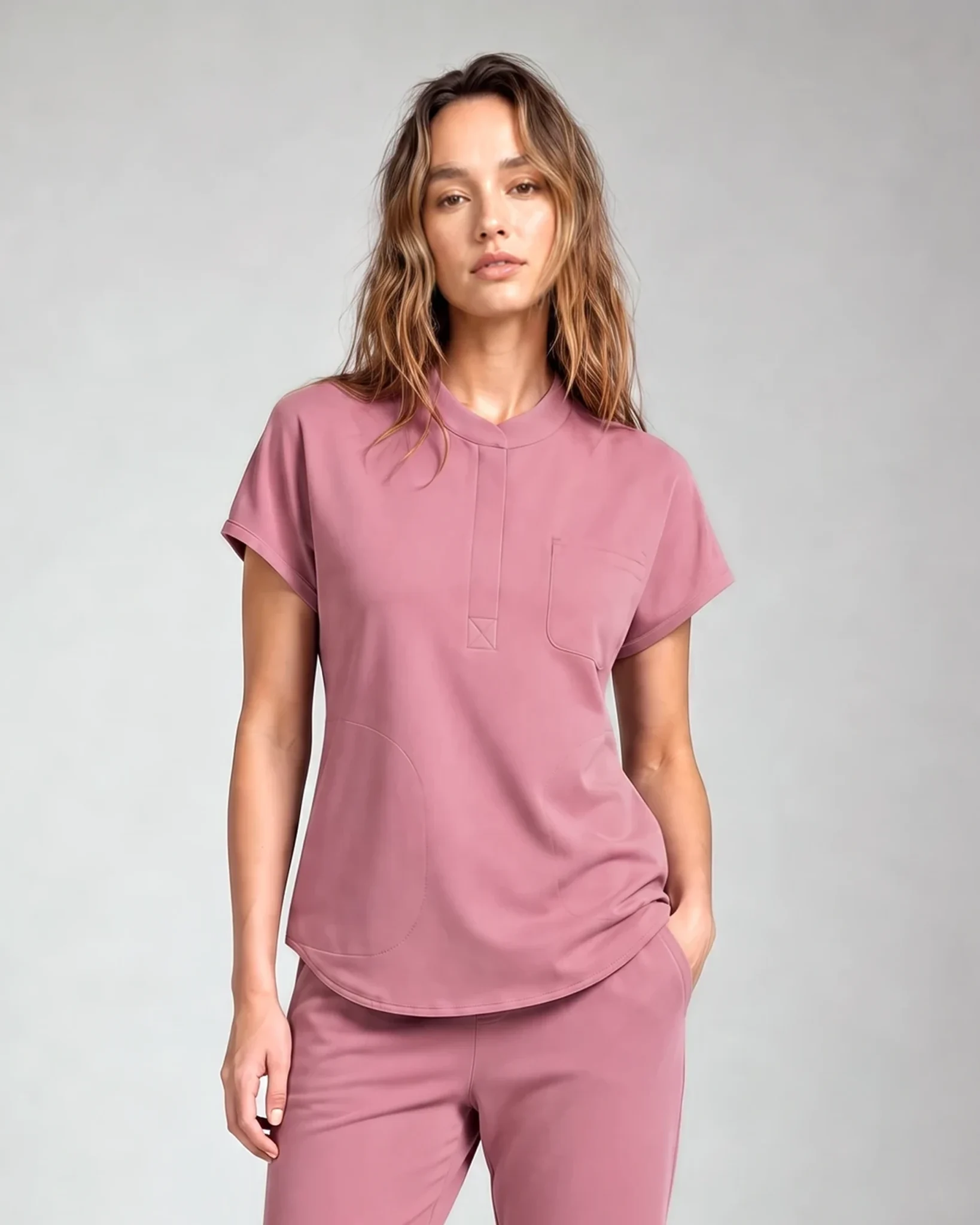

The jogger vs straight-leg scrubs decision comes down to five practical differences: the written dress rule, lower-leg shape, finished length, work shoes, and what happens when you sit, walk, squat, and load the pockets. A jogger tapers into an ankle cuff. A straight-leg pant continues to an open hem. Neither one is automatically more professional, current, or functional.
LumiScrubs publishes this guide and sells all four product options linked below. We have not run a head-to-head wear trial, workplace-appearance study, comparative movement test, loaded-pocket test, hem-contact study, or durability ranking on them. Product and policy sources were checked on August 26, 2026.
The visible difference—and what it does not decide
| Feature | Jogger scrub pants | Straight-leg scrub pants |
|---|---|---|
| Lower leg | Narrows toward the ankle | Continues in a straighter line from the knee |
| Bottom edge | Elasticated cuff | Open hem; some styles add an ankle slit |
| Length question | Does extra fabric stack above the cuff? | Does the rear hem clear the floor in work shoes? |
| Shoe question | Does the cuff meet the shoe without pressure or bunching? | Does the hem fall correctly with the shoe’s height and shape? |
| Workplace question | Are tapered cuffs allowed? | Is an open hem required or preferred? |
Those construction facts do not answer waist, rise, hip, seat, thigh, knee, or pocket fit. Two pants with the same silhouette label can use different patterns. Compare the exact size chart and garment—not the word “jogger” or “straight” by itself.
Are jogger scrubs unprofessional or out of style?
“Are jogger scrubs unprofessional?” is the wrong question until the workplace rule is known. If a school, employer, or department requires a straight leg, a jogger conflicts with that rule. If both shapes are allowed, the useful checks are coverage, condition, fit, shoe interaction, visible identifiers, and repeated adjustment. The cuff alone cannot deliver a universal verdict.
“Are jogger scrubs still in style?” has the same problem. A trend can change faster than a uniform policy or replacement cycle. It also says nothing about whether the rise fits, the cuff stacks, or a pocket presses into the knee. Choose a shape that passes the current rule and the actual workday; let fashion preference break a tie, not override those results.
The scrub color guide applies the same principle to color: confirm the exact local requirement instead of borrowing another workplace’s standard.
Seven checks for jogger versus straight-leg scrub pants
1. Get a yes-or-no answer on the dress rule
Ask whether joggers, elastic cuffs, ankle exposure, cargo pockets, and ankle slits are allowed. Record the exact required color and whether the top and pant must match. A general phrase such as “navy scrubs” may not settle product, shade, or silhouette.
For a team or student program, use the current written rule or a direct answer from the person who enforces it. Do not treat social photos or a coworker’s older uniform as approval.
2. Fit the waist, rise, seat, and thigh before judging the leg
Start with body measurements and the product chart. Then try the pant with tags attached. Stand and sit for several minutes. Check waistband position, drawcord tension, rise, back coverage, hip, seat, and thigh before looking at the lower leg.
A cuff cannot repair a rise that is too short. An open hem cannot fix pressure across the seat. If one area fails, compare the next size and another cut rather than applying a universal “size up” rule. Fit & Size Help gives the current measuring sequence.
3. Test length with the actual shoes
Wear the shoes and socks used at work. For a jogger, check where the cuff sits, how much fabric stacks above it, whether the cuff rotates, and whether it creates pressure after several minutes. A contained bottom edge is not proof that the pant length is correct.
For a straight leg, inspect the front break, side line, and rear hem while standing and walking. Repeat the test with the lowest-profile work shoe in the rotation. A hem that clears one shoe can sit differently over another.
If standard lengths are consistently the problem, use the petite scrubs and inseam guide rather than choosing a smaller waist size to shorten the pant.
4. Repeat the positions that change pant fit
Walk, sit, cross one ankle over the other knee, take a long step, climb one step, perform a controlled squat, and stand again. Add kneeling or a low-to-high transition only if it reflects the job and can be repeated safely at home.
Record waistband movement, back coverage, pulling at the hip or thigh, knee restriction, cuff or hem movement, and every adjustment. “Stretchy” is not a result. The useful note is where the pant pulled, shifted, pressed, or needed correction.
5. Load the pockets with safe stand-ins
Use clean stand-ins for the personal items the workplace permits. Match their approximate size and weight; do not use work supplies in a home trial.
Sit, walk, squat, and lean forward. Note opening direction, access hand, closure, body pressure, garment pulling, and whether the object shifts. Pocket count alone cannot answer those questions. The 12-hour shift pocket test expands this into a repeatable record.
6. Inspect front, side, and back—not just the cuff
Use bright indoor light and the planned base layer. Look at the full outfit from the front, side, and back while standing, seated, and leaning. Check pocket outlines, waistband position, rise, seat, thigh, knee, lower-leg line, and top-to-pant proportion.
A product image can show silhouette and construction. It cannot prove fit on another body, movement, opacity, pocket retention, workplace acceptance, or a professional outcome.
7. Keep the first comparison reversible
If possible, compare one jogger and one straight leg indoors with the same base layer, shoes, movements, and pocket stand-ins. Keep tags and packaging intact. Record the exact product, color, size, shoe, test positions, and result so the decision is not reduced to whichever mirror photo looked better.
The current LumiScrubs Shipping & Returns page gives eligible non-personalized items a 30-day return window when they are unworn, unwashed, and in original packaging; personalized or custom items are final sale unless defective. Read the current terms before laundering, altering, or wearing a pant to work.
Four current LumiScrubs pant paths
These are current construction choices, not a ranking. LumiScrubs has separate women’s jogger and straight-leg pants, a separate men’s jogger pant, and a men’s straight-leg pant inside the Core set. No separate men’s straight-leg pant was listed in the current catalog when this guide was checked.
| Current option | Configuration | Current selector boundary |
|---|---|---|
| Women’s Motion Jogger Pant | Pant only; tapered leg, elasticated cuff, drawcord waistband | 2XS–2XL listed; tops sold separately |
| Women’s Straight-Leg Pant | Pant only; open hem with ankle side slits, drawcord waistband, nine-pocket layout | 2XS–2XL listed; tops sold separately |
| Men’s Motion Jogger Pant | Pant only; tapered leg, elasticated cuff, drawcord waistband | XS–3XL listed; tops sold separately |
| Men’s Core Scrub Set | Four-pocket V-neck top and nine-pocket straight-leg pant | XS–3XL listed; top and pant sizes selected separately at the set price |
When checked, the women’s and men’s Motion Jogger pants were listed at $38.90, the women’s Straight-Leg Pant at $36.90, and the men’s Core Scrub Set at $64.90. Price, size-menu endpoints, pocket count, and silhouette do not prove fit, movement, job-specific suitability, or durability.
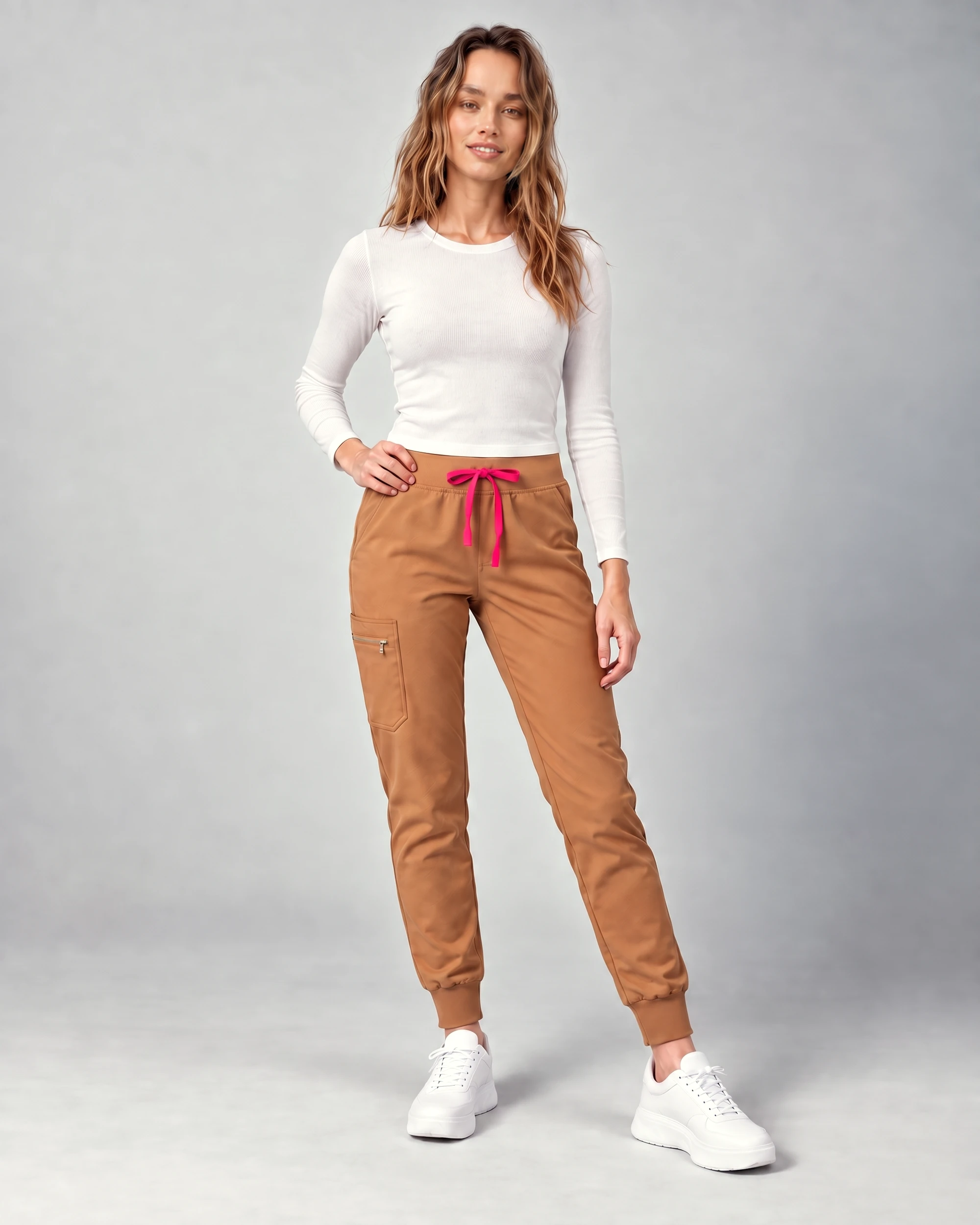
Jogger image: the tapered lower leg, ankle cuffs, front thigh pocket placement, and shoe interaction are visible. The photo does not prove fit, cuff comfort, movement, pocket performance, opacity, workplace acceptance, or durability.
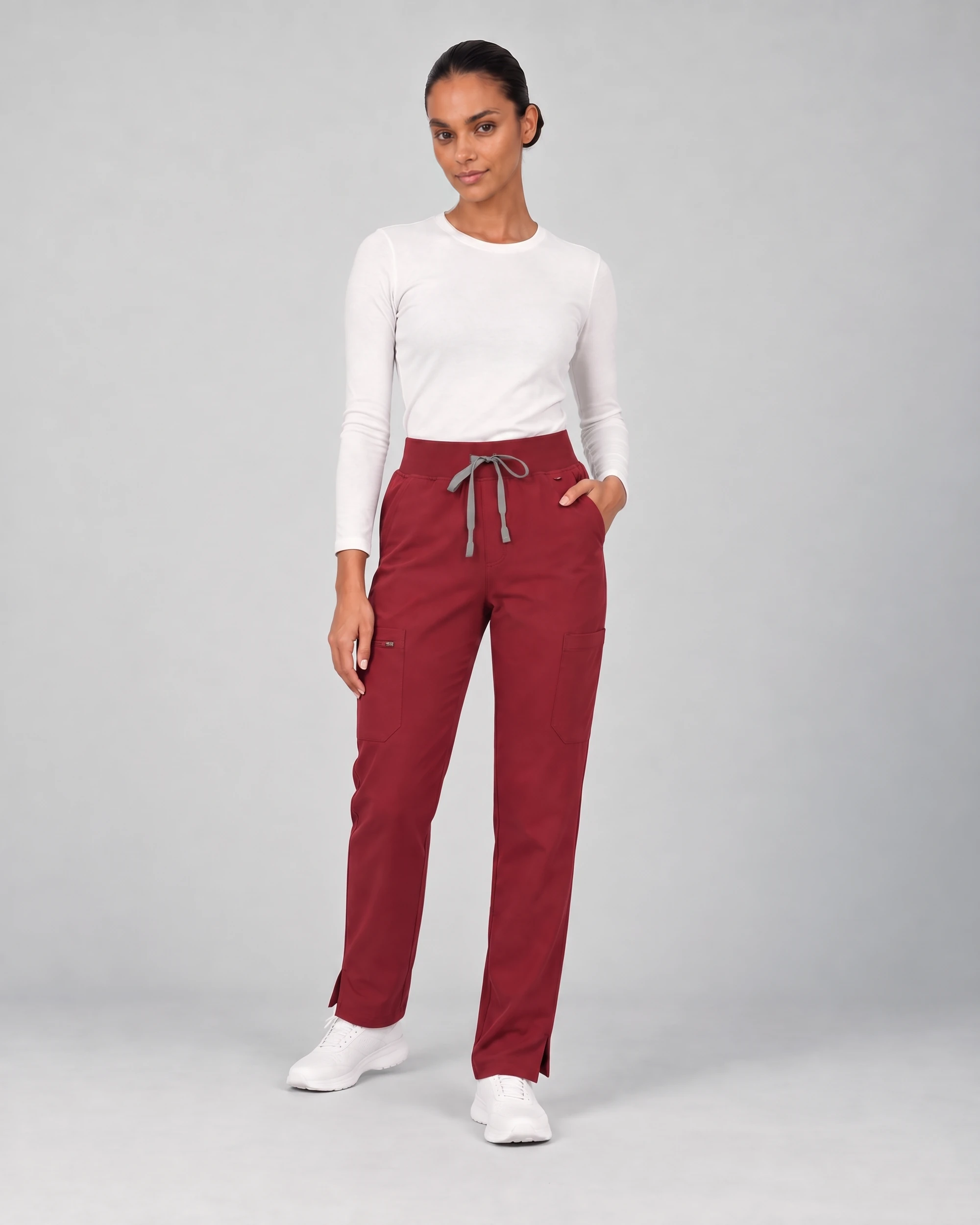
Straight-leg image: the open lower-leg line, ankle side slits, thigh pockets, and shoe interaction are visible. The photo does not prove fit, hem clearance on another body, movement, pocket performance, opacity, workplace acceptance, or durability.
After the written rule and tags-on trial have narrowed the shape, compare current LumiScrubs scrub pants and choose the exact size, color, and construction that produced the better record.
Frequently asked questions
Are jogger scrubs professional?
They can fit a workplace standard when cuffs are allowed and the complete uniform passes its rule. “Professional” is not a fixed property of the cuff; use the current dress code, coverage, condition, fit, shoes, and visible role requirements.
Are jogger scrubs still in style?
Style preference changes, but a workplace decision should be based on the current rule, correct length, fit, shoes, movement, and pocket interaction. Do not replace those checks with a trend prediction.
Are jogger scrubs tighter than regular scrubs?
Joggers taper below the knee, but “regular” is not a reliable pattern name. Waist, rise, hip, seat, and thigh measurements vary by product. Compare the exact charts and try-on notes.
What are the best straight-leg scrub pants?
The best pair is the one that follows the dress rule and fits the waist, rise, seat, thigh, knee, finished length, shoes, and permitted pocket load. A straight-leg label or high pocket count is not enough.
Are joggers better for petite wearers?
A cuff can contain the bottom edge, but extra fabric may still stack above it. A straight leg may be easier to shorten when no low pocket, zipper, or cuff blocks alteration. Measure the required length instead of assuming the cuff solves it.