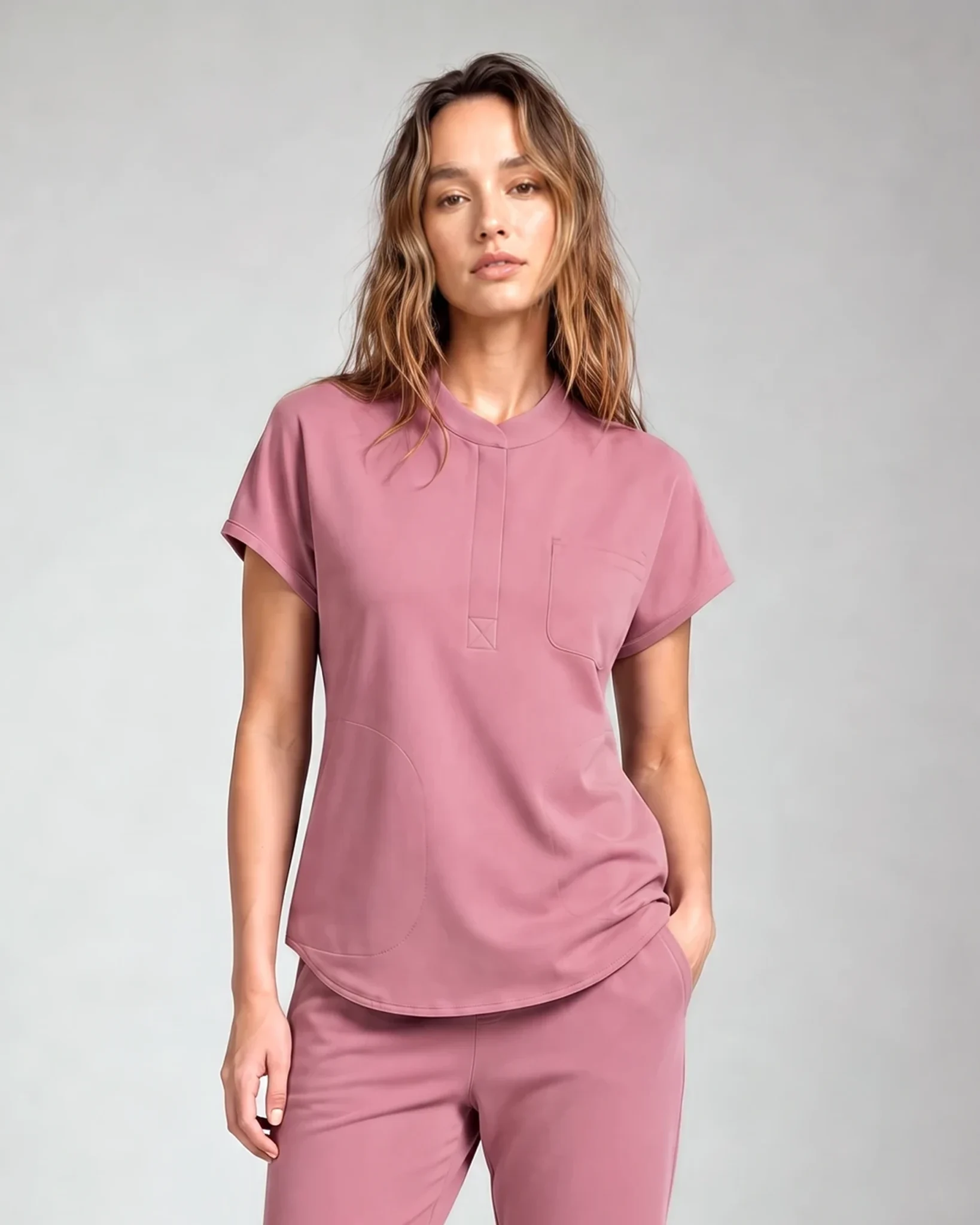

The right number of scrub pockets is the number of usable locations your routine requires—not the largest count in a product title. List what stays on your body, give each item a reachable home, reserve a closure for anything easy to lose, and test whether the loaded garment stays in place while you sit, bend, walk, and climb a step.
Evidence boundary: LumiScrubs publishes this guide and sells the four pants linked below. We have not completed a published loaded-pocket test that measures waistband drop, pocket deformation, seam opening, zipper cycles, or a maximum safe carrying weight. Product details and galleries were checked on August 26, 2026; photos support visible construction only.
Why pocket count alone is a weak buying rule
Two pants can advertise the same count and still organize a shift differently. One may split small items across narrow compartments; another may use several large patch pockets. A pocket can be deep yet awkward to reach when seated. A secure closure can help contain one item but add hardware where your leg meets a chair.
A 2026 survey of 267 operating-theatre staff compared two hospital-provided scrub designs. Respondents clearly preferred the option with an elastic waistband and trouser-style pockets, and their written reasons included fit, practicality, dignity, privacy, and safety. That finding comes from one Australian workplace and two specific uniforms. It supports treating pockets and waistband design as linked decisions; it does not establish a universal pocket number or prove how a retail product performs.
The practical rule is simpler: count storage jobs, then test the garment under your own permitted load.
1. Build a pocket list from a normal shift
Write the list after work, before shopping. Separate items into three groups:
| Group | What belongs here | Buying consequence |
|---|---|---|
| Always carried | Items that stay on your body for most of the shift | These determine your base pocket layout |
| Task-specific | Items carried for one room, round, or task | One flexible location may be enough |
| Stored elsewhere | Items kept on a cart, desk, tray, locker, or workstation | Do not buy garment storage for them |
Record only items your workplace permits you to carry. A colleague’s loadout is not automatically yours. If your constant list is a phone, badge, pen, and folded note, the garment needs four workable storage jobs—not necessarily four separate pockets. A divider can create two locations inside one pocket, while one oversized pocket may fail to separate anything.
If your list changes from shift to shift, use the 12-hour shift pocket test to record three real shifts before choosing a layout. That page owns the tracking exercise; this guide owns the purchase decision.
2. Match pocket construction to the item
Phone
Test the phone with its normal case. Place a safe stand-in in an unworn garment if the seller’s try-on rules allow it. Sit, stand, crouch, and lean forward. Watch the opening, where the phone contacts your body, and whether its weight pulls the waistband or side seam.
Pens and narrow items
A narrow sleeve or divider can keep long items upright, but only a home test can show whether the item catches, leans out, or presses into you. Check the clip against the actual opening rather than assuming a product’s “pen pocket” label solves the problem.
Keys and small valuables
Use a contained location with a closure when loss would be disruptive. A zipper, snap, or internal compartment is a construction choice, not proof of security under every movement. Cycle the closure several times indoors and check whether it is easy to operate without looking.
Rigid or pointed items
Follow workplace rules first. Do not run a home test with a sharp tool. Use a blunt, lightweight stand-in and check whether the location keeps the object away from pressure points when sitting and bending.
Notes or folded paper
Look for a flat location separate from objects that can mark, puncture, or crease it. Back pockets may keep paper flat while standing but place it directly against a chair; that trade-off only appears when you sit.
3. Choose placement before capacity
Pocket position controls reach and changes where weight acts on the garment.
- Top pockets can keep a pen or flat item close to the hand, but added weight may pull the neckline or hem.
- Front pant pockets are familiar and quick to reach, but a rigid object may meet the hip crease while seated.
- Thigh or cargo pockets move storage away from the waist, but a loaded pocket can pull at the side of the leg.
- Back pockets suit light, flat items, but anything bulky sits between the wearer and a chair.
Do not infer capacity from a model’s hand inside a pocket. Photography can show the opening, location, stitching, divider, flap, or zipper. It cannot establish the usable depth for your phone, the weight a seam tolerates, or whether the waistband stays level under load.
4. Test the whole garment under a safe load
Keep the tags attached, stay indoors, and read the seller’s current try-on and return terms. Use safe stand-ins close to the size and approximate weight of your permitted everyday items; never place restricted or sharp equipment in an unworn garment.
Run the same sequence every time:
- Photograph the unloaded front, side, and back.
- Add one stand-in at a time and note its location.
- Sit for two minutes without readjusting the waistband.
- Stand, walk, turn, crouch, and climb one step.
- Lean forward and reach across the body.
- Compare the loaded garment with the unloaded photos.
Record observable changes: the item tilts toward the opening; the pocket edge gaps; the side seam twists; the waistband moves; the pant leg swings; the top hem or neckline shifts; the item becomes hard to remove or return. “Feels bad” is less useful than “phone pulls the right side lower when I climb a step.”
This is a fit and layout screen, not a durability test. Proving a weight limit or seam life would require a controlled load, repeated action cycles, defined measurements, and more than one sample.
5. Compare current Lumi pocket layouts without inventing capacity
The current catalog gives two explicit nine-pocket straight-leg examples and two jogger paths whose galleries show construction without publishing an exact count. None has a published loaded-pocket result.
| Current pant | Published or visible pocket information | Price and size snapshot | Honest use of the page |
|---|---|---|---|
| Women’s Straight-Leg Pant | Nine pockets, including a zip cargo pocket | USD 36.90; 2XS–2XL | Shortlist when a multi-pocket straight leg and one zippered location match your map |
| Men’s Classic Pant | Nine pockets, including a zip cargo pocket | USD 36.90; XS–3XL | Compare the visible front, back, side, waistband, and cargo views with your layout |
| Women’s Motion Jogger Pant | Exact layout is shown in the current gallery; no count is published on the page | USD 38.90; 2XS–2XL | Inspect every gallery angle; do not transfer the straight-leg count to the jogger |
| Men’s Motion Jogger Pant | Exact layout is shown in the current gallery; no count is published on the page | USD 38.90; XS–3XL | Use the gallery for location and construction only, then run the same tags-on screen |
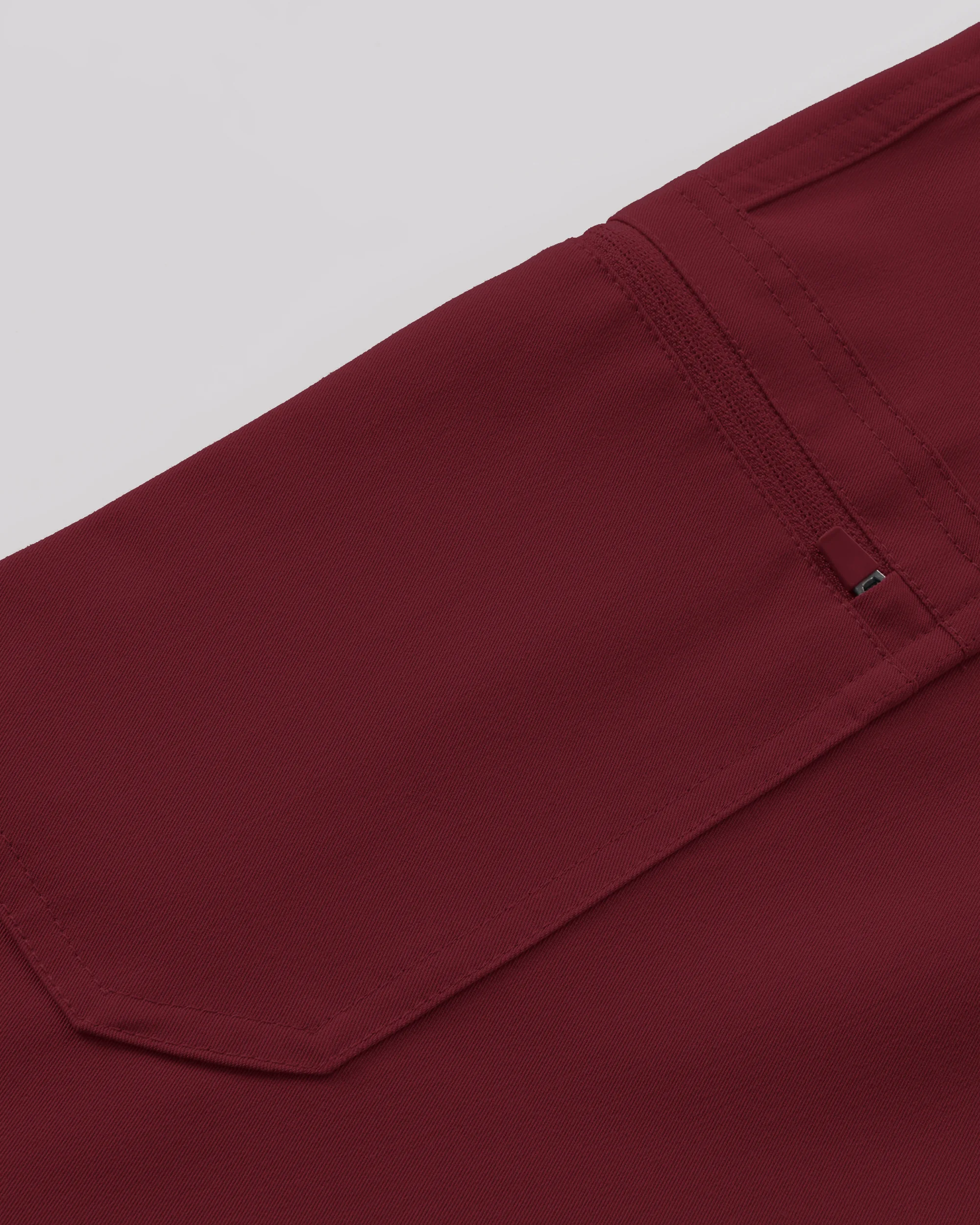
The women’s Straight-Leg Pant cargo close-up shows a zipper, openings, stitching, and layered construction. It does not prove usable depth, zipper life, seam strength, containment, or waistband stability.
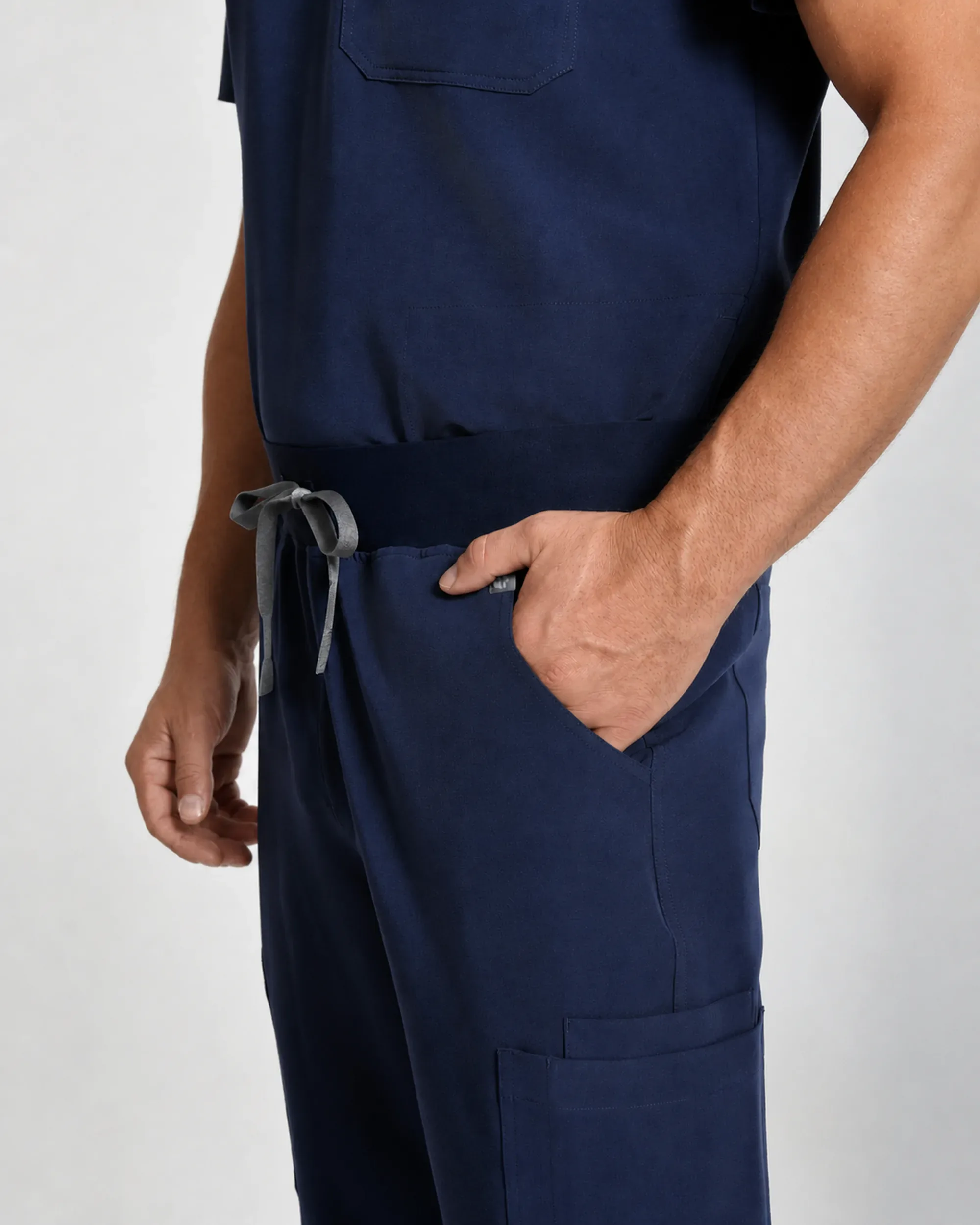
The men’s Classic Pant image shows the waistband, drawcord, front opening, and lower cargo placement. The model’s hand is not a capacity measurement.
Pocket-layout checkpoint: Compare current scrub pants by shape, gallery, and published pocket information, then test one eligible garment against your written map.
6. Check seams, corners, and the unload routine
Inspect each pocket corner, zipper end, divider, flap, and the seam that joins the pocket to the garment. Look for the construction that exists; do not turn a close-up into a lifespan claim. A new photo cannot tell you which point will fail first after repeated loading and laundering.
Before washing, use the same sweep every time: top left to right, pants front to back, then every closed compartment. Emptying pockets is part of the layout decision. A hidden pocket that is easy to forget may create more laundry risk than value.
If a specific pocket keeps tearing, route that problem to the separate guide on why scrub pants rip at the pocket. Do not solve recurring localized failure by adding more weight to another untested pocket.
Frequently Asked Questions
How many pockets do nurses need in scrubs?
There is no universal number. Count the items that remain on your body, group them by the kind of storage they need, and test whether each location stays reachable without moving the garment out of place.
Are more pockets always better?
No. Extra pockets help only when their openings, placement, closure, and separation match your loadout. Unused compartments add places to forget small items.
Do nurses need a zippered pocket?
A closure is useful for an item that would be disruptive to drop, but it does not have to be a zipper. Compare zipper, snap, flap, and internal-compartment options against the item and movements involved.
Should a phone go in a scrub top or pant pocket?
Use the location that contains your phone and case without pulling the neckline, waistband, or side seam during sitting and bending. Test both positions indoors rather than applying one rule to every body and garment.
Can a product photo prove that a scrub pocket is deep?
No. A photo can show visible placement, openings, seams, dividers, flaps, and zippers. Depth, capacity, containment under movement, and load tolerance need measurements or a defined test.
How can I stop leaving items in scrub pockets before washing?
Assign predictable locations and sweep them in the same order before every wash. Check closed and hidden compartments last, then repeat the full sweep once.