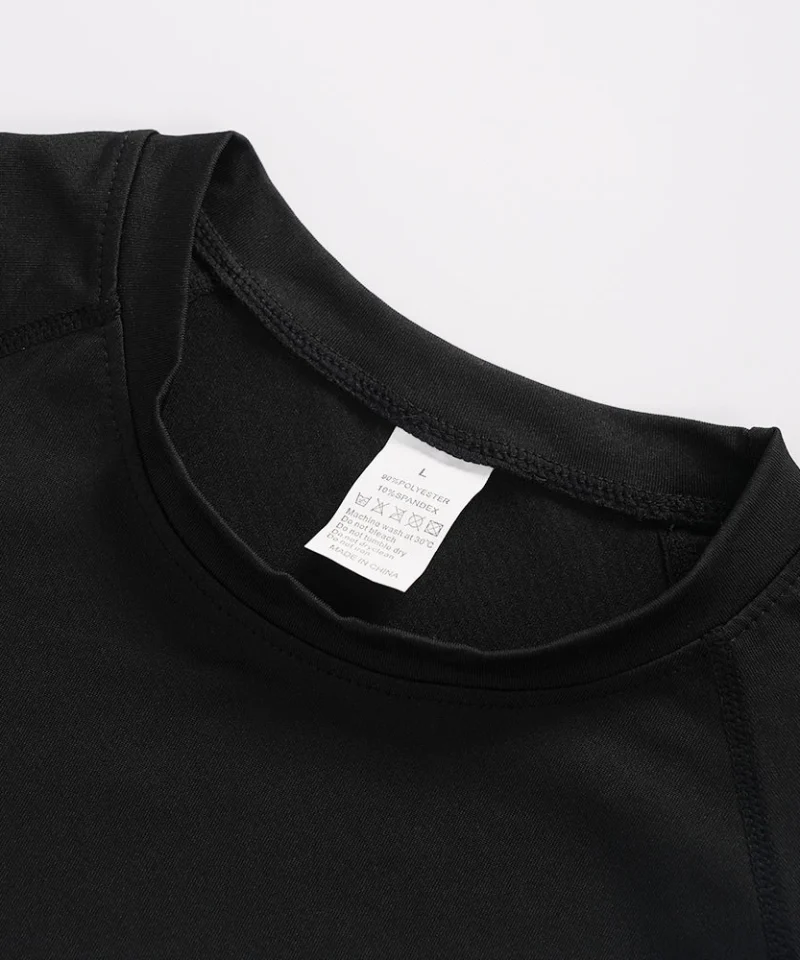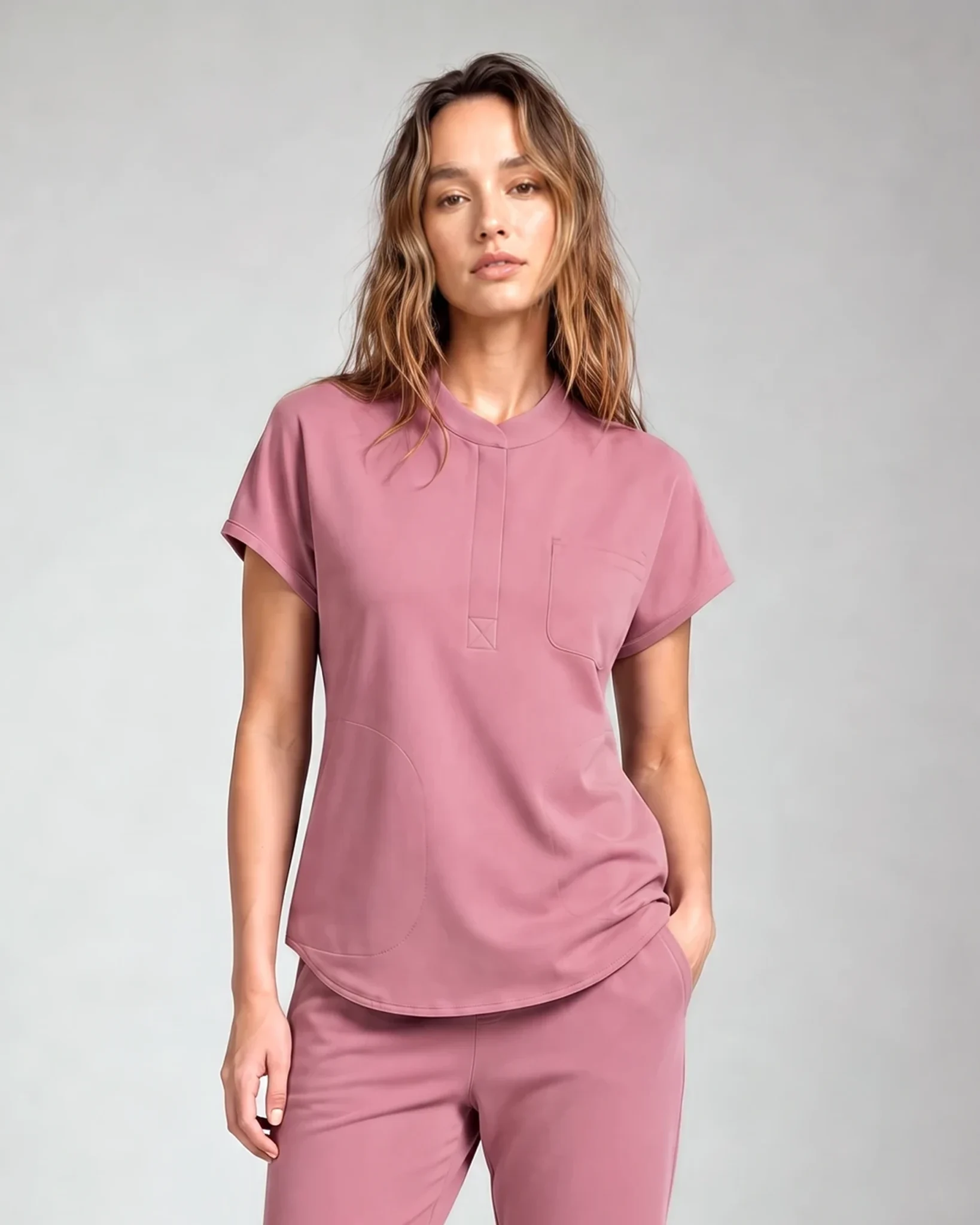

What to wear under scrubs depends on the job the extra layer must do. For a cold unit, a close long-sleeve layer may help when exposed sleeves are allowed. For neckline coverage, choose a layer that stays in place when you lean. Under light scrub pants, use smooth undergarments close to your skin tone and test the full outfit in bright light.
You do not automatically need a shirt under scrubs. If another layer adds heat, bulk, friction, or a dress-code problem without solving anything, skip it.
The workplace rule comes before the base layer
An underscrub is part of the visible uniform when its collar, sleeves, or hem can be seen. Check the written rule before choosing a material or color.
Confirm these details:
- whether sleeves may extend below the scrub top during patient care;
- whether cuffs must stay above the wrist or elbow in specific areas;
- which underscrub colors are permitted;
- whether visible logos, prints, or contrast stitching are allowed;
- whether a jacket must be removed for certain tasks;
- whether school, site, and unit instructions differ.
A base layer that is acceptable at reception may not be acceptable during every procedure. If the handbook is vague, ask the unit, program instructor, or placement contact a literal question: “May I wear an exposed long-sleeve shirt under my scrub top in this area?”
Do not rely on a general article to approve a local uniform choice. The scrub colors guide can help you translate a written color rule, but the current local instruction still controls.
Choose the layer by the problem
For warmth
Look for a layer that fits under the scrub top without twisting at the sleeves or pulling across the upper back. Try both garments together. A base layer that feels fine alone may become restrictive once the scrub top is over it.
Long sleeves are not the only option. If exposed sleeves are restricted, a sleeveless or short-sleeve layer may add a small amount of insulation without changing the visible uniform. A permitted scrub jacket may solve room-to-room temperature changes more flexibly than a shirt you cannot remove easily.
For neckline coverage
First check the scrub top itself. If the neckline opens because the top is too large, pulls across the chest, or shifts at the shoulders, another shirt may hide the symptom without fixing the fit.
When the top fits and you still want more coverage, compare the two necklines while seated and leaning forward. A crew neck can create a visible border; a V-neck underscrub can sit below a scrub neckline but may provide less front coverage. Neither is universally better. The useful neckline is the one that stays where you placed it during movement and follows the uniform rule.
For a distracting contact point
A thin layer can separate the skin from a rough seam, label, or garment surface. It can also add its own collar edge, cuff, side seam, or waistband. Check the entire contact map rather than buying from a general “soft” description.
Run a hand around the inside neckline, shoulder, armhole, side seam, and cuff. Then wear the layer long enough at home to notice whether one spot keeps asking for attention. That is a fit-and-construction observation, not a diagnosis or a promise that one fabric suits every sensitive wearer.
Under light-colored scrub pants
Use smooth undergarments close to your skin tone. White underwear can still show under white or pale pants when the edges contrast with the skin. Prints, thick seams, and high-contrast waistbands can also become visible when the fabric stretches.
Check the outfit near a bright window and under strong indoor light. Look from the front, side, and back while standing, sitting, bending, and squatting. The scrub opacity test gives the complete sequence.
Long sleeves, three-quarter sleeves, or short sleeves?
The decision is less about style than exposure, movement, and policy.
- Long sleeves cover the arm and can add warmth, but the cuff may enter the work area or conflict with a bare-below-the-elbow rule.
- Three-quarter sleeves keep more fabric away from the wrist, but they are not automatically approved for every work area.
- Short sleeves or sleeveless layers stay hidden more easily and add less visible fabric, but they do not solve forearm coverage.
- A removable jacket can help with changing temperatures, provided the unit permits it and you have an appropriate place to store it.
Test cuff position while reaching, washing your hands, putting on required protective wear, and raising both arms. A sleeve that creeps down every few minutes becomes an adjustment problem even if it looked tidy in the mirror.
Do underscrubs have to be a certain material?
There is no universal underscrub material for every workplace. A school or employer may specify a color, sleeve, or laundering method without naming a fiber; another may give more precise requirements. Follow the document you were given.
For personal comfort, do not use one fiber name as a shortcut. Cotton content, polyester content, fabric weight, knit structure, seams, finish, fit, and the scrub layer above it all change the experience. The scrub fabric blends guide explains how to separate a material requirement from heat, movement, and contact problems.
Read the care label before buying. If the base layer and scrub top require different care, decide whether you can keep those routines straight across a working rotation. A cheap shirt that cannot go through your normal laundry is not a simple solution.
What about sweat, lint, and pet hair?
An extra shirt is extra fabric. It may feel useful in one room and too warm under a fitted scrub top, a jacket, or required protective wear. Compare the same scrub top with and without the layer at home, then make the work decision within your unit’s rules.
Do not assume that a smooth photograph proves a fabric will resist lint or pet hair. If that issue matters, wear the layer around your normal home environment before committing to several, inspect dark and light colors under bright light, and note how much brushing or rolling it takes to leave the house. No current LumiScrubs fact supports an anti-fur or lint-resistant claim.
Run one complete tags-on layering test
Put on the underwear, base layer, scrub top, scrub pants, socks, and shoes you expect to wear. Keep all return-sensitive tags attached and use clean movements indoors.
- Raise both arms and check whether the underscrub or scrub hem rides up.
- Reach forward and watch for pulling across the upper back.
- Sit, lean, and turn to both sides; check the neckline from realistic viewing angles.
- Bend the elbows repeatedly and see where the cuffs settle.
- Squat and step up; check whether two waistbands roll or pinch.
- Add only the permitted items you normally carry and check the combined fit again.
- Remove the layers and note any seam, label, or pressure point you kept adjusting.
Use the LumiScrubs fit guide for measurements, but make the final decision with all intended layers on your body. Read the current Shipping & Returns terms before washing or removing tags.
A short decision guide
Wear an underscrub when it solves a defined warmth, coverage, or contact problem and the workplace permits it. Choose the sleeve and neckline around the rule and the movement, not around a styled photo.
Skip the layer when the scrub top already gives enough coverage, the room and activity make another layer unpleasant, or the added seams and waistbands create more distraction than they remove.
For light pants, the answer is usually an undergarment decision rather than a long-sleeve-shirt decision: low-contrast color, smooth edges, and a full light-and-movement check.
Frequently asked questions
What are underscrubs?
Underscrubs are base-layer garments worn beneath scrub tops. They may add warmth, coverage, or separation from a contact point, but they remain subject to workplace rules when any part is visible.
Are you supposed to wear clothes under scrubs?
Wear ordinary undergarments, then add a base-layer shirt only when you need it and the local policy allows it. A separate shirt is optional in many settings, not a universal requirement.
Can I wear a V-neck underscrub?
Yes when the workplace permits it and the neckline stays where you need it. Test it under the actual scrub top while leaning forward; two V-necks can align neatly or leave more exposure than expected.
What should men wear under scrubs?
The same decision applies: start with required undergarments, then choose an optional base layer by warmth, coverage, fit, and policy. Use the product’s own measurements rather than assuming a loose T-shirt or compression fit is correct.
Can I wear a hoodie under or over scrubs?
Only when local rules allow it. A hoodie adds bulk, a loose hood, and visible fabric, so it may be inappropriate in some patient-care or procedure areas even when it is comfortable elsewhere.
If a long-sleeve underscrub is the right layer
LumiScrubs currently lists women’s and men’s Quick-Dry Long-Sleeve Underscrubs in Black and White. Check the live product page for current size availability and product details; the catalog name is not a substitute for your policy or tags-on test.
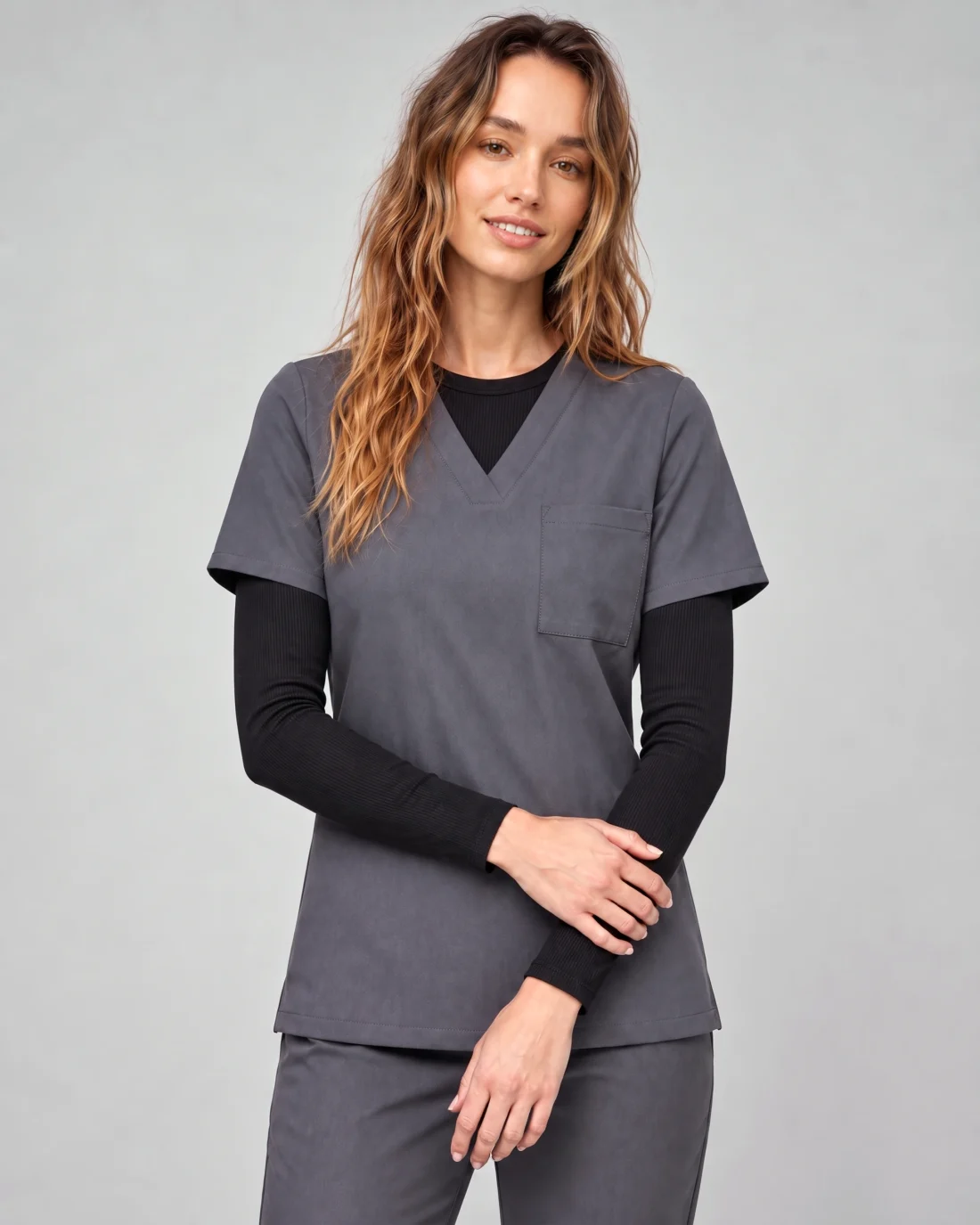
Women’s Quick-Dry Long-Sleeve Underscrub