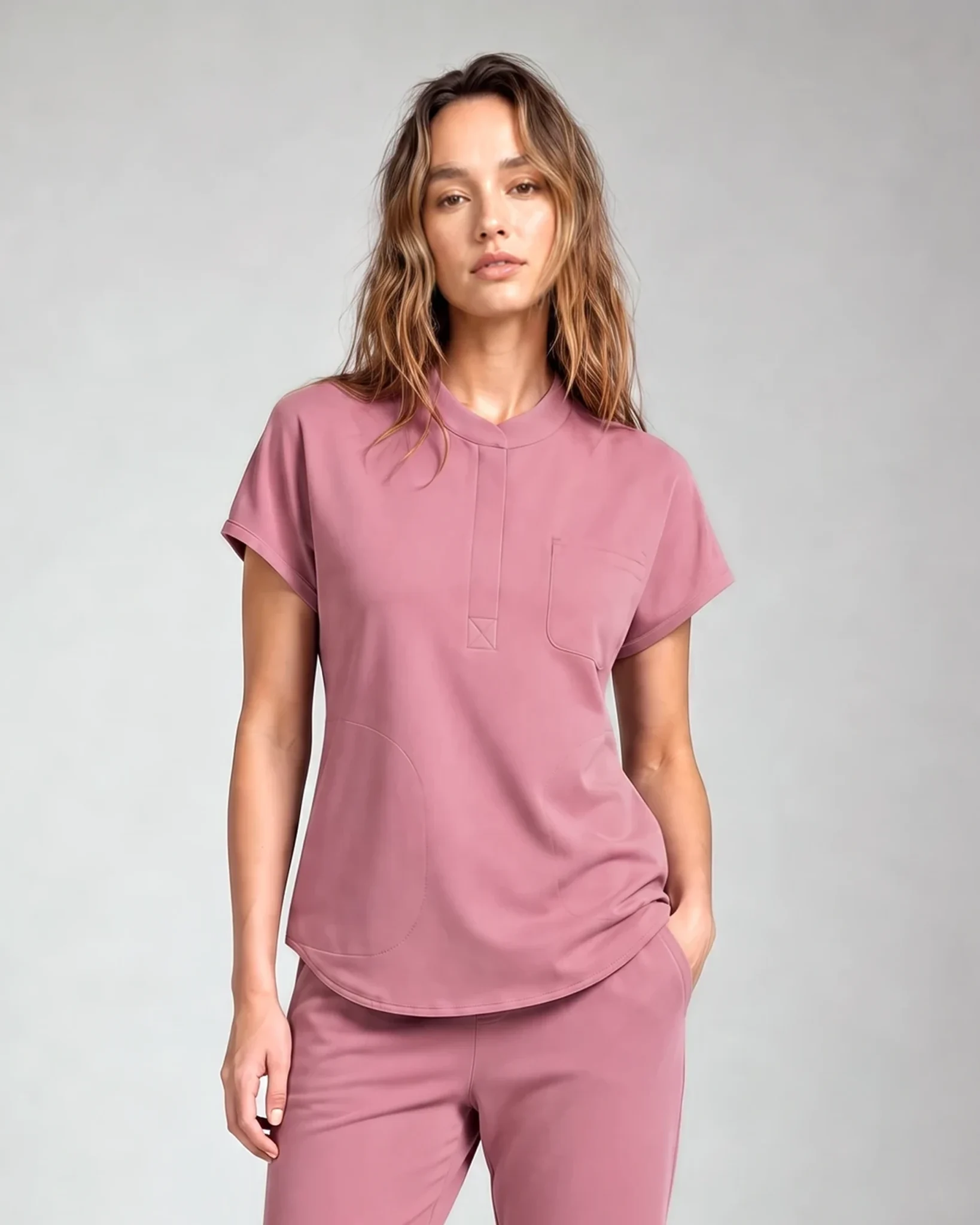

Dental hygienist scrubs should be judged in the position where standing-room fit often changes: seated, slightly forward, and reaching. Check the uniform rule, required layer rules, upper back, neckline, hem, waistband, pockets, layers, and return conditions before committing to a rotation. A styled photo cannot answer those questions for you.
LumiScrubs publishes this guide and sells the two products shown below. We have not run a hygienist wear trial, posture study, loaded-pocket test, comparative comfort test, or required-layer compatibility study on them. Product and policy sources were checked on August 26, 2026.
Build the trial around real positions
Do the first fitting indoors with tags attached. Use the shoes and permitted base layer you expect to wear, but use safe stand-ins—not items already used at work—for the personal items your workplace allows in uniform pockets.
| Test area | Standing check | Seated-forward check |
|---|---|---|
| Neckline | Depth, shape, and visible base layer | Shifting, gaping, pressure, and coverage at the angle you actually use |
| Upper body | Shoulder line, sleeve, body width, and hem length | Pull across upper back, armhole contact, sleeve movement, and hem lift |
| Pant | Waist, hip, rise, thigh, inseam, and hem or cuff | Waist pressure, back coverage, thigh pull, pocket pressure, and need to readjust |
| Pockets | Location, opening, closure, and visible construction | Reach, chair or body contact, garment pulling, and retention with safe stand-ins |
| Layers | Neckline and sleeve compatibility | Bunching, heat, friction, and movement in the complete permitted stack |
If a problem appears, name its location. “Pulls across upper back on a two-hand forward reach” is useful. “Bad fit” is not.
Get the required garment layers from the practice
The practice’s written procedures determine what must be worn for each task, when each layer is changed or removed, and what stays in the work area. Ask for those instructions before buying the uniform underneath.
A higher neckline, longer hem, close cuff, surface-finish statement, or fabric percentage does not replace an additional garment layer named in the workplace procedure. Shop the scrub for dress-code fit, movement, and storage; follow the task instructions separately.
A job title alone cannot answer which layers apply to a specific task. Confirm the exact setup with the practice, then include every permitted layer when you run the clean indoor fit test.
Seven checks for dental hygienist scrubs
1. Freeze the clinic rule before comparing styles
Confirm the exact color name, whether top and pant must match, permitted pant shapes, visible underscrub rules, footwear, personalization, and who launders the uniform. Ask whether a particular product code is required; “navy scrubs” may not be specific enough for a team.
Write the answer beside the size chart. That prevents a good fit from becoming a noncompliant purchase. Use the scrub color guide for the policy sequence, but treat the current employer rule as the final source.
2. Test the upper back with a two-hand reach
Sit in a firm, backless chair or on the front half of a firm seat. Reach both hands forward at chest height, then slightly down and to each side. Cross one arm, rotate gently, and reach overhead. Hold each position long enough to notice where the garment changes.
Check shoulder seam position, upper-back tension, armhole contact, sleeve movement, and hem lift. If only one area fails, compare the next size and a different cut; do not assume more overall width is the only answer.
Record the base layer used. An apparently small change at the shoulder can come from the top, the layer underneath, or their combination.
3. Recheck neckline and back coverage at the same angle
Use a mirror or a trusted second person to view the front, side, and back while you repeat the forward reach. Watch neckline shift, visible base layer, hem overlap at the waistband, and lower-back coverage. A neckline label alone—crew, V-neck, zip, or collar—does not predict what the exact size does on your body.
If you wear approved cords, clips, or other external equipment near the neckline, test their position only according to workplace instructions. The goal is to notice contact or pulling, not to recommend where work equipment belongs.
4. Let the pant sit before deciding
Stand-up fit can hide a waistband or rise problem. Sit for several minutes, lean forward, rotate, stand without adjusting, take a long step, and perform a controlled squat. Check waistband pressure, back rise, seat, thigh, knee, inseam, hem or cuff, and shoe clearance.
A jogger brings the opening close to the ankle; a straight leg leaves an open line over the shoe. Neither name proves better seated fit. The jogger-versus-straight-leg guide helps compare the visible construction without assigning professionalism or performance to the label.
5. Map pockets around sitting and reaching
Start with the few permitted personal items you truly keep on your body. Use clean, safe stand-ins of similar size and weight. Test each pocket while standing, seated, leaning, and rotating.
Note whether the opening stays accessible, the object presses into your waist or thigh, the garment pulls to one side, or the item shifts. A large pocket count can still be the wrong layout, and an untested pocket should not be trusted with something valuable.
Clinic infection-control and instrument-handling rules decide what belongs on the body, tray, workstation, or approved storage surface. This test evaluates garment interaction only.
6. Test the complete permitted layer stack
Operatories and personal temperature preferences vary, but a buyer cannot solve that from one “cooling” or “warm” adjective. If you plan to wear an underscrub, test the scrub top over that exact layer. Keep every workplace-required garment layer in the task plan rather than treating a base layer as a substitute.
Look for two necklines competing, sleeve bunching, armhole pressure, friction at the upper back, and extra fabric at the waist. The under-scrubs guide separates warmth, coverage, contact points, and workplace policy.
7. Make the first order reversible
Measure the body using the current chart, then measure a clean top and pant that already fit. Compare top and pant separately. Open Fit & Size Help beside the exact product page rather than relying on a saved chart.
Before washing or wearing the garment to work, repeat the entire clean indoor trial. LumiScrubs’ Shipping & Returns currently gives eligible non-personalized items a 30-day window when they are unworn, unwashed, and in original packaging; personalized items are final sale unless defective. Read the complete current policy before removing tags.
Two current LumiScrubs constructions to inspect
The women’s Soft Crew Top was listed at $32.90 when checked. It is a top-only product with a crew neckline, short sleeves, and the pocket layout shown in its gallery. Pants shown in the product image are styling and sold separately.
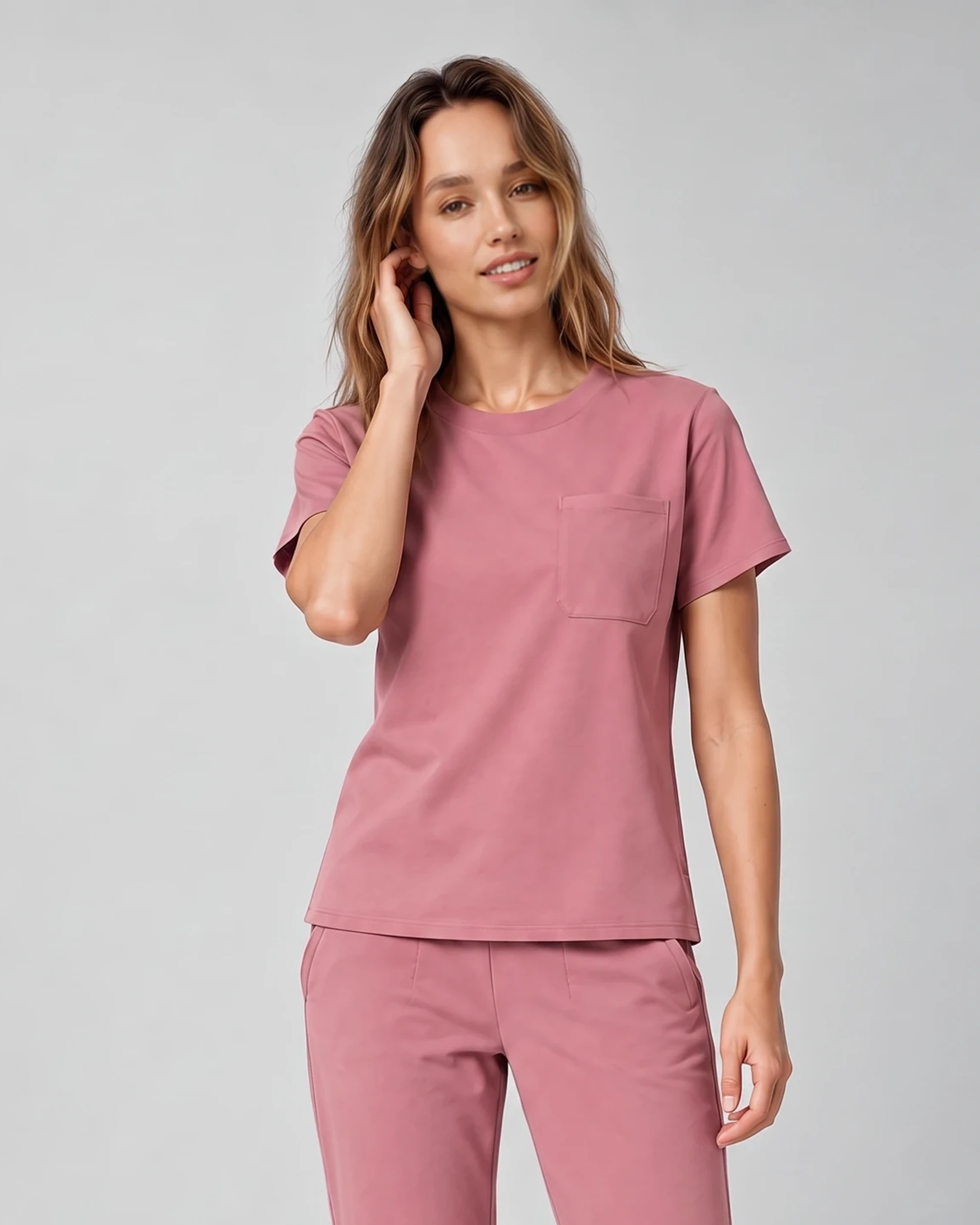
Soft Crew image: the front view shows visible neckline, sleeve, length, and pocket position. It does not prove seated coverage, shoulder movement, or comfort; the styled pants are not included.
The women’s Motion Scrub Set was listed at $64.90 when checked. The current page describes a coordinated top with a tapered jogger pant and elasticated cuff, with separate top and pant size selection at the set price. Its published production specification is 72% polyester, 21% rayon, and 7% spandex. Those facts do not prove hygienist-role fit, thermal comfort, or movement performance.
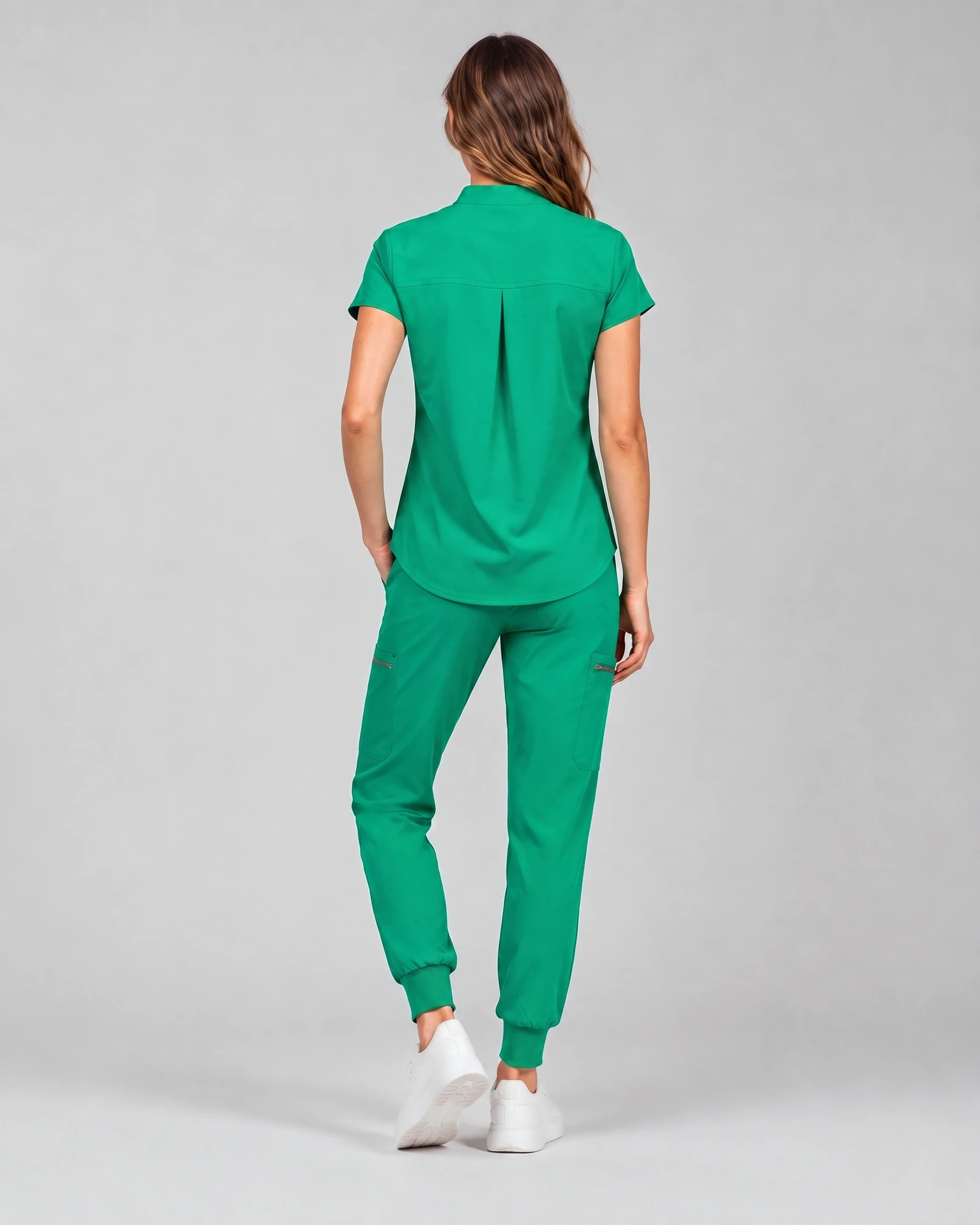
Motion back image: the yoke, center pleat, curved hem, rear pockets, tapered leg, and cuff are visible. A static rear view cannot establish reach, coverage while leaning, pocket access, or range of motion.
If one construction fits your clinic rule and measurements, compare it with the current dental styles and trial one outfit before personalizing or multiplying the order.
A one-minute seated-fit record
Keep one short card for each style:
| Field | Record |
|---|---|
| Policy | Exact color, matching rule, pant shape, base layer, personalization, and laundering owner |
| Top | Style, size, base layer, neckline shift, upper-back pull, armhole contact, and hem lift |
| Pant | Style, size, waist, rise, seat, thigh, inseam, hem or cuff, and shoes |
| Positions | Upright sit, two-hand forward reach, side reach, rotation, stand, long step, and squat |
| Pockets | Permitted stand-in, location, access, pressure, pulling, and retention |
| Layer stack | Exact permitted underlayer plus every workplace-required garment layer |
| Outcome | Keep, exchange size, change cut, or stop because the style conflicts with policy |
Dental assistants have a separate movement and pocket workflow. Use the dental assistant scrub guide for that role rather than making one dental page answer every job.
Frequently asked questions
What do dental hygienists wear?
They wear the uniform and garment layers required by the practice for the task. If the uniform is scrubs, confirm exact color, matching, silhouette, layer, footwear, personalization, and laundering rules before buying.
Can a scrub feature replace a workplace-required layer?
No. Follow the practice’s task-specific garment instructions. Choose the scrub for the dress code and fit test; do not treat a retail feature as a substitute for a workplace requirement.
Is a crew neck better than a V-neck for a hygienist?
Not universally. Compare the exact neckline and size during a seated-forward reach with the permitted base layer. Shape alone does not establish coverage or comfort.
How many pockets should dental hygienist scrubs have?
There is no universal count. Evaluate the few permitted personal items you carry, then test pocket location, seated access, pressure, garment pulling, and retention with clean stand-ins.
Are jogger or straight-leg pants better for dental hygiene?
Neither is automatically better. Confirm the dress code, then compare rise, seat, thigh, hem or cuff, shoe clearance, and pocket access while seated and moving.