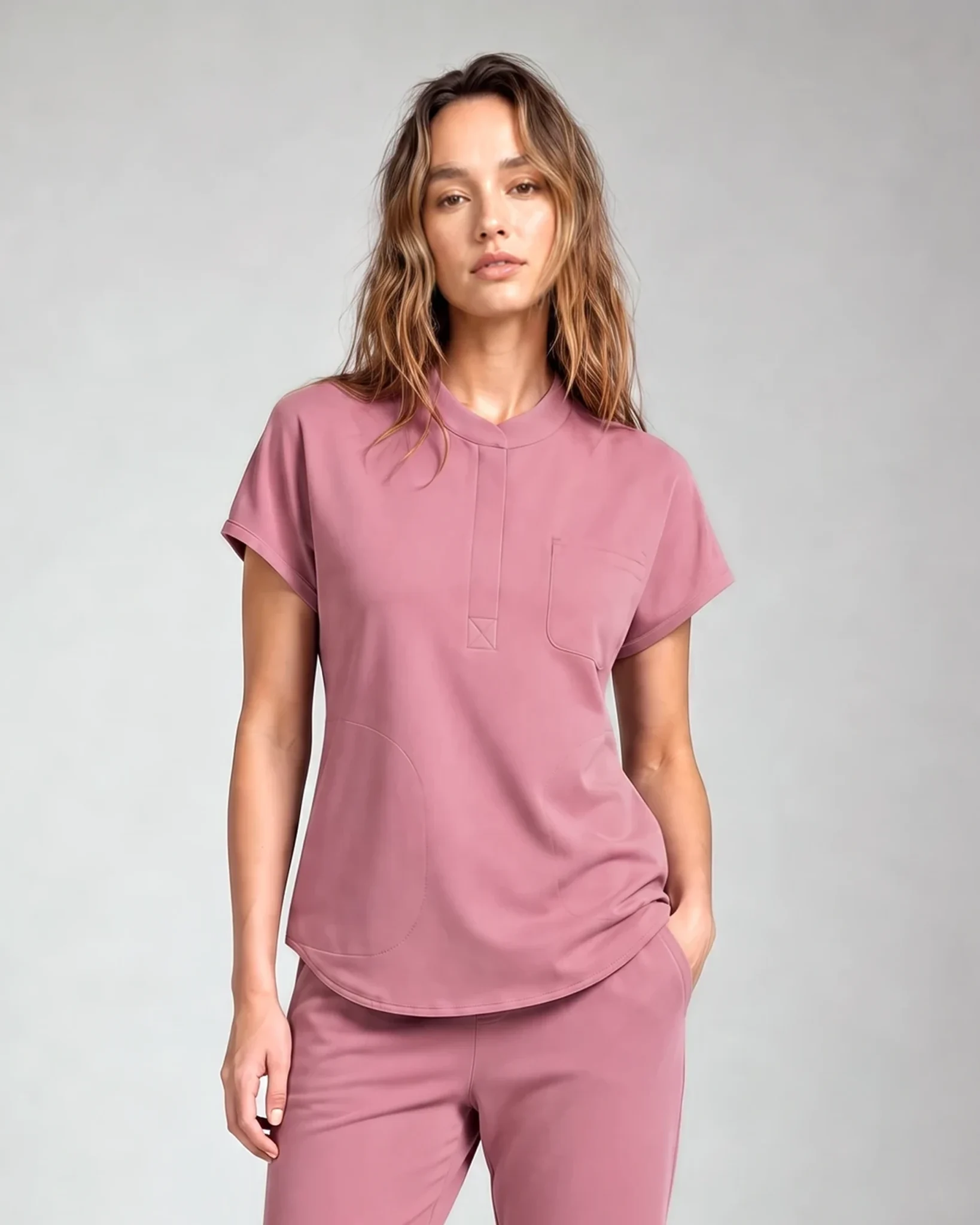

Breathable scrubs cannot be chosen from one “cooling” adjective. Compare what the claim means, the fabric label, room through the cut, required layers, pant opening, color, care, and return conditions—then test one set in your real work setup. Clothing is one heat-load variable, not a substitute for workplace heat controls or illness response.
LumiScrubs publishes this guide and sells the two sets shown below. We have not run a comparative thermal, air-permeability, or perspiration-management test on these outfits, so this article does not rank them as cooler or more breathable than another scrub. Product and safety sources were checked on August 26, 2026.
What you can verify before buying—and what you cannot
“Breathable,” “moisture-wicking,” “lightweight,” and “cooling” are not interchangeable. Before choosing a set, separate the visible specification from the wearer outcome.
| Buying question | What you can verify before purchase | What still needs a real-use check |
|---|---|---|
| What does the performance word mean? | Definition, product covered, test method, dated result, and limits | Whether the result matters in your room, workload, and layers |
| What is the fabric made from? | Fiber percentages and care label | Hand feel, cling, noise, opacity, and heat experience on your body |
| Does the cut leave working room? | Garment chart, fit label, neckline, sleeve, rise, thigh, and hem shape | Pulling, shifting, pressure, and coverage during movement |
| What sits under or over it? | Dress-code and protective-equipment requirements | How the complete stack feels through the shift |
| Can you reverse a poor choice? | Return window, item-condition rules, exclusions, and shipping cost | Whether the kept garment still works after permitted laundering and wear |
No table can declare a universal winner here. Heat and sweating change with the person, physical work, room temperature, humidity, air movement, required equipment, layers, hydration, and health factors.
Keep garment comfort separate from heat-stress safety
NIOSH describes occupational heat stress as a combination of metabolic heat, environmental heat, clothing, and required protective gear. Indoor workers can be affected, not only people working outside. A different scrub set cannot correct a hot room, heavy workload, limited air movement, or required gear by itself. See the current NIOSH heat-stress overview.
When heat stress is a workplace hazard, NIOSH recommends employer-level engineering and work-practice controls, training, hydration access, appropriate rest, acclimatization, and a system for reporting symptoms. Those controls sit above an apparel preference. The workplace recommendations should be read with your facility’s policies.
Do not use “my scrubs feel hot” as the only screen for illness. Headache, nausea, dizziness, weakness, confusion, heavy sweating, and other warning signs require the response described by workplace protocol and current NIOSH heat-illness guidance. Confusion or loss of consciousness is an emergency; follow the official first-aid and emergency steps rather than changing clothes and continuing the shift.
Seven checks for breathable scrubs
1. Ask what the performance claim actually measures
Look for five pieces: the term’s definition, the named test or method, the material or garment tested, the result, and the limitation. If a page provides only a moving droplet graphic or a comfort adjective, you still do not know whether it measured air flow, water-vapor transfer, drying, surface wetting, or something else.
These questions prevent unlike claims from collapsing into “keeps me cool.” A surface result can be valid and still answer the wrong question for sweat or heat.
LumiScrubs publishes a water-repellent surface statement for the covered fabric sample. That means liquid can bead at the surface long enough to be wiped; it does not establish body-temperature control, air permeability, sweat transport, or a cooling effect. The fabric evidence page gives the method, scope, and limits.
2. Use composition as a filter, not a temperature verdict
Fiber percentages are concrete. They help you compare labels accurately and avoid pretending two different blends are the same. They do not reveal fabric weight, yarn, weave or knit, finish, dye, pattern, seam placement, or the way a garment sits on your body.
The current LumiScrubs Core and Motion sets list a production specification of 72% polyester, 21% rayon, and 7% spandex. That does not prove the sets feel cool, breathe at a particular rate, or match another garment with the same percentages. The scrub fabric blends guide explains what a label can and cannot establish.
3. Test room through the shoulders, back, seat, and thighs
Close fit and excess fabric can both create problems. With tags attached, reach forward and overhead, cross your arms, sit for several minutes, squat, bend, and take a long step. Watch the neckline, upper back, hem, waistband, rise, seat, and thigh.
Do not size up from a blog rule to “create airflow.” Compare your measurements with the current chart and the exact cut. A larger size can add unwanted length or fabric without solving the pressure point that made the original size uncomfortable.
4. Treat underlayers and protective equipment as part of the setup
An underscrub adds coverage or warmth, but it is also another layer. Required protective equipment can add heat load and cannot be removed simply because another shirt feels better. Test the exact permitted combination and keep every safety requirement in place.
Check whether sleeves bunch, necklines compete, the armhole feels crowded, or the layers grab during reaching. The what-to-wear-under-scrubs guide separates warmth, coverage, contact points, and local policy without promising that one underlayer manages heat.
5. Compare jogger and straight-leg openings around the job
A jogger brings the hem close to the ankle with a cuff. A straight leg leaves an open line over the shoe. That visible difference may affect preference, but neither pant name proves that the complete garment will feel cooler.
Try the permitted style with work footwear. Check cuff pressure, hem clearance, rise, seat, thigh, and waistband while walking and sitting. Use the jogger-versus-straight-leg guide for the full silhouette decision.
6. Choose color for policy and visibility—not a cooling promise
Start with the required uniform color. If you have a choice, inspect the set under indoor light and daylight, and consider how lint, powder, damp areas, and common marks appear. Dark and light shades can reveal different things; neither is a universal answer for sweating.
Top and pant also need to look coordinated. Select the same named style and color, then inspect the pair together when it arrives. The scrub color guide keeps employer rules separate from general color associations.
7. Run one controlled trial before building a rotation
Start with one exchange-eligible outfit. For the tags-on indoor check, use the underlayer, shoes, and pocket load you expect at work. Change one variable at a time. If you compare two cuts while also changing the base layer and shoe, the result will not tell you what helped.
Once the garment is kept and laundering is allowed, follow its care label. Record the room, workload, layers, movement pressure points, damp areas, pocket load, and care cycle. A short note is more useful for a repeat purchase than “felt fine.” Read Shipping & Returns before removing tags.
Two current LumiScrubs silhouettes—with the limits visible
The current women’s Core set pairs a V-neck top with a straight-leg pant. The Motion set pairs its top with a tapered jogger pant and cuff. Both were listed at $64.90 when checked, and both product pages state that top and pant sizes can be selected separately.
They share the published 72/21/7 composition, but the images and product copy show different top and pant constructions. That makes them useful for a silhouette comparison—not a cooling comparison.
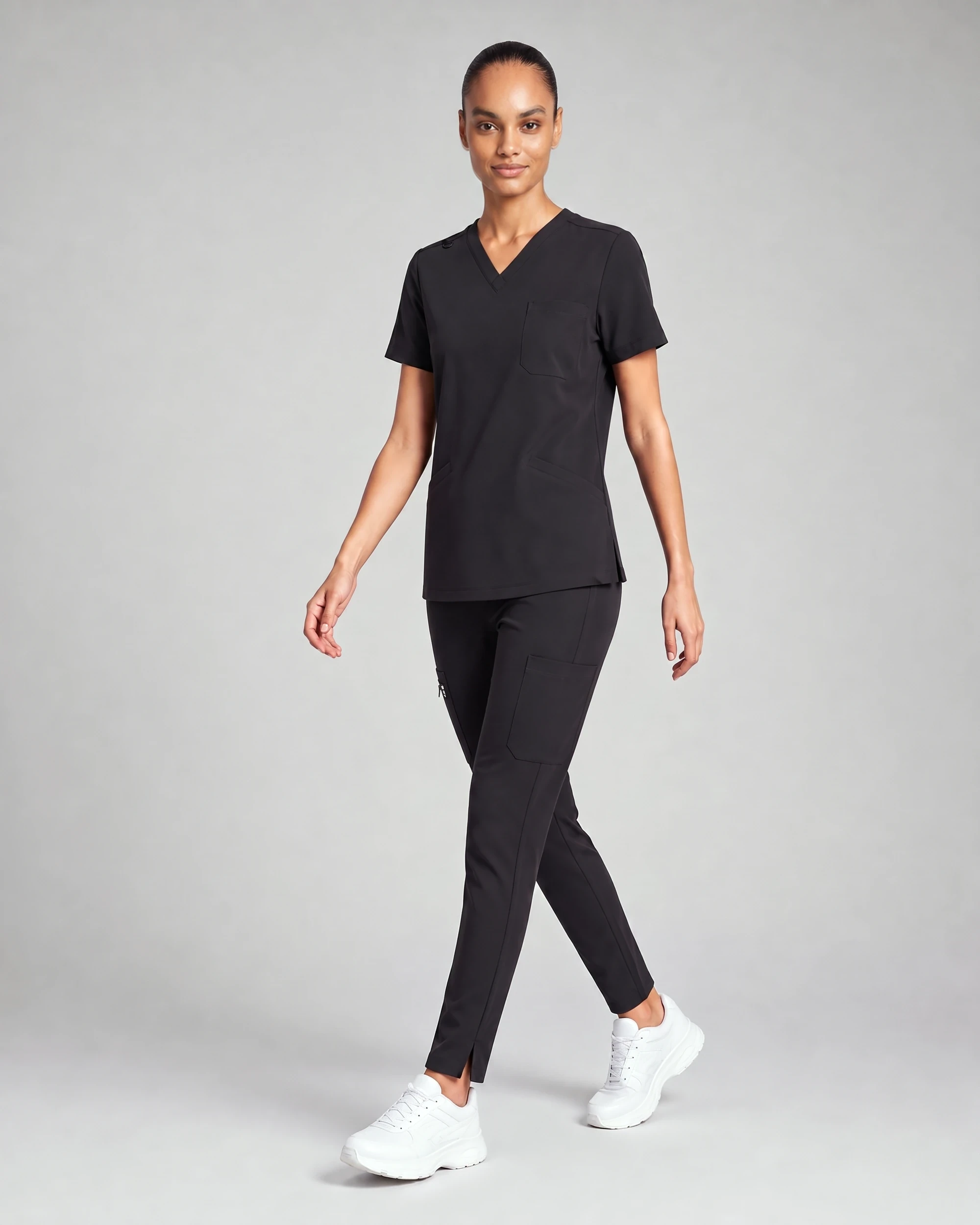
Core walking image: the pose helps show the straight-leg outline. It is not a thermal, air-flow, or sweat test.
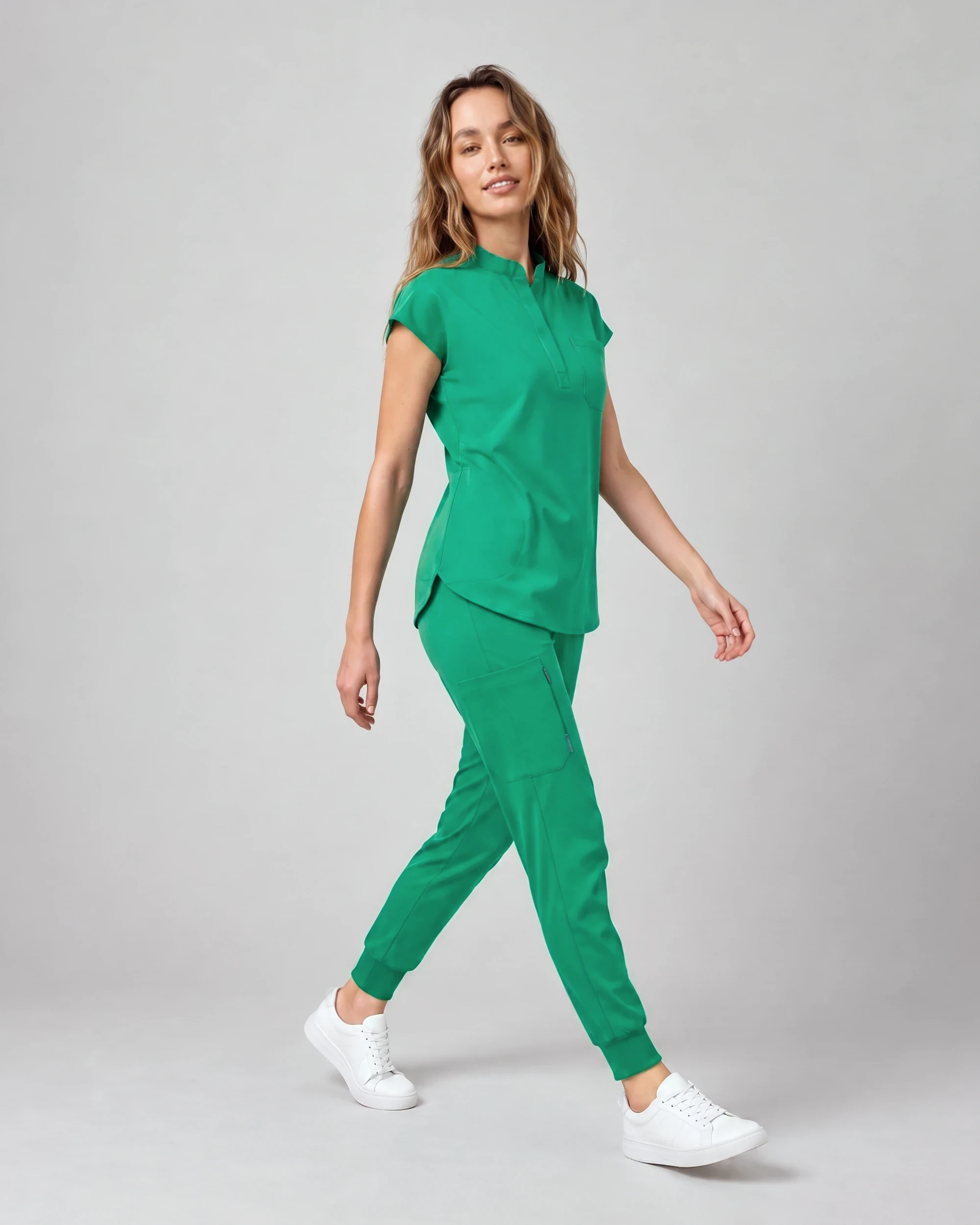
Motion walking image: the tapered leg and cuff are visible. Movement in a photo does not prove cooling or breathability.
If either construction fits your policy and measurements, compare Core and Motion with Fit & Size Help open beside them, then test one complete setup instead of assuming the fabric label decides the hot-shift result.
A useful hot-shift record
Keep the log short enough that you will actually use it:
| Record | Example level of detail |
|---|---|
| Conditions | Warm medication room; low air movement; protective layer required for part of shift |
| Workload | Mostly walking, with two periods of lifting and rapid room turnover |
| Outfit | Exact top, pant, sizes, underlayer, socks, and shoes |
| Fit pressure | Upper back during reach; waistband after sitting; cuff at ankle |
| Moisture location | Upper back, waistband, underlayer sleeves—not merely “sweaty” |
| Pocket load | Phone, badge, pens, notes, and any item removed during the test |
| Care | Label method, cycle, dry method, and whether the same setup was repeated |
The point is not to diagnose heat response from a diary. It is to stop changing several apparel variables at once and to recognize when the problem belongs to workplace heat controls rather than another shopping experiment.
Frequently asked questions
What makes a scrub breathable?
The word can refer to different properties. Look for a defined method and result for the exact product, then consider cut, layers, conditions, and your own wear experience. One adjective is not a measurement.
Does more rayon or spandex prove a cooler scrub?
No. Composition does not provide fabric weight, construction, finish, air permeability, water-vapor behavior, or fit. Use it as one label fact, not a temperature verdict.
Can a water-repellent fabric also move perspiration?
Those are different questions. A surface beading result does not by itself establish what happens to perspiration at the body side or how quickly moisture moves or dries.
Should I buy a larger size for better air flow?
Not from a general rule. Use the specific chart and cut, then test movement with tags attached. Extra size can create length, shifting, or coverage problems without fixing the original pressure point.
When does feeling hot become a safety issue?
Follow the workplace heat plan and current official guidance. Symptoms such as headache, nausea, dizziness, weakness, confusion, or loss of consciousness require the prescribed response; confusion or loss of consciousness is an emergency.