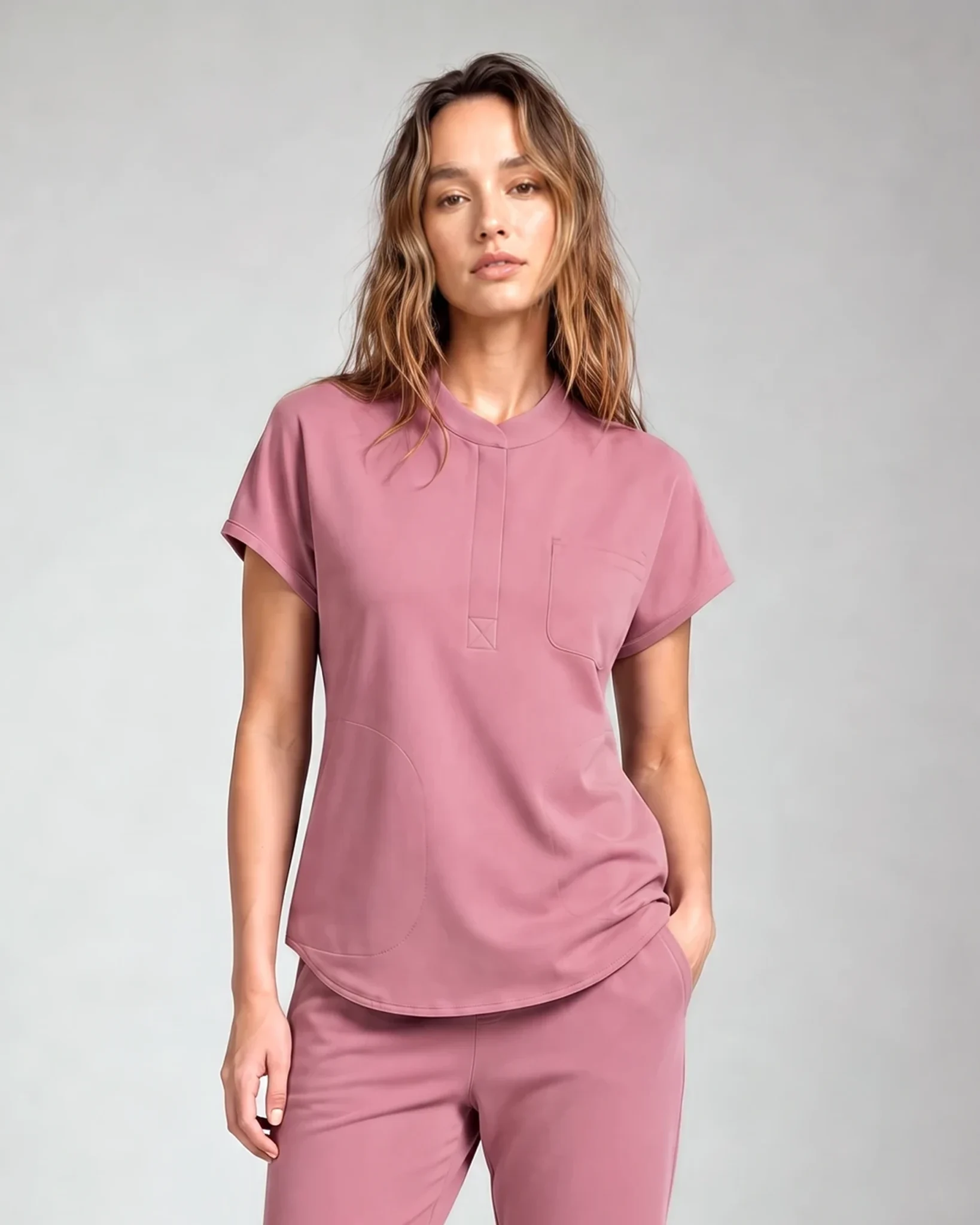

Bulk scrub ordering for clinics works best when one person owns the process and the team freezes style, color, sizes, and customization before production. The seven steps below turn a broad request for “matching scrubs” into an order that can be quoted, checked, delivered, and reordered.
Do not begin with a logo or a discount tier. Begin with the people who need garments, the workplace rules they must follow, and the date the uniforms are actually needed.
1. Assign one order owner and one decision deadline
Choose one person to collect answers, approve changes, and communicate with the vendor. Multiple decision-makers can still review the order, but one owner should maintain the final record.
Write down:
- practice name and locations;
- team size and roles;
- target wear date;
- workplace color or dress rules;
- whether garments will be blank or personalized;
- who can approve the final quote and proof.
A target wear date is not the same as a desired ship date. Leave time for size collection, sample review, artwork changes, production, transit, and internal distribution.
2. Build the roster before choosing quantities
Create one row per employee. At minimum, collect:
- employee identifier;
- role or department;
- top style and size;
- pant style and size;
- color;
- name or credential text, if used;
- approval or exception notes.
Let employees choose top and pant sizes independently when the selected set allows it. Do not guess sizes from appearance or copy a roster from an older brand without checking the current chart.
Flag anyone outside the available size or inseam range early. Solving an exception before the quote is easier than discovering it after the team has approved one uniform system.
3. Narrow the team to one or two garment systems
More choice can create more ordering errors. Start with one approved color family and one or two cuts that cover the team’s movement and presentation needs.
Compare:
- neckline and shoulder movement;
- straight-leg versus jogger pants;
- pocket placement for each role;
- available sizes and inseams;
- care instructions;
- current color availability;
- whether the style accepts the planned logo position.
If the practice uses role-based colors or cuts, document the rule in the roster. Avoid creating exceptions informally through email threads.
4. Use a sample stage to answer fit and color questions
A sample stage is useful when the order introduces a new fabric, cut, or color. It is a decision checkpoint, not a miniature team order.
The current LumiScrubs team process offers a two-set sample kit for prospective team orders of 10 or more sets, with availability and next steps confirmed by email and no payment collected on the request form.
Use the sample to check:
- fit in standing, seated, reaching, and squatting positions;
- top and pant size combinations;
- color under the practice’s lighting;
- pocket placement with permitted items;
- garment care according to the label.
Record the result. “The sample was fine” is not enough for a later reorder; save the style, size, and color that passed.
If several employees test the samples, use the same movement checklist and collect written results. A shared test prevents one person’s preference from becoming an undocumented rule for the entire team.
5. Freeze the roster before customization
Embroidery makes spelling, placement, and size decisions harder to reverse. Do not approve stitching while employee names, credentials, garment sizes, or colors are still changing.
For each personalized row, confirm:
- exact spelling and capitalization;
- credential order;
- logo version;
- placement and dimensions;
- thread color;
- garment style, color, and size.
The current LumiScrubs team process uses a digital logo proof, two included revision rounds, and a stitched-out sample photograph before bulk production. Tie written approval to the final proof version.
6. Compare an itemized quote, not one total
An order total is difficult to compare when it hides what is included. Ask the quote to separate:
- garments by style and quantity;
- team discount or tier rule;
- logo embroidery;
- names or second positions;
- artwork or revision charges;
- sample, rush, or special handling;
- shipping;
- taxes, duties, or destination charges;
- deposit and balance schedule;
- estimated production and transit windows.
Check the quote against the roster quantity. Also confirm which terms apply to blank items and which apply to personalized items.
Current LumiScrubs custom and embroidered orders are listed at about 2–3 weeks, with the schedule confirmed before work begins. A fixed launch date should be written into the order discussion rather than inferred from a general estimate.
What not to finalize too early
Some decisions should remain provisional until the samples and roster are complete. Avoid locking:
- final quantities before size exceptions are known;
- logo scale before seeing it on the selected top;
- thread color before comparing it with the garment;
- distribution dates before production and transit are confirmed;
- replacement rules before the team agreement is reviewed.
At the same time, do not leave every choice open. Freeze the practice-level rules—approved color direction, who can approve, whether customization is required, and the target date—so the sample stage answers a defined question.
The right sequence is progressive commitment: broad rules first, garment and fit after samples, personalized details after the roster, and production only after quote and proof approval.
7. Save the specification for new hires and reorders
A completed team order should produce a reusable record:
- final roster;
- garment styles and colors;
- approved logo file;
- thread colors;
- placement and dimensions;
- proof version;
- order date and destination;
- exception notes;
- reorder reference.
LumiScrubs currently assigns a reorder ID and keeps the approved roster, style, and color information on file for 18 months. Availability and shade should still be reconfirmed before adding a new piece to an older uniform rotation.
For a multi-location practice, record which rules belong to the whole organization and which vary by location. This prevents a new office from rebuilding the uniform system from memory.
What a clinic should have before requesting a quote
You do not need a perfect spreadsheet to start. You should have:
- a realistic team count;
- target date and destination;
- role mix;
- preferred color direction;
- likely style or movement needs;
- customization decision;
- known size exceptions;
- one order owner.
That is enough for a useful first conversation. The roster, samples, and proof then convert assumptions into confirmed order details.
LumiScrubs currently handles team orders from 10 sets. Review the current tiers, sample path, roster template, and inquiry form on the Team Orders page.
Frequently asked questions
How many sets qualify as a LumiScrubs team order?
The current team-order program starts at 10 sets. Confirm the current tier and garment availability when requesting a quote.
Should a clinic collect sizes before requesting a quote?
You can request an initial quote with an estimated size range, but the final roster should be confirmed before customization or production.
Can team members choose different top and pant sizes?
Use split sizing when the selected product supports separate top and pant choices. Record both sizes on every roster row rather than assuming a matched letter size.
When should embroidery be approved?
Approve embroidery only after garment style, color, employee sizes, names, credentials, placement, and thread color are frozen in writing.
What should be saved for future reorders?
Save the final roster, garment and color references, artwork, thread colors, placement, proof version, exception notes, and reorder identifier.