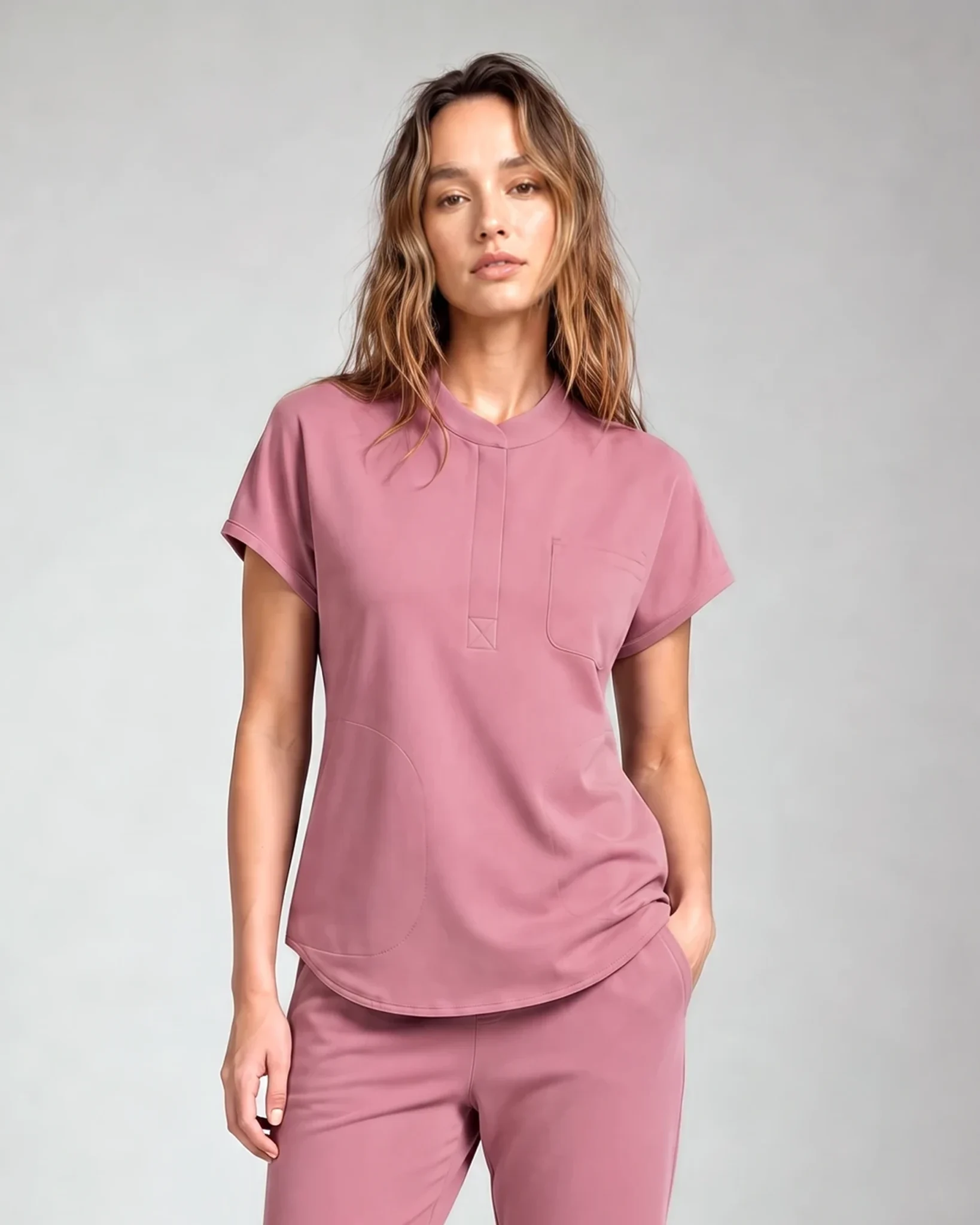

Group Scrub Orders: 9 Checks Before Your Clinic Buys
Group ordering for scrubs gets expensive when “medium, navy” is treated as a complete instruction. It is not. A usable team order identifies the exact top, pant, top size, pant size, length, color, quantity, branding, deadline, approval owner, and what happens when one person needs a change.
This guide was checked on August 26, 2026. LumiScrubs publishes it and sells the linked products. The current team route starts at 10 sets and invites teams to request current availability, mixed sizing, color confirmation, and optional embroidery proofing. Team orders are quoted separately from online retail checkout. This page explains what to put in that request; it does not promise a discount, sample, stock hold, production slot, proof timing, color continuity, or reorder term that is not in the final written quote.
Quick answer: what should a group scrub order include?
Send one controlled roster, not a collection of texts and screenshots. Give every line a person or role owner and make each selectable field explicit.
| Field | What to record | Why it prevents a failure |
|---|---|---|
| Wearer or role | Name or stable roster ID; department if useful | Keeps changes tied to one line rather than the whole order |
| Product | Exact product name and current URL | “Jogger” or “V-neck” can describe several products |
| Top | Top size and quantity | A set label does not resolve a top/pant split |
| Pant | Pant size, length option if offered, and quantity | Width and length are separate decisions |
| Color | Exact storefront color name for that product | “Blue” is not a catalog identifier |
| Branding | None, name, title, logo, placement, thread color | Prevents a verbal logo request from reaching production |
| Deadline | Required arrival date plus a usable buffer | Makes approval, production, and transit constraints visible |
| Exception | Fit concern, unavailable size, layer, accommodation, new-hire status | Stops an unresolved line from being silently forced into the standard rule |
Freeze a version number and date on the roster. Every later change should name the row, old value, new value, approver, and time. That small discipline is more valuable than a beautifully formatted sheet no one owns.
Nine checks before approving a team uniform order
1. Translate the actual dress code
Write the permitted color, garment type, logo or name requirement, base-layer rule, footwear rule, and any department distinction. Separate what the facility requires from what the team merely prefers.
Do not treat another clinic’s color map as an industry standard. If a role must be readable, confirm whether color alone is enough or whether the approved name/title/logo carries that job.
2. Give one person change authority
Name the buyer, workplace or policy approver, artwork approver, and receiving contact. They can be the same person, but the responsibilities cannot be blank.
Also set a roster cutoff. Without one, late size edits, new hires, and color changes turn one order into several undocumented versions.
3. Use exact product identities
Record the product name and URL on every line. Keep Core separate from Motion and straight-leg separate from jogger. If a product is replaced, treat it as a new decision rather than assuming a same-color substitute is identical.
If the team’s roles need different silhouettes rather than one uniform formula, review the role-based scrub paths before locking the roster.
The current Lumi product pages expose separate top and pant size selectors. Use both. The scrub size chart is a starting point, then each wearer should run a clean fit and movement trial on the exact product.
4. Make the sample question specific
Ask whether a physical sample is available, which product/color/size it represents, who pays inbound and return freight, how long it can be held, and whether the sample comes from the same production state as the order. Do not assume the sample is free or automatically included.
A photo can show neckline, pocket position, leg shape, or visible stitching. It cannot prove fit across the roster, loaded-pocket behavior, opacity, thermal performance, wash outcome, color continuity, or durability.
5. Approve branding as its own artifact
For names, titles, or logos, require written text, artwork file, placement, maximum dimensions, thread color, spelling, and an approval step before production. The embroidery guide explains the proof questions and the career-mobility cost of permanent employer branding.
Put every personalized line on a final-sale review list. A typo caught after stitching is not the same problem as a typo caught on a proof.
6. Compare the complete order cost
Ask for garment quantity, unit price by product, discount rule, branding charge, setup charge, sample charge, shipping, duties if applicable, tax, payment timing, and change fees. Keep temporary retail promotions separate from a written group quote.
The four current Core and Motion set pages show a $64.90 retail set price. That is a current individual-order reference, not a promised team price.
7. Build the schedule backward
Start with the required arrival date. Work backward through transit, production, artwork approval, roster approval, sample decision, quote approval, payment, and a buffer for unavailable variants.
“Two weeks” is incomplete unless it says whether that means approval-to-dispatch, dispatch-to-arrival, or inquiry-to-arrival. Put those milestones in the written quote.
8. Define replenishment before the first order
Ask how a new hire, damaged garment, changed size, or discontinued variant will be handled. Record the exact style, color name, sizes, approved artwork, and order date in your own system even if the seller also keeps a record.
Do not accept “same navy next time” as a continuity plan. Ask what can and cannot be held constant, how substitution approval works, and what happens when the original item is unavailable.
9. Put returns, exchanges, and defects in writing
LumiScrubs’ current Shipping & Returns states that custom team-order returns and exchanges follow the policy in the team-order agreement, not the consumer page. Require that agreement before production.
Separate a roster mistake, personal size change, production defect, wrong item, transit loss, and late delivery. Each can have a different owner, deadline, freight rule, and remedy. Do not let a general consumer-return badge answer a custom-order question it was not written to answer.
Four current product paths to put on the roster
The table records current retail configurations. It does not promise bulk stock, a team discount, color matching across products or batches, or suitability for a facility.
| Product | Current retail configuration | Roster fields that still need confirmation |
|---|---|---|
| Women’s Core Scrub Set | $64.90 top-and-pant set; V-neck top; straight-leg pant; separate top/pant size selectors | Exact color, two sizes, quantity, current availability, branding, deadline |
| Women’s Motion Scrub Set | $64.90 top-and-pant set; coordinated top; tapered cuffed jogger; separate top/pant size selectors | Exact color, two sizes, quantity, current availability, branding, deadline |
| Men’s Core Scrub Set | $64.90 top-and-pant set; V-neck top; straight-leg pant; separate top/pant size selectors | Exact color, two sizes, quantity, current availability, branding, deadline |
| Men’s Motion Scrub Set | $64.90 top-and-pant set; V-neck top; tapered cuffed jogger; separate top/pant size selectors | Exact color, two sizes, quantity, current availability, branding, deadline |
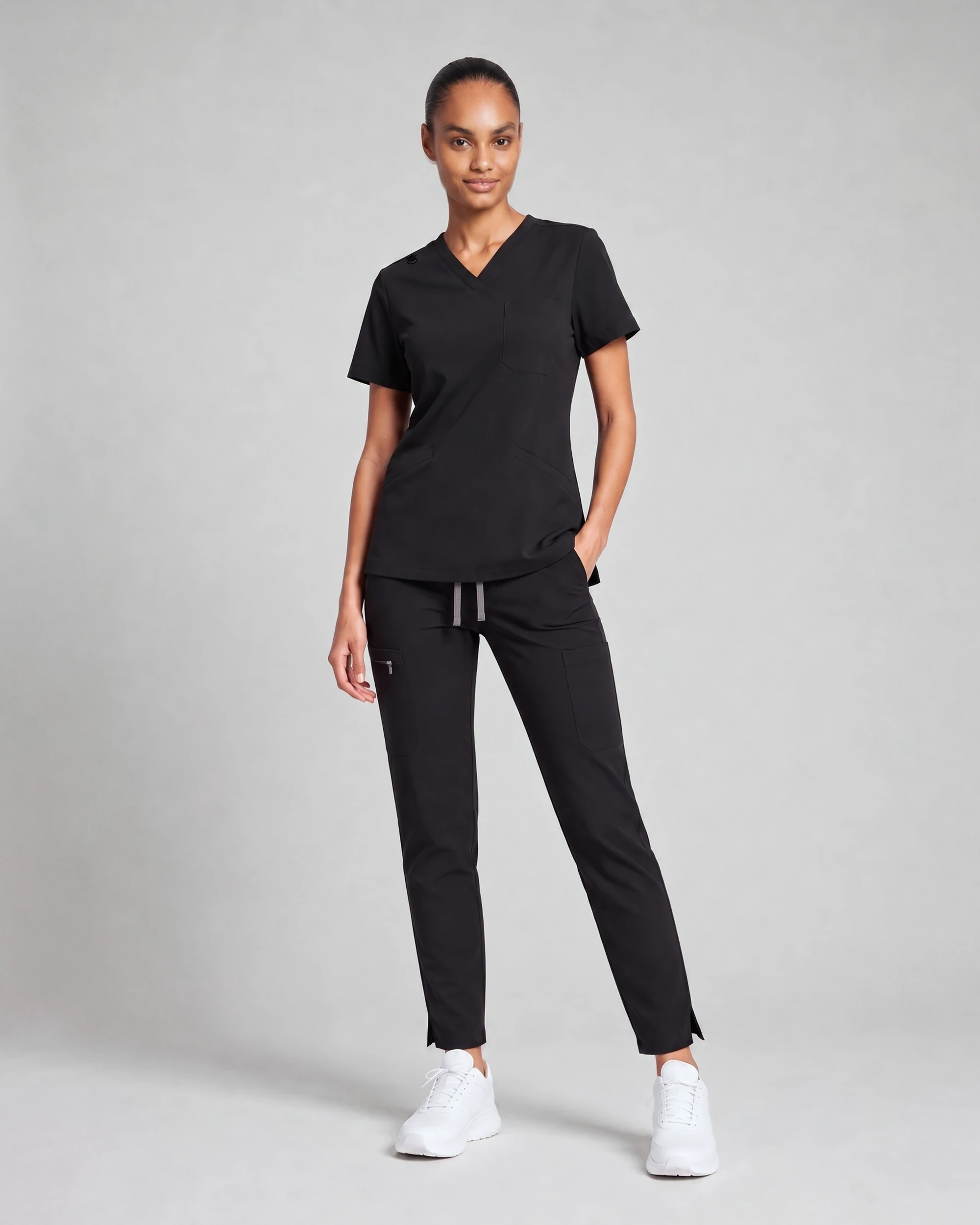
Women’s Core image: the front view shows the V-neck, visible top pockets, straight-leg outline, and ankle slits. It does not prove team fit, color continuity, movement, capacity, opacity, comfort, or durability.
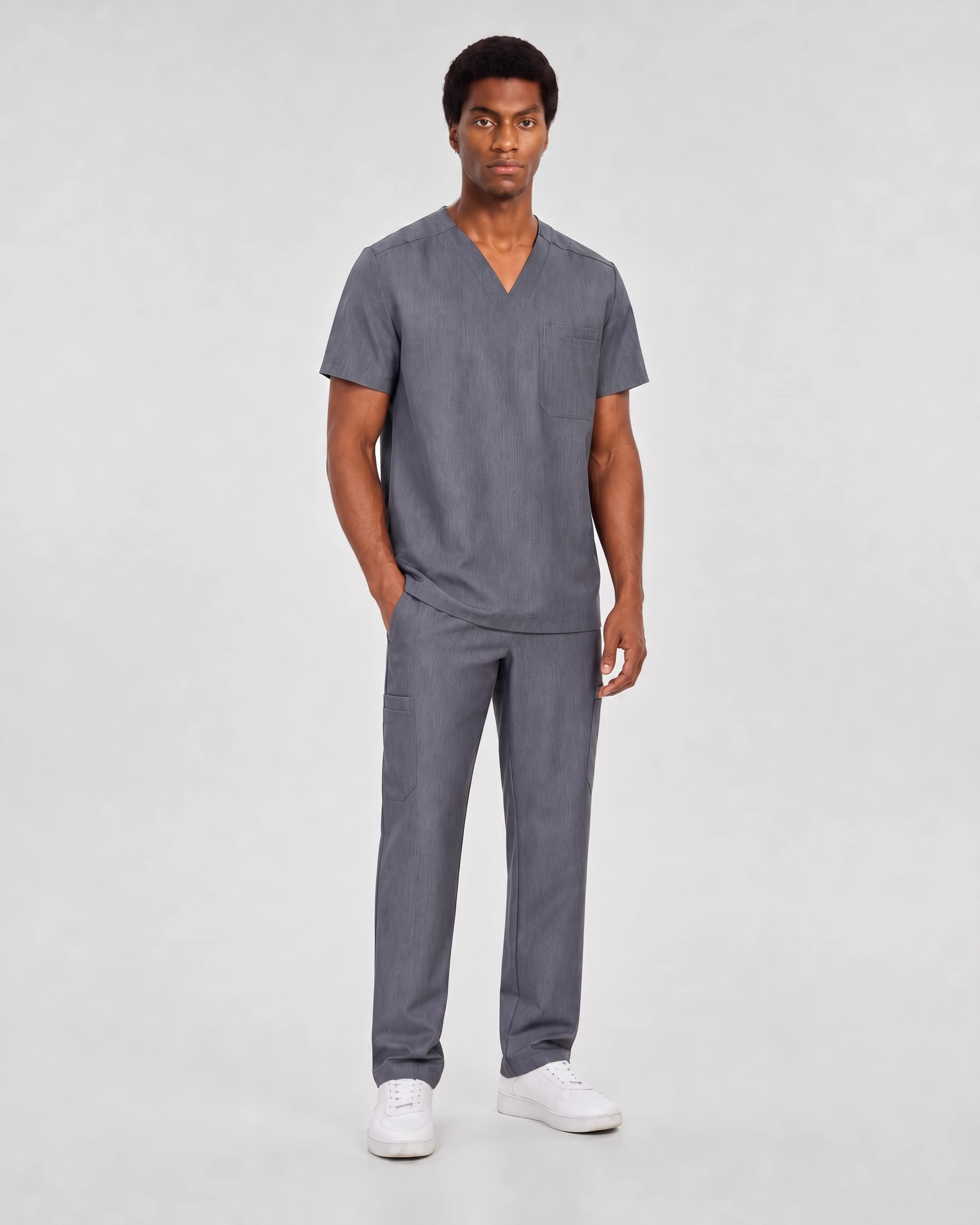
Men’s Core image: the front view shows the V-neck, short sleeves, visible top and pant pockets, and straight-leg outline. It does not prove team fit, color continuity, movement, capacity, opacity, comfort, or durability.
What the written quote should settle
Before payment, one document should identify the quote version, expiration date, exact product rows, current availability, unit and total prices, branding scope, proof method, approval owner, payment terms, production start, estimated dispatch, delivery method, shipping/duties, substitution process, change cutoff, return/exchange rules, defect remedy, and replenishment route.
The current team form asks for name, work email, clinic or practice name, team-size band, role mix, and embroidery status. Attach the controlled roster and ask for every unresolved term above to be answered in writing.
Once the roster and decision list are ready, request a written team quote.
Frequently asked questions
What is the minimum information needed for a group scrub quote?
Provide the exact products, quantities, top and pant sizes, colors, length options, branding scope, delivery location, and required date. Add exceptions rather than forcing every wearer into one rule.
Should every staff member wear the same scrub size?
No. Uniformity comes from approved product and color rules, not identical size labels. Record top and pant sizes separately and test the exact clean garments.
Is a digital logo proof enough?
It can confirm spelling, layout, and approximate placement, but not every finished result. Ask what proof format is offered, what it represents, who approves it, and what happens after approval.
Can consumer return terms be used for a custom team order?
Do not assume so. Require the team-order agreement to state personalized, non-personalized, size-change, defect, wrong-item, freight, and deadline rules before production.
What should a clinic keep for future reorders?
Keep the final roster, exact product URLs or style identifiers, color names, sizes, length choices, approved artwork, placement, quote, approval record, order date, and received-item notes. Reconfirm current availability each time.