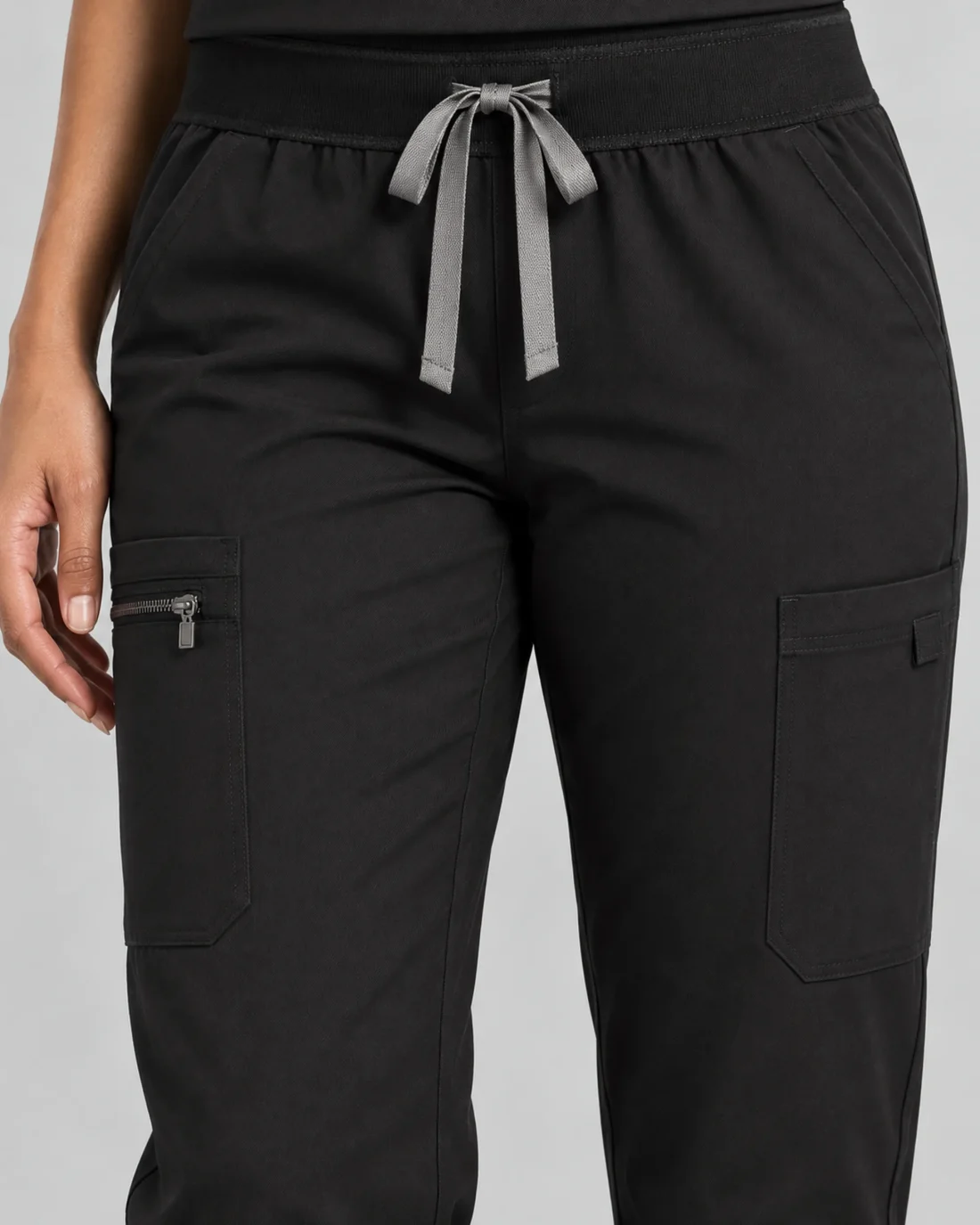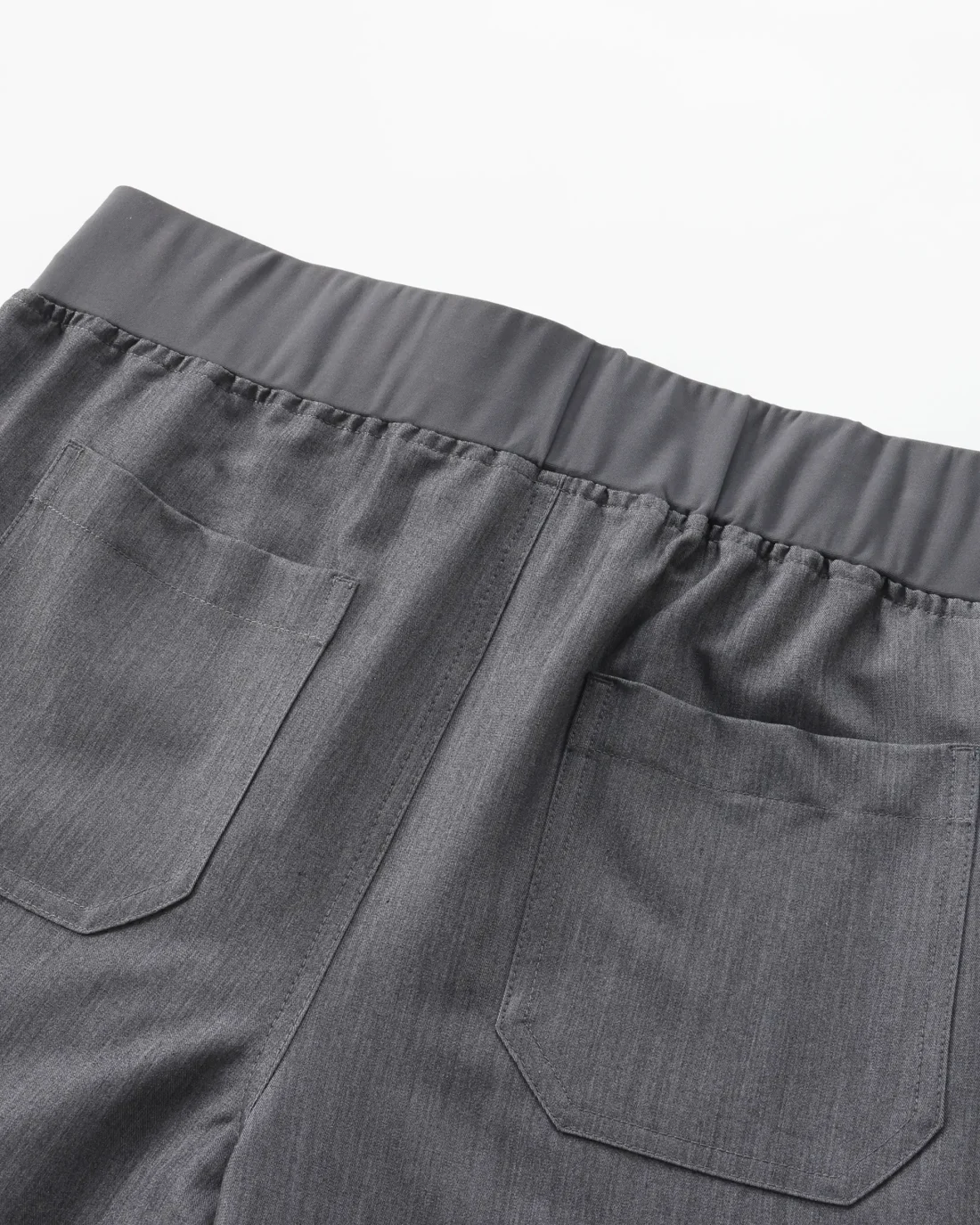

How long do scrubs last? There is no honest universal answer in years or wash cycles. A set stays in your work rotation until it no longer meets the required coverage, fit, closure, appearance, or function for your job. The first failure may be a thinning inner thigh, a pocket corner that will not hold a repair, a waistband that shifts under load, or a color that no longer meets a team standard.
Use the seven checks below instead of borrowing a lifespan from another fabric, wearer, laundry system, or work setting.
Start a wear record before you need one
Write down the first wear date, each wash, the drying method, and the first change you notice. Also record why the item leaves the work rotation. “Stopped wearing it” is not enough; “waist slid when the phone was in the cargo pocket” gives you a criterion for the replacement.
The record does not need to be perfect. A note in your phone is more useful than a table that assumes every worker wears three shifts, owns four sets, and washes the same way.
Rotation size still matters, but not as a promise. More sets can spread use across more garments; a color change, fit change, new policy, or discontinued style can still end the useful period before the fabric wears through. Count actual wears rather than assigning an imaginary lifetime to the price tag.
Map the high-wear areas
Inspect a clean, dry garment under bright light. Turn it inside out and compare both sides. The useful map is local:
- inner thighs, crotch, and seat;
- pocket corners, openings, and zipper ends;
- waistband casing, elastic, and drawstring exit points;
- knees, cuffs, and hems;
- neckline, armholes, shoulder seams, and the area pulled during dressing;
- badge, bag, or equipment contact points permitted by your workplace;
- any spot you repeatedly tug, roll, or reposition.
Different failures need different responses. A loose thread, a split seam, a thinning panel, and a stretched waistband are not one generic “durability” problem.
The 7 signs your scrubs need action
1. The garment no longer passes the coverage check
Recheck opacity and coverage in the movements you use at work. Stand, sit, bend, squat, and reach under bright light. Fabric that looks fine on a hanger can become revealing when stretched across the seat, thigh, chest, or upper back.
The scrub opacity test gives a repeatable light-and-movement sequence. If the garment no longer gives the coverage your workplace requires, remove it from the work rotation even if the rest looks intact.
2. A waistband or drawstring will not hold position
Test the pants empty, then with a safe version of the permitted items you normally carry. Sit, stand, step up, and bend without retightening the waist. Repeated sliding, rolling, or retying is a functional failure, not a styling annoyance.
The cause may be elastic, drawstring, fit, or pocket load. The drawstring guide and three-shift pocket test help separate those problems. Do not call a waistband “durable” until the exact construction has been tested under a defined load and movement cycle.
3. The inner thigh, crotch, or seat is thinning
Look for a lighter patch, change in texture, visible yarn movement, or a small hole where friction repeats. Hold the clean fabric up to light and compare the area with a lower-friction section of the same garment.
A tailor may be able to reinforce a small, localized problem when the surrounding fabric remains sound. If the area around the repair is also thin or the damage keeps spreading, another patch may move the failure instead of restoring the garment.
4. A pocket corner, opening, or zipper cannot carry its job
Inspect pocket corners from the inside. Watch for stitches pulling apart, fabric distortion, a zipper that separates, or an opening that no longer secures the permitted item. A large pocket is not useful when the attachment point is failing.
If one pocket repeatedly takes too much weight, change what you carry and where it sits before blaming the entire garment. The pocket-rip guide explains how load, reach angle, and attachment points create different failure patterns.
5. A seam or closure keeps reopening
A missing stitch can be local. A seam that reopens beside a repair, a snap that no longer holds, or several closures failing in different places may show that the surrounding material or construction can no longer do the job.
Check the repair while moving, not only while the garment lies flat. Retire it from work if the closure protects coverage or fit and you cannot trust it to stay closed for the required task.
6. The fit has changed enough to require constant adjustment
Bagged knees, a stretched seat, a twisting sleeve, or a neckline that no longer settles may change coverage and movement even without a hole. Compare the garment with a trusted fit or its original measurements if you recorded them.
Do not size the replacement from the worn item alone. Re-measure your body, review the current garment chart, and perform a fresh tags-on movement check using the fit guide.
7. Color or surface wear breaks the uniform standard
Fading, pilling, shine, abrasion, or a permanent visible mark may be cosmetic in one setting and disqualifying in another. Compare the garment with the written rule, a current approved sample, or the other pieces in the team rotation.
Do not assume a named color must remain identical across products, production lots, or different wear histories. If a matching set is required, evaluate the top and pant together under the same light. Retire only from the relevant work use; an item that no longer meets the local standard may still have a nonwork second life.
Repair, retire, or repurpose?
Use three questions:
- Is the failure local? A tailor can assess a small seam or isolated pocket problem more confidently than a broad thinned area.
- Can the repair restore the required function? Appearance alone is not enough when the issue is coverage, closure, or a load-bearing pocket.
- Is the surrounding material still sound? A strong patch beside weakened fabric can simply move the next tear.
Do not perform a first repair during the workday and then trust it untested. Try the repaired garment clean at home with the same movement and safe load checks. If it fails again or a second area starts to go, remove it from work.
Repurposing is different from keeping a questionable garment in a work rotation. Depending on workplace policy and the garment’s condition, it may become a home project outfit, cleaning layer, or textile-recycling item instead of going straight to the trash.
Laundry advice must follow the garment
There is no universal wash routine for every scrub fabric, finish, workplace, or soil condition. Follow the garment label and any employer-controlled laundering rule. Do not import a cold-water, low-heat, or hang-dry routine from one product into a garment whose label says something else.
Keep the care record with the wear record. If two garments with similar fiber percentages behave differently, the explanation may sit in construction, finish, fit, use, or care—not in the percentages alone.
What current LumiScrubs evidence can say about lifespan
The current LumiScrubs Core set pages list a supplier-declared production specification of 72% polyester, 21% rayon, and 7% spandex. Verified records for the submitted black fabric sample cover resistance to surface wetting, soil release, and color fastness for water, perspiration, and rubbing.
Those facts do not establish a garment lifespan, a number of washes, reinforced high-wear zones, or identical durability across colors and lots. LumiScrubs should not turn them into a promise that a Core set will last longer than another product.
Use the current product page to inspect construction photos, measurements, care information, and availability. Use your own record to learn how the garment performs in your rotation.
Frequently asked questions
How many years should scrubs last?
No fixed number applies to every garment. Count actual wears and inspect coverage, waistband function, high-friction areas, pockets, closures, fit, and uniform appearance. The first nonrecoverable failure ends the work-use period.
How many scrub sets do I need?
Start with shifts between laundry opportunities, then add enough buffer for drying time, spills, schedule changes, and a garment being out for repair. The right number comes from your week; it is not automatically four or six.
Can pilling be repaired?
Surface pills may be removable cosmetically, but removal does not restore lost fiber or prove the area remains strong. Inspect for thinning and coverage before returning the garment to work.
Can inner-thigh holes in scrub pants be repaired?
A tailor can assess a small, localized hole and the strength of the surrounding fabric. Broad thinning, repeated failure, or damage that affects coverage is a reason to retire the pants from work.
Should scrubs be washed after every shift?
Follow your employer’s laundering policy, the garment care label, and the exposure rules for your work. This article does not replace infection-control or employer instructions.
If a replacement is actually due
Replace the failed criterion, not just the label. Compare waistband construction, pocket placement, coverage, measurements, and current return terms before buying several. The cost-per-shift guide explains how to calculate from actual wears without inventing a lifespan.