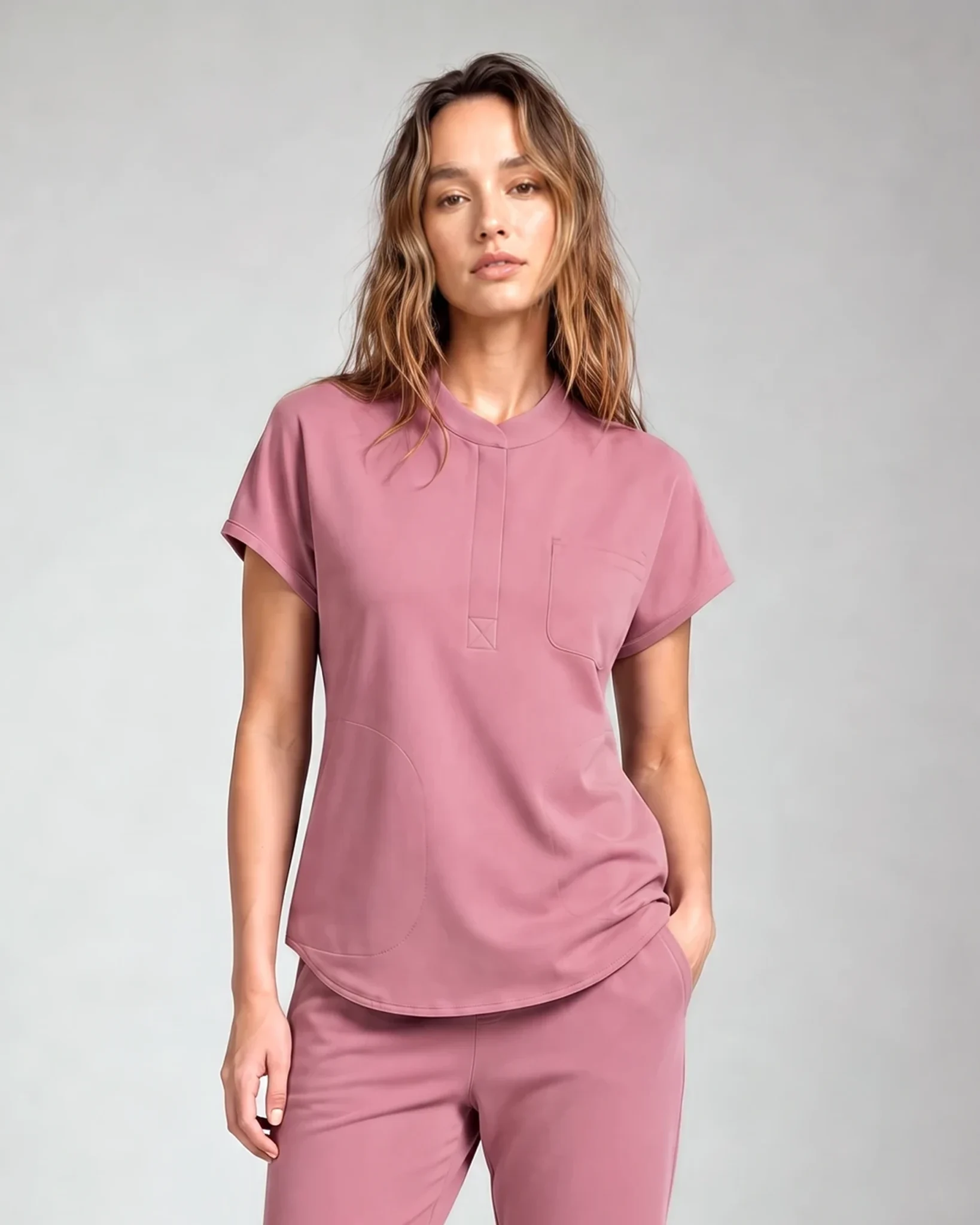

Scrubs for vet techs should move through squatting, kneeling, lifting, and restraint work without binding. They also need secure pockets, a hem that suits floor-level work, and a color and fabric surface you can maintain around visible fur and frequent laundering.
No garment is claw-proof, fluid-proof, or right for every animal hospital. Use these seven checks to match the uniform to your tasks and the hospital’s safety rules.
1. Test the movements you actually perform
Standing in front of a mirror is not enough. Try the scrubs with the shoes and base layer you would normally wear, then:
- squat and kneel;
- sit on a low stool;
- reach forward and across the body;
- lift your arms while keeping the back covered;
- turn from the floor toward a counter;
- check whether the waistband rolls or slides.
The top should not pull sharply across the shoulder blades. The pant should leave room through the seat and thigh without falling away at the waist.
LumiScrubs describes its Motion cut as closer through the seat and thigh and its Classic cut as straighter through the leg. Compare your measurements with the fit and size guide and size for movement rather than for a tightly styled product photo.
2. Put pocket security ahead of pocket count
During floor-level work, an open pocket can change angle. A phone, keys, or small item that feels secure while standing may slide toward the opening when you kneel or sit.
Check:
- pocket depth with your own phone;
- whether a zipper is reachable with one hand;
- whether loaded pockets press into the hip while kneeling;
- whether the pocket mouth spreads when the pant is under tension;
- which items should stay on a workstation instead of your body.
The current women’s and men’s Lumi Core straight-leg pants list nine pockets, including a zip cargo pocket. That layout provides options, but it does not make every pocket suitable for heavy or sharp tools.
3. Choose jogger cuffs or straight hems deliberately
A jogger cuff keeps the hem close to the ankle and away from wet floors, kennel areas, and chair casters. A straight-leg opening creates a more traditional line and leaves the ankle open.
The cuff does not automatically make a pant safer or cooler. Check how it works with your footwear, whether it rides up while kneeling, and whether your hospital permits the silhouette.
Compare the Women’s Motion Jogger Pant or Men’s Motion Jogger Pant with the straight-leg pants in the Lumi Core sets.
4. Expect fur to behave differently on different colors
Dark colors can make pale fur, powder, and lint easier to see. Light colors can make dark hair and marks more visible. There is no color that hides every coat type in a mixed veterinary caseload.
Choose around the hospital dress code first. Then consider the animals you handle most often and how easily the garment can be cleaned during or after a shift. A lint roller at work may be more reliable than a broad “pet-hair resistant” marketing claim.
If a hospital allows prints, the CarePrint Soft Top is a current animal-print option with two front drop-in pockets. Confirm that prints fit the hospital’s patient-facing and role-identification rules before ordering.
5. Read water-repellent claims with the correct limit
The current LumiScrubs woven performance line lists a supplier-specified fluorine-free water-repellent finish and a Grade 3 spray-test result under GB/T 4745-2012. The finish is intended to help with everyday external splashes.
It is not fluid-proof PPE, chemical protection, bite protection, or claw protection. Follow the hospital’s protective-equipment and exposure procedures. The published fabric evidence should be treated as workwear information, not a substitute for required safety wear.
Current care instructions call for washing with like colors, low tumble drying, no bleach, and no fabric softener. Follow the garment label and confirm whether those instructions fit your hospital’s laundering process.
6. Plan layers around cold rooms and physical work
An underscrub can add warmth in a cold treatment area, but it also adds another layer during active work. Use a close-fitting layer that does not bunch under the scrub top and does not restrict shoulder movement.
The current women’s and men’s Quick-Dry Long-Sleeve Underscrubs use a lighter stretch knit than the main woven scrub line. Product and size availability differ between the women’s and men’s pages, so check the live selector rather than an older guide.
Follow the hospital’s sleeve and hygiene requirements. A long sleeve that is allowed in one area may not be appropriate in another.
7. Build a rotation from one tested set
Do not buy a full workweek based only on a model photo. Try one blank set indoors with tags attached. Test the movement, pocket load, cuff, coverage, and base layer. If you keep it, wash it according to the label and decide whether the cut belongs in your rotation.
The current women’s and men’s Lumi Core and Motion sets are listed at $64.90. Set pages allow separate top and pant size selection. Standard U.S. shipping is currently free over $50, and blank, unworn, unwashed, non-personalized items have a 30-day return window under the shipping and returns policy.
For a hospital choosing one color or adding a logo, team orders start at 10 sets. Confirm employee sizing and color before embroidery makes the garments final sale.
Which LumiScrubs cut should a vet tech compare?
- Motion: closer through the seat and thigh, with a jogger silhouette for buyers who want a contained cuff.
- Core: a straighter pant line with a detailed nine-pocket layout.
- CarePrint: an animal-print top for workplaces that permit a more approachable visual style.
These are purchase paths, not universal rankings. Your hospital policy, body measurements, tasks, and footwear should decide the final choice. The vet scrub collection groups current options in one place.
Frequently asked questions
What color scrubs are best for vet techs?
Follow the hospital’s color policy. Dark colors can show pale fur; lighter colors can show darker hair and marks. Choose a color you can reorder and maintain.
Are jogger scrubs good for veterinary work?
They can keep hems close to the ankle during floor-level work. Test the cuff while kneeling and confirm that the hospital allows the style.
Are water-repellent scrubs claw-proof?
No. Water repellency addresses how the fabric face handles some external splashes. It does not protect against claws, bites, sharps, or chemical exposure.
How many scrub sets does a vet tech need?
Base the number on shifts between laundry days, workplace change requirements, drying time, and whether you keep a spare set. There is no universal number for every schedule.
Should vet techs wear printed scrubs?
Only when the hospital permits them. Prints may suit some patient-facing environments, while other hospitals use solid colors for role identification.