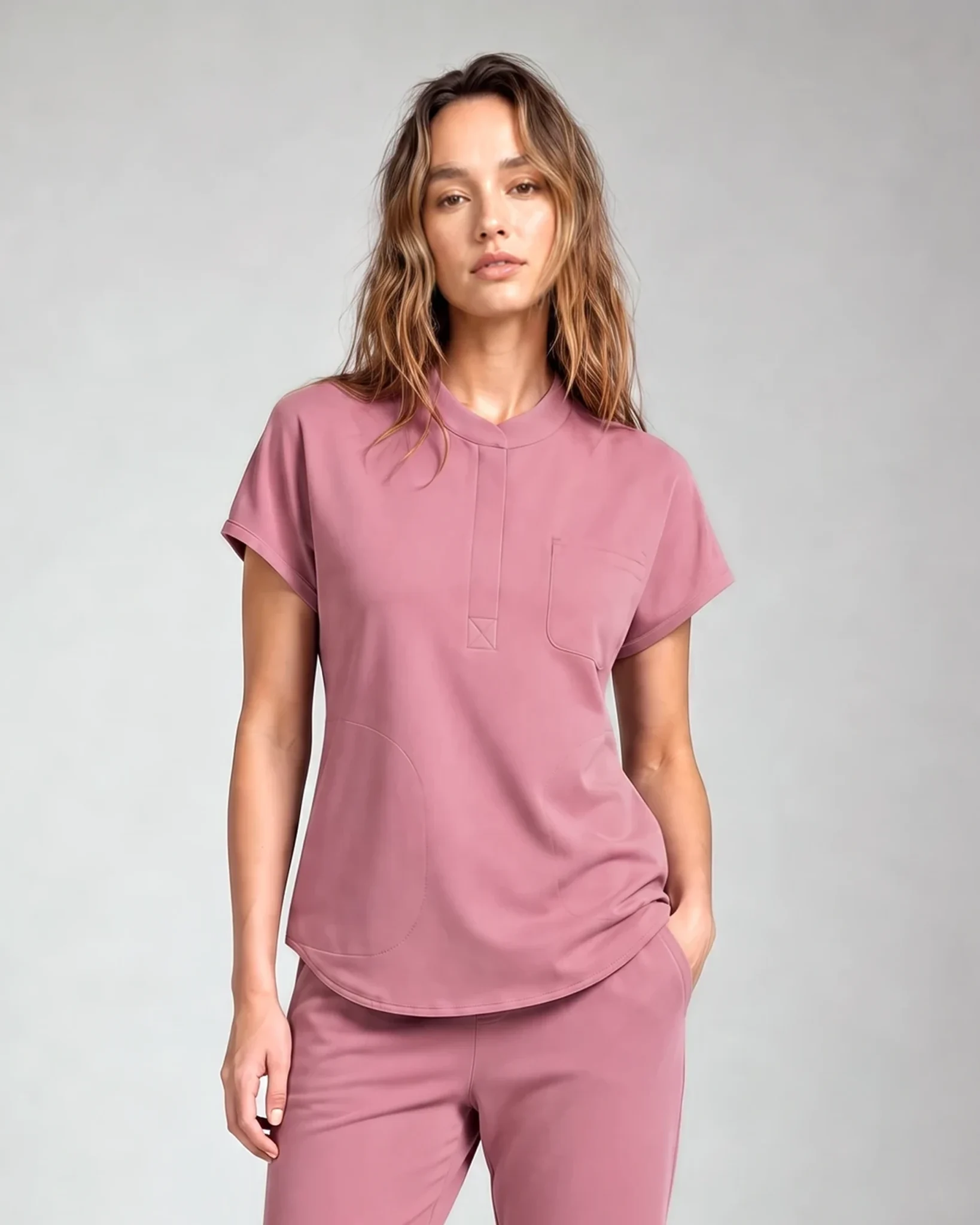

A scrub pants drawstring should fine-tune a waistband that already fits. It should not have to rescue pants that are wrong at the waist, hip, or rise. If your pants slide, test them first with empty pockets and then with a safe stand-in load.
Check the whole system: base fit, elastic construction, cord exits, ends, adjustment, knot behavior, and pocket load. Photos cover visible details; a repeatable try-on shows how a pair behaves on your body.
Evidence boundary: LumiScrubs publishes this guide and sells the pants linked below. We have not published a controlled test of drawstring strength, knot retention, waistband slip, loaded-pocket stability, or repeated-cycle life for these products. Product pages and images were checked on August 27, 2026; images support visible construction only.
A drawstring is one part of the waistband—not the whole answer
Pants can slide because the waist is too large, the rise is wrong, the hip fit pulls downward, the elastic has changed, or the pocket load is unbalanced. A cord may reduce movement or hide the wrong size.
A 2026 survey of 267 operating-theatre staff compared two hospital-provided designs. Respondents clearly preferred the design with an elastic waistband, central drawstring, and trouser-style pockets over a side-tie design with a side opening and thigh pockets. Their written reasons included fit, practicality, dignity, privacy, and safety.
That was one Australian institution and two supplied uniforms. It does not prove that every elastic waistband is better, every central cord stays tied, or any LumiScrubs pant performs like the preferred design. It does support judging waistband, closure, pockets, and coverage together.
1. Check the base fit before tying the cord
If the seller’s current rules allow it, try on the tagged pants indoors. Leave the drawstring loose and check four points:
- waistband position;
- downward pull from the hip or seat;
- standing and seated rise;
- whether the cord must close a large gap.
Sit, stand, and bend once without tightening anything. If the empty pants move sharply, record a base-fit problem—not a bad drawstring.
Compare finished garment measurements with pants you already wear successfully. The LumiScrubs Fit & Size guide owns the current measurement tables.
2. Identify the waistband system you are actually buying
“Drawstring waist” covers several constructions. The cord may work with elastic, act as the main adjustment, sit at the center, or close at the side. It may be exposed or partly hidden.
Read the description and inspect every gallery angle:
- Is elastic listed, visible, or neither?
- Does the cord emerge at the center or side?
- Is there an opening or overlapping panel that the tie also has to close?
- Is the drawstring internal, external, or convertible?
Elastic may reduce how much work the cord does, but fit still depends on garment, size, body, and load. A central cord may be easier for one wearer without being universally better.
3. Inspect the cord exits, ends, and channel—without guessing performance
Photos answer a narrow set of questions. Zoom in for:
- where the cord enters the waistband;
- whether both exits appear even and unobstructed;
- how the visible ends are finished;
- whether the cord looks twisted before use;
- whether stitching near the channel appears continuous in the photo.
Metal hardware is not automatically superior to a stitched opening, and a flat cord is not automatically more secure than a round one. Visible finishes do not establish strength, abrasion, slippage, or cycle life.
Use the image to plan an arrival inspection, not to predict a shift result.
4. Test adjustment and knot behavior indoors
Start loose. Tighten only until the waistband feels settled, then use your normal knot. Record the method so another pair can be tested the same way.
Run one short sequence:
- Sit.
- Stand without touching the waistband.
- Walk and turn.
- Bend to knee height.
- Climb one safe step.
Note observable changes: one tail lengthened, the waistband rotated, the cord retreated, or the tie created a seated pressure point. “Stayed perfect” and “felt weird” are too vague for comparison.
This fit screen cannot establish months of tying, washing, and pocket loading.
5. Repeat the screen with a safe pocket load
Use blunt, safe stand-ins close to the size and approximate weight of permitted everyday items. Keep the tags on, stay indoors, and check the seller’s rules first.
Add one stand-in at a time and repeat the same movement sequence. Watch the waistband, side seams, pocket openings, and knot. One side dropping under a phone-sized object differs from the whole waistband sliding while empty.
The guide to scrubs with pockets maps permitted items to pocket locations and closures. Here, ask whether load changes the waistband and drawstring.
Do not turn a home try-on into a weight-limit claim. A proper Loaded Shift Test needs a fixed load, repeated movements, multiple samples, and measurements for waistband drop, knot retention, pocket deformation, seam opening, and closure cycles. Until then, report only what happened to your pair under your stated test.
6. Diagnose the symptom before choosing the fix
Use the first row that matches what you observed:
| What you observe | Most useful next check | What not to assume |
|---|---|---|
| Pants slide while empty and untied | Recheck size, waist, hip, rise, and waistband placement | The cord alone will correct the fit |
| Pants stay put empty but move when pockets are loaded | Reduce or redistribute the safe stand-ins; inspect pocket position and side-seam movement | A tighter knot solves the load interaction |
| Knot loosens but the waistband position otherwise works | Retie consistently and compare the visible tail lengths after the same sequence | The cord material is defective from one attempt |
| One cord end retreats toward the waistband | Inspect the visible end finish and exit; stop before the end disappears | Pulling harder is harmless |
| Cord frays, cuts, or breaks | Stop relying on it and inspect the whole waist channel before wearing again | Only the cord is affected |
| Waistband fit changed after extended wear | Compare current measurements with your original baseline | A single component is the confirmed cause |
Separate sizing, load, adjustment, and visible-damage problems before deciding whether to exchange, repair, or retire the pants.
7. Check policy and care instructions before altering anything
Before cutting a cord, opening a seam, washing, or arranging a repair, read the seller’s current terms. Alteration and laundering can affect return eligibility. LumiScrubs keeps its current rules on the Shipping & Returns page.
Follow the care label. Empty every pocket and keep loose ends from tangling as the label permits. One wash or drying rule does not fit every garment.
If an older pair has a damaged cord plus stretched elastic, torn exits, opening seams, or repeated fit changes, evaluate the full garment. The guide to how long scrubs last covers the broader keep-repair-replace decision.
Compare current LumiScrubs waistband paths
These are catalog facts, not performance results. Prices, sizes, and availability can change; the snapshot below was checked on August 27, 2026.
| Current pant | Published waistband and shape facts | Price and size snapshot | Best reason to open the page |
|---|---|---|---|
| Women’s Straight-Leg Pant | Straight leg; adjustable drawcord waistband; nine pockets including a zip cargo pocket | USD 36.90; 2XS–2XL | Inspect the waist close-up |
| Men’s Classic Pant | Straight leg; elastic waistband with adjustable drawcord; nine pockets including a zip cargo pocket | USD 36.90; XS–3XL | Compare an elastic-plus-cord straight leg |
| Women’s Motion Jogger Pant | Tapered jogger; elasticated cuff; drawcord waistband | USD 38.90; 2XS–2XL | Compare a women’s tapered route |
| Men’s Motion Jogger Pant | Tapered jogger; elasticated cuff; drawcord waistband | USD 38.90; XS–3XL | Inspect a men’s tapered front waist |

The women’s Straight-Leg Pant close-up shows the visible drawcord, finished ends, gathered waistband, and seam lines. It does not prove cord material, knot retention, waistband grip, strength, or lifespan.
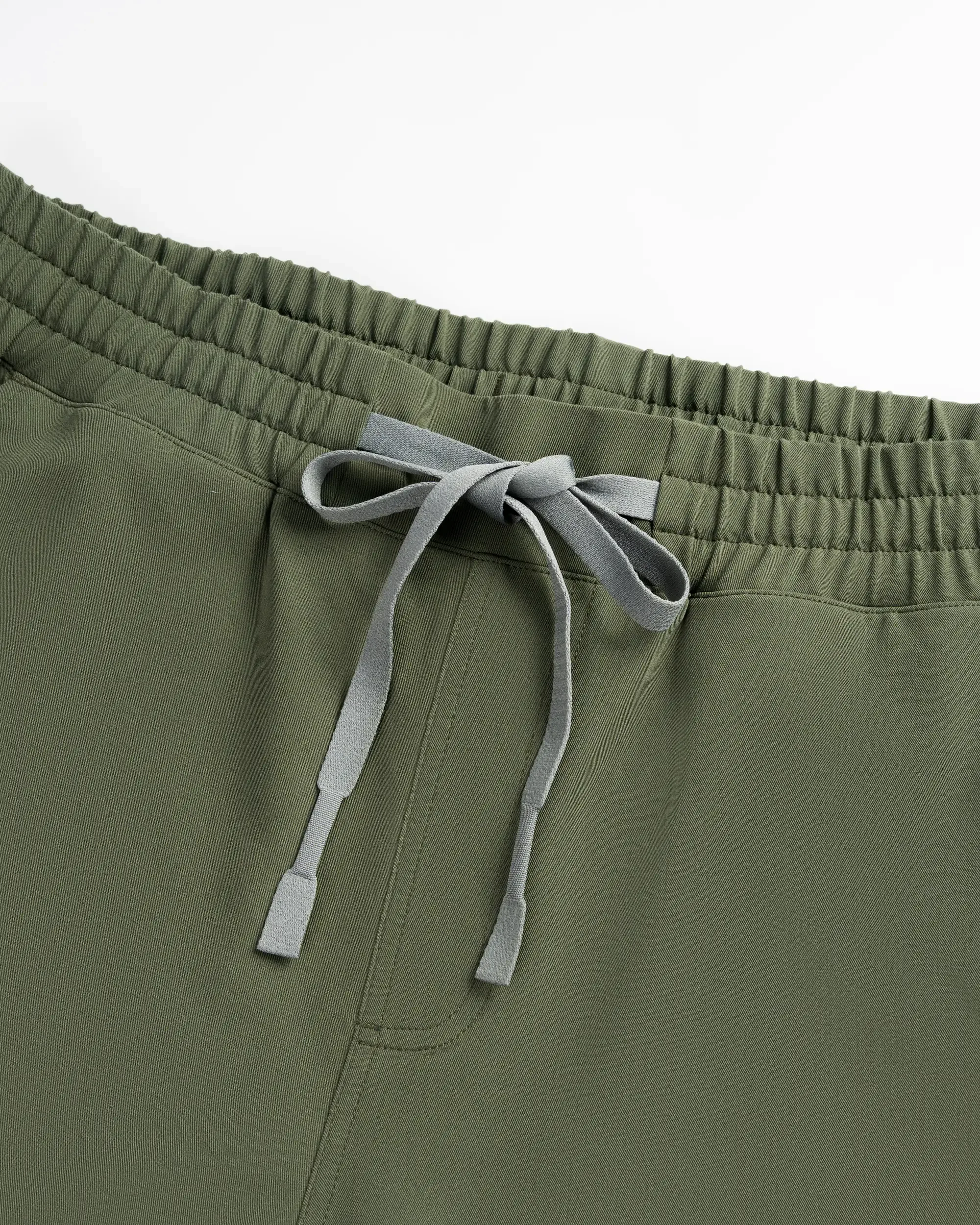
The men’s Motion Jogger image shows an elasticized waistband, central drawcord, bow, finished ends, and nearby seam lines. The tied presentation is not a knot-retention or slippage test.
Waistband checkpoint: Compare current scrub pants by shape, listed waistband construction, and gallery evidence, then run the same tags-on screen on the pair that matches your base fit.
Frequently Asked Questions
Why do my scrub pants keep falling down even with a drawstring?
Test them empty. Sliding without pocket weight points back to waist, hip, rise, or waistband position. Movement only when loaded points to pocket placement and load distribution.
Is an elastic waistband better than a drawstring-only waist?
Not universally. Elastic can share the adjustment with a cord, but the result still depends on cut, size, body, construction, and pocket load. Compare both under the same screen.
Are metal eyelets better for a scrub pants drawstring?
You cannot establish that from appearance alone. Metal and stitched exits are different constructions; either would need defined abrasion, pull, and cycle testing before making a durability comparison.
Should I tie scrub pants with a double knot?
Use a knot you can tie consistently, release when needed, and wear comfortably. Test it indoors through sitting and bending. If extra tightening creates discomfort or still does not stabilize the pants, reassess the base fit instead of adding more knots.
How do I stop a drawstring from disappearing into the waistband?
Stop when one end begins retreating, inspect both end finishes and cord exits, and avoid pulling the opposite end harder. For a new unworn item, check the seller’s current exchange rules before altering it. For a used garment, inspect the channel before deciding on repair.
Can a product photo show whether a drawstring will last?
No. A photo can show the visible cord, exits, ends, elasticized areas, and seam lines. Strength, fraying resistance, knot behavior, waistband slip, and repeated-use life require measurements or a controlled test.