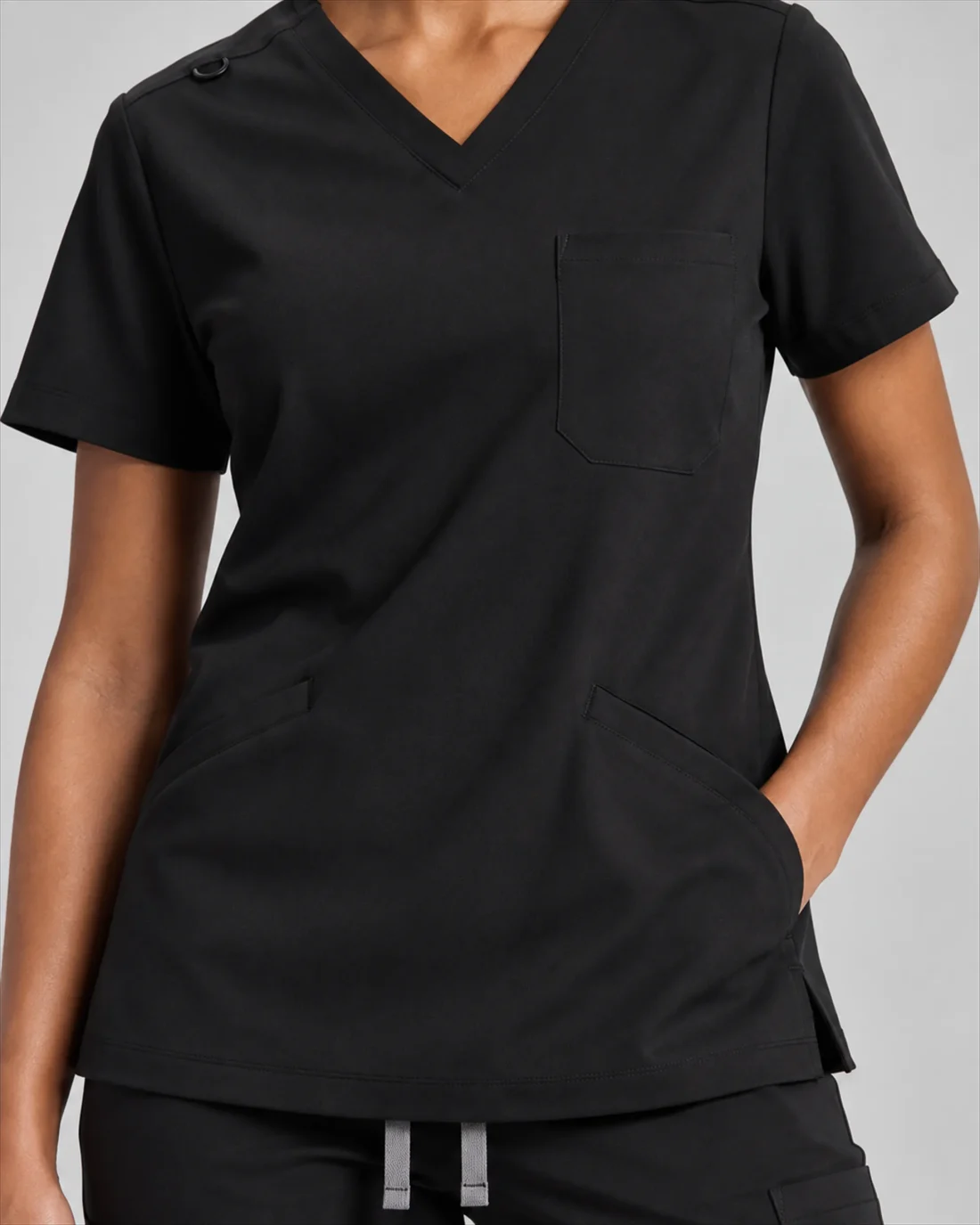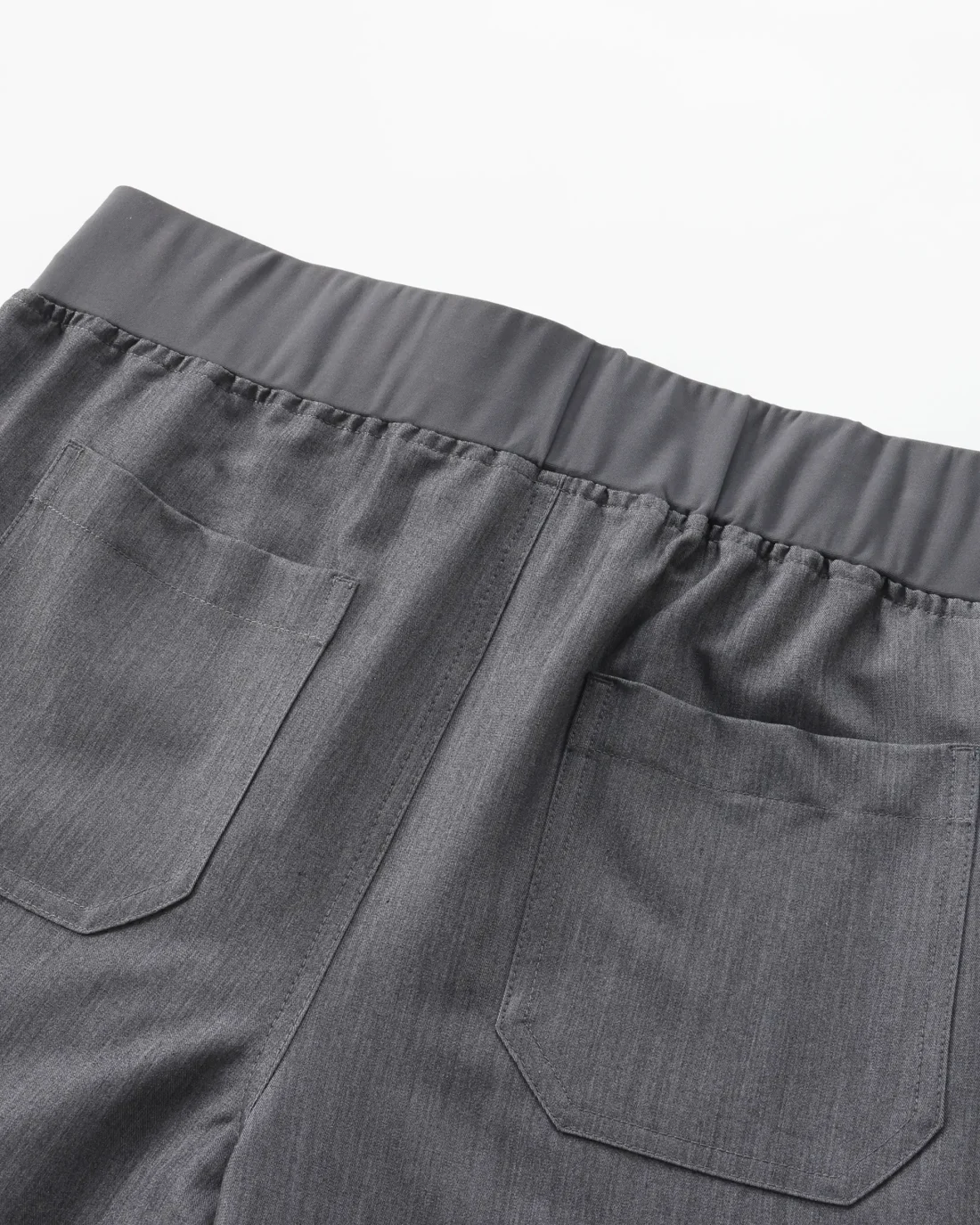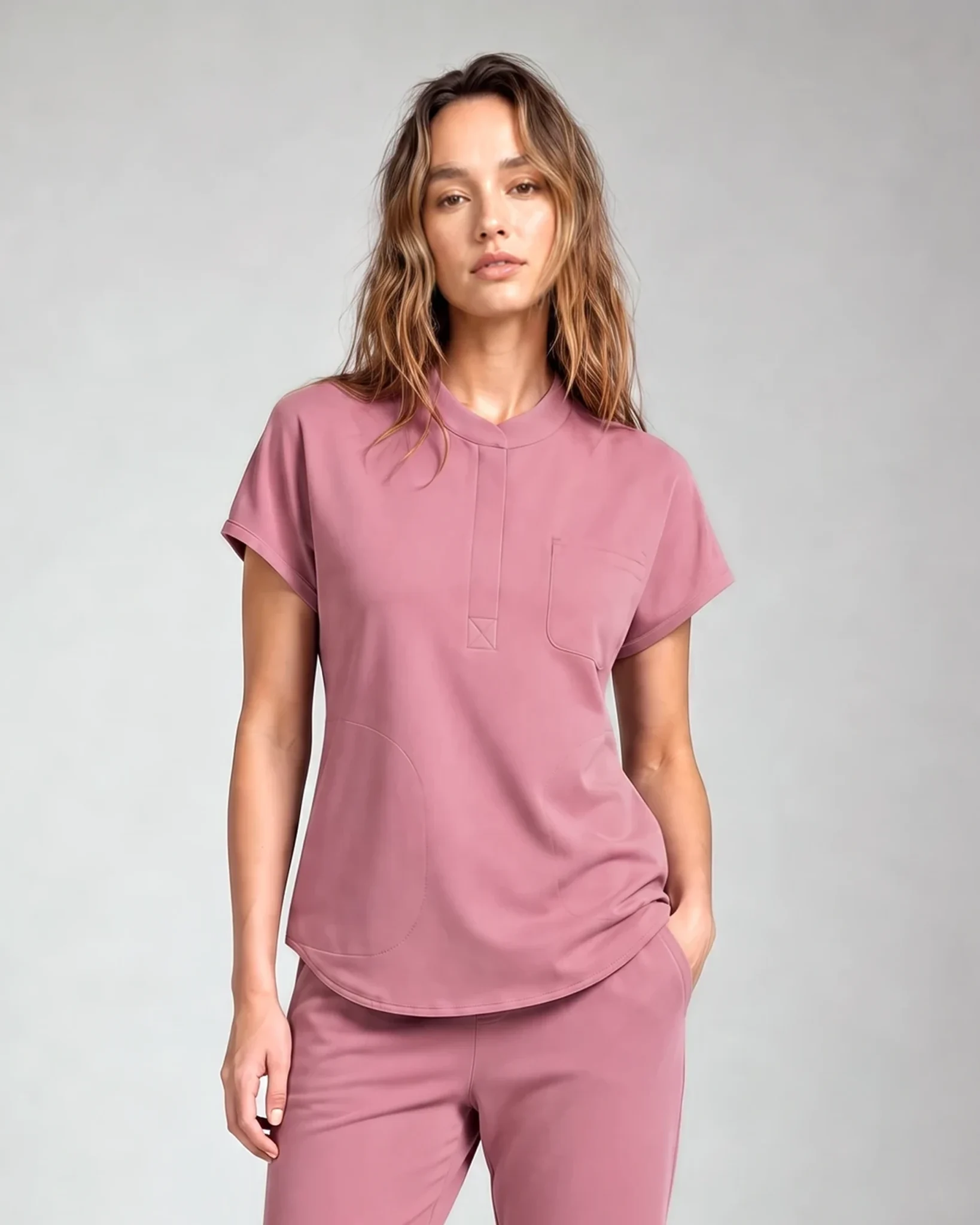

The best scrub fabric is not decided by one fiber name. Cotton can be the right answer when natural-fiber content is non-negotiable. A polyester, rayon, and spandex blend can be the better trial when you want a different balance of structure, drape, and stretch. Neither label tells you how the finished garment will feel at hour ten, behave with loaded pockets, or come out of your laundry.
Start with the reason you are changing fabrics. Then read the label, inspect the garment, and test the exact set you may keep.
First, name the problem you are trying to solve
“I want cotton scrubs” and “I need scrubs that feel less hot” are not the same request.
You may be choosing for one of these reasons:
- Fiber preference: you specifically want a natural fiber or want to reduce synthetic-fiber content in your clothing.
- Skin contact: a waistband, label, seam, or surface texture distracts you during the day.
- Heat and sweat: the garment feels unpleasant once you are moving, wearing a base layer, or working in a warm room.
- Movement: the top pulls across the back or the pants resist sitting, squatting, or stepping up.
- Laundry: the care instructions do not fit the machines, products, or drying method you can use.
- Appearance: the fabric collapses, clings, wrinkles, shines, or hangs differently from the silhouette you need.
Only the first problem can be answered by fiber content alone. The others depend on the whole garment: yarn, fabric construction, weight, finish, cut, seams, size, care, and what you wear underneath.
What a scrub fabric label tells you
For covered textiles sold in the United States, the FTC Textile Fiber Rule requires labels to disclose the generic fiber names and percentages by weight, along with the responsible business and country of processing or manufacture. That makes the label useful for confirming whether a product is cotton, polyester, rayon, spandex, or a blend.
It is still an ingredient list, not a performance report. Matching percentages do not establish matching softness, stretch direction, air movement, opacity, drying behavior, or durability. A product page should not turn a fiber name into claims the finished garment has not earned.
Read the sewn-in label when it is available. Also read the care label: the FTC treats care instructions as information about the regular care needed for ordinary use. If a product page and the finished garment differ, use the garment label and ask the seller to clarify the discrepancy.
Cotton scrubs: when the fiber itself is the decision
Cotton is a natural fiber. If your requirement is all-cotton clothing or the lowest synthetic share you can find, a polyester-heavy blend is not a substitute—no matter how a brand describes its hand feel.
The cotton percentage still does not tell you whether the scrubs will feel soft, stay out of the way when you bend, or suit your laundry routine. Compare the fabric weight, surface, cut, stretch construction, seams, and care instructions. A loose, stiff garment and a close, lightweight garment can both carry a cotton label and wear very differently.
Do not let “natural” become shorthand for cool, low-sweat, gentle on every skin type, or environmentally superior. Those are separate questions. If one matters, look for evidence that addresses it directly.
Polyester scrubs: judge the finished fabric, not the stereotype
Polyester is a manufactured fiber. That fact does not automatically mean the garment will feel slick, trap heat, dry quickly, resist wrinkles, or last longer. The construction and finish can change the result substantially.
If you are open to polyester, inspect both sides of the fabric. Rub the inside surface lightly against the forearm, check whether it catches dry skin or an underscrub, and look at how it bends rather than only how it photographs. Then compare the care label with your real wash routine.
If you are avoiding synthetic fibers as a matter of principle, stop at the label. A try-on cannot turn polyester into cotton.
Rayon and spandex: useful clues, limited promises
In U.S. textile labeling, rayon and spandex are manufactured fibers. Rayon in a blend may be part of the fabric’s drape and hand, but the word does not guarantee softness or cooling. Spandex tells you an elastic fiber is present; the percentage does not prove four-way stretch, recovery after a shift, or unrestricted movement.
Test the cut with the fabric. Reach forward, sit, squat, step up, and return to standing without pulling the garment back into place. A stretchy textile cannot rescue a rise, shoulder, or thigh that is too tight. A well-shaped garment may move adequately with less elastic fiber.
The LumiScrubs fit guide explains how to compare body and garment measurements before this tags-on check.
A better cotton-versus-blend comparison
Use one candidate from each material route and compare the same things.
- Confirm the exact label. Record every fiber and percentage; do not rely on a collection-page adjective.
- Check the inside. Feel the neck, armhole, waistband, drawstring, pocket bag, and major seams—not just the outside face.
- Wear your normal base layer. An underscrub changes heat, friction, and fit.
- Repeat work-like movement. Sit, reach, squat, walk, and step up in the shoes you expect to wear.
- Use a safe version of your normal pocket load. Watch the waistband and pocket opening rather than assuming stretch solves the load.
- Read care and return terms before washing. Complete all tags-on checks while the garment remains eligible under the current Shipping & Returns terms.
- After you decide to keep it, track the garment. Note washes, drying method, the first change you notice, and the reason you eventually stop wearing it.
This test separates three common complaints. A hot garment may be a layering or fit problem. An irritating garment may have one bad contact point rather than the wrong fiber category. A disappointing cotton garment may satisfy the label requirement but miss the silhouette you need.
How to read fabric evidence without overreaching
A useful fabric claim answers four questions: what sample was tested, which method was used, what result was recorded, and where the result stops.
Surface-wetting, soil-release, color-fastness, and fiber-composition results answer different questions. None proves pocket strength, seam life, skin comfort, odor control, or the number of washes a garment will survive. A swatch result also should not be presented as a guarantee for every color, lot, or finished SKU.
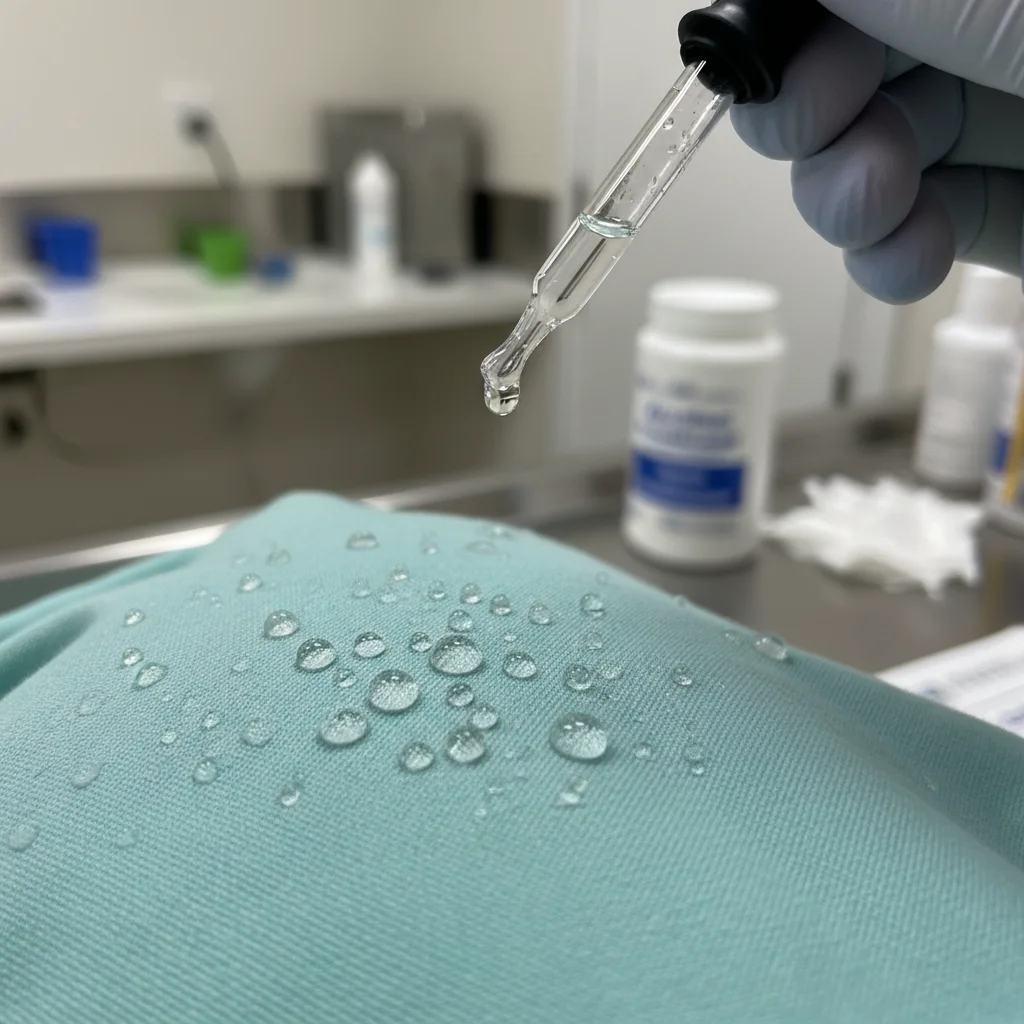
The LumiScrubs fabric evidence page is the place to inspect the published methods and limits. Use each result only for the decision it actually measures.
What the current LumiScrubs Core blend does—and does not—answer
The current LumiScrubs Core set pages list a supplier-declared production specification of 72% polyester, 21% rayon, and 7% spandex. It is not a cotton fabric, and LumiScrubs should not describe it as cotton-like or as a natural-fiber experience.
For the submitted black fabric sample, verified records cover resistance to surface wetting, soil release, and color fastness for water, perspiration, and rubbing. Those records do not establish breathability for the finished garment, sensory suitability, garment lifespan, or identical performance across every color and production lot.
That makes the decision straightforward. If cotton content is your requirement, keep looking for an accurately labeled cotton option. If you are open to this synthetic blend, judge the current product photos, measurements, evidence limits, care information, and tags-on movement together.
The short answer
Choose cotton scrubs when cotton content itself is part of the requirement, then verify the cut, contact points, and care. Choose a polyester, rayon, and spandex blend when synthetic content is acceptable and the exact garment passes your fit, feel, movement, and laundry checks.
Do not ask one fiber name to answer five different problems. The label chooses the material category; the finished garment earns the rest.
Frequently asked questions
Are cotton scrubs more breathable than polyester scrubs?
The fiber name alone cannot settle that comparison. Fabric construction, weight, fit, layers, moisture behavior, and finish all affect how a garment feels in heat. If thermal comfort is the goal, compare finished garments under the same conditions instead of substituting cotton percentage for a garment-level result.
Is polyester, rayon, and spandex a good scrub blend?
It can be a candidate if you accept synthetic fibers and want to test a fabric designed around structure, drape, and stretch. The ratio alone does not establish comfort, durability, or movement; evaluate the finished garment and its evidence.
Does more spandex mean better stretch?
Not necessarily. Percentage, yarn placement, stretch direction, fabric construction, pattern ease, and seams work together. Use movement checks instead of ranking garments by spandex percentage alone.
Are rayon scrubs natural?
Rayon can begin with cellulose feedstock, but U.S. textile labeling classifies rayon as a manufactured fiber. If natural-fiber content matters to you, read the generic fiber names and percentages rather than relying on plant-based language.
Can fabric tests prove that scrubs will last longer?
Only when the test actually measures a relevant durability outcome and the sample scope matches the claim. Surface-wetting, soil-release, and color-fastness results should not be converted into an invented wash count or garment-lifespan promise.
If the Lumi Core blend fits your shortlist
Compare the current women’s and men’s Core set pages only if a 72/21/7 synthetic blend meets your material criteria. These detail images were selected because they show garment construction more usefully than another generic front pose.