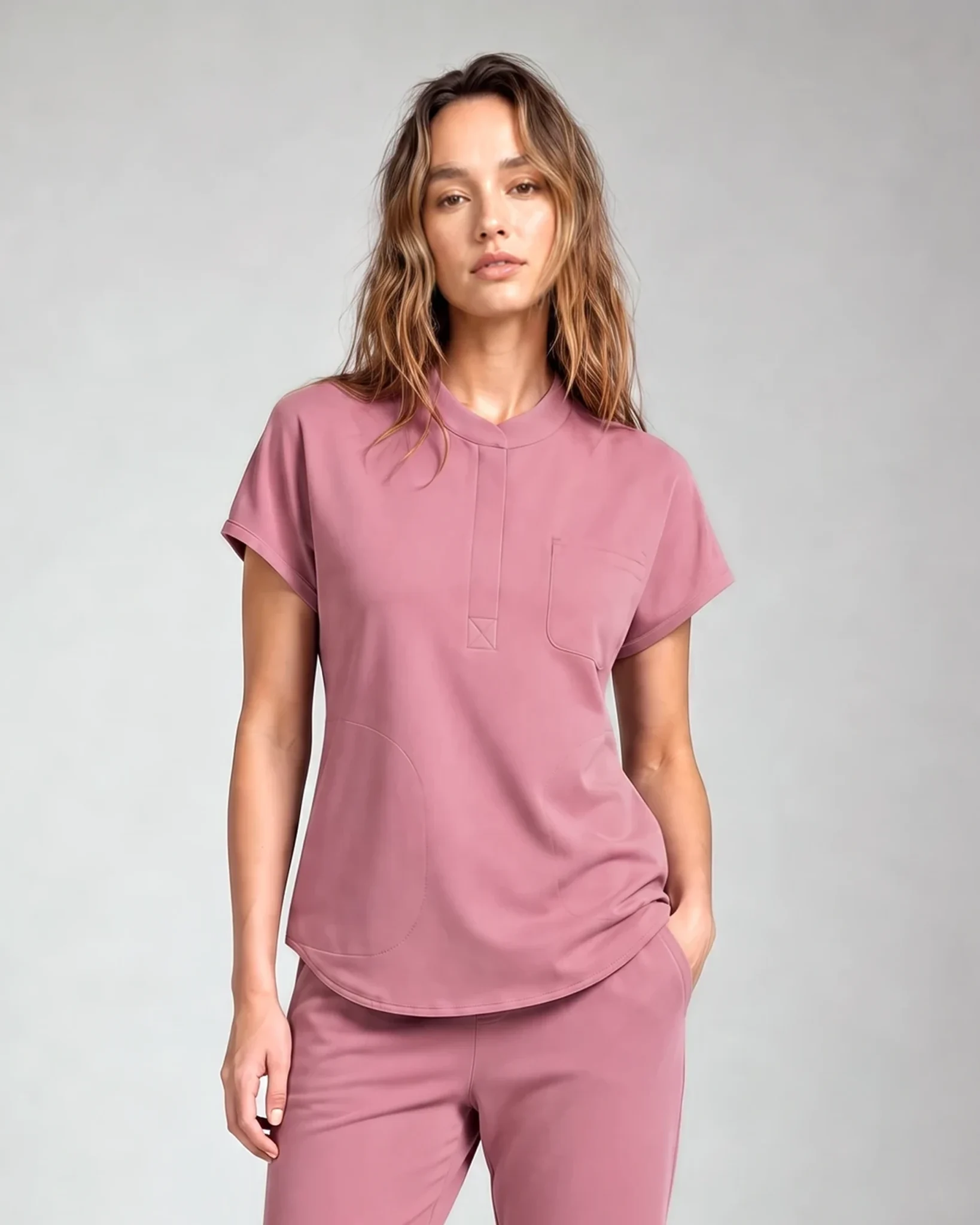

For a conversation-only clinical interview, start with business casual unless the employer tells you otherwise. For a working interview or shadowing shift, wear scrubs only when the host confirms them. If the invitation is unclear, ask before the visit; the facility’s instructions matter more than a universal color rule found online.
The phrase “clinical interview” can describe very different visits. One candidate may spend an hour with a hiring manager. Another may tour treatment rooms or complete a working portion. Your first task is to identify which visit you actually have.
Use this decision process before choosing an outfit
Read every part of the invitation
Check the email, text message, calendar invitation, application portal, and any attachment from the employer. Look for words such as “interview,” “tour,” “working interview,” “skills assessment,” “shadowing,” or “meet the team.” Do not treat those labels as interchangeable.
A standard interview usually centers on conversation. A working interview or shadowing visit may place you in a treatment area, but the host still decides what clothing is appropriate. A school-arranged placement may have an entirely separate handbook.
For an assigned school placement, the Clinical Attire Policy Index shows the kinds of color, shoe, identification, and underlayer rules programs may publish. Use it to frame your questions, then follow your own program and site instructions.
Ask one specific question when the instructions are incomplete
Do not send a vague message such as “What should I wear?” Give the coordinator the two likely options and mention the clinical portion:
I’m looking forward to the visit. Should I arrive in business casual, or would you prefer plain scrubs for the working or shadowing portion?
That wording is short, easy to answer, and prevents you from guessing about color, footwear, or whether you need a change of clothes.
If the response says “scrubs,” ask a follow-up only when necessary: Is there a required color? Should existing school or employer embroidery be covered? Are there footwear, hair, nail, jewelry, or identification rules you should know before arrival?
Plan for a mixed-format visit
Some visits combine a formal conversation with a tour or working segment. Ask whether you should arrive in one outfit or bring scrubs to change into. Confirm whether a secure changing area is available rather than assuming you can use a restroom or staff room.
When you receive an answer, follow it exactly. Bringing a backup option can be useful, but it does not replace the host’s direction.
What should you wear to a conversation-only clinical interview?
Business casual is the practical starting point when the visit is a standard sit-down interview and the employer has not requested a uniform. Choose clothing that looks intentional, allows you to walk through the facility comfortably, and does not require constant adjustment.
Useful checks include:
- The neckline and hem stay in place while you sit, stand, and reach.
- Shoes are clean, closed at the toe if the facility requests it, and comfortable for a possible tour.
- Jewelry, fragrance, nails, and hair follow any instructions provided by the employer.
- The outfit does not display branding from another employer.
- You can carry your identification, notes, and required documents without overloading your pockets.
Avoid trying to signal a clinical role the employer has not assigned. A white coat, school uniform, or role-specific badge can create confusion unless the host asks you to wear it.
When are scrubs appropriate for a working interview?
Scrubs are appropriate when the employer explicitly requests them for a working portion, skills assessment, or job-related observation. Do not infer that request solely because the job is in healthcare.
Once scrubs are confirmed, ask about color before buying a new set. Clinics may use color assignments, matching team uniforms, or a simple “any solid color” rule. If the host confirms that any plain color is acceptable, a dark neutral can keep the clothing visually quiet; it is a fallback, not a universal standard.
Test the complete outfit before the visit:
- Reach forward and overhead to check the shoulders, upper back, and neckline.
- Sit, squat, and take a long step to check the rise, seat, thighs, waistband, and hem.
- Place only the items you expect to carry in the pockets and confirm they remain comfortable while seated.
- Wear the exact shoes and underlayer you plan to use.
- Check the outfit under normal indoor light for marks, lint, transparency, and mismatched pieces.
What should you wear for a shadowing shift?
Shadowing rules come from the host organization or program. Ask the coordinator whether observers should wear scrubs, business casual, a school uniform, or another specified outfit. Also confirm footwear and identification requirements.
Do not assume that observing means you can dress exactly like the working team. The facility may need observers to remain visibly distinct. It may also assign a particular color or badge. The correct choice is the one the host gives you.
For a veterinary shadowing visit, ask whether you will enter treatment, kennel, or animal-handling areas. For a dental visit, ask whether the schedule includes chairside observation or only an office tour. For a med spa or front-desk role, ask whether the interview is administrative, treatment-area based, or mixed. These details shape the clothing decision more reliably than the job title alone.
How should you choose a scrub color for shadowing?
Start with the facility’s answer. If it gives a required shade, use the exact name and ask whether close alternatives are acceptable. Navy, royal blue, ceil blue, and other blues are not interchangeable simply because they share a color family.
If the host says any plain color is acceptable, choose a clean solid shade that does not draw attention away from the visit. Avoid novelty prints unless the host specifically welcomes them. Do not use a color to imply a role, department, or level of training you have not been assigned.
When no one responds before the visit, do not solve the uncertainty by buying a random set. Contact the main office, bring the most conservative appropriate outfit for the confirmed portion, and carry a change only if the logistics allow it.
What should you prepare besides clothing?
Attire is one part of readiness. The invitation may also require identification, a school form, vaccination or onboarding documents, a notebook, or a specific arrival process. Review the instructions the day before and keep the requested items together.
Plan your route and arrival time. Know whom to ask for and where to wait. Keep bags compact because the facility may not have storage for visitors. Silence your phone before the conversation or observation begins.
The goal is not to look as though you already work there. It is to arrive prepared, follow the host’s instructions, and avoid making the team solve preventable clothing or access questions at the door.
Frequently asked questions
Should I wear scrubs to a nursing interview?
Wear business casual for a conversation-only interview unless the recruiter or manager requests scrubs. If the visit includes a working or shadowing portion, ask which outfit the host prefers.
What color scrubs should I wear for shadowing?
Use the color assigned by the host. If the host confirms that any plain color is acceptable, choose a clean solid shade and avoid using color to imply an unassigned role.
Can I wear scrubs to an interview with a working component?
Yes, when the employer confirms scrubs for that component. Ask whether you should arrive in scrubs or bring them to change into.
Should I wear my school uniform while shadowing?
Wear it only when the school or host instructs you to. A school-arranged placement may have different rules from an independently scheduled shadowing visit.
Are jogger scrubs acceptable for an interview or shadowing visit?
Ask about the facility’s dress expectations rather than assuming a particular pant silhouette is accepted. If the host permits it, test the full outfit for coverage, movement, and a neat appearance before the visit.