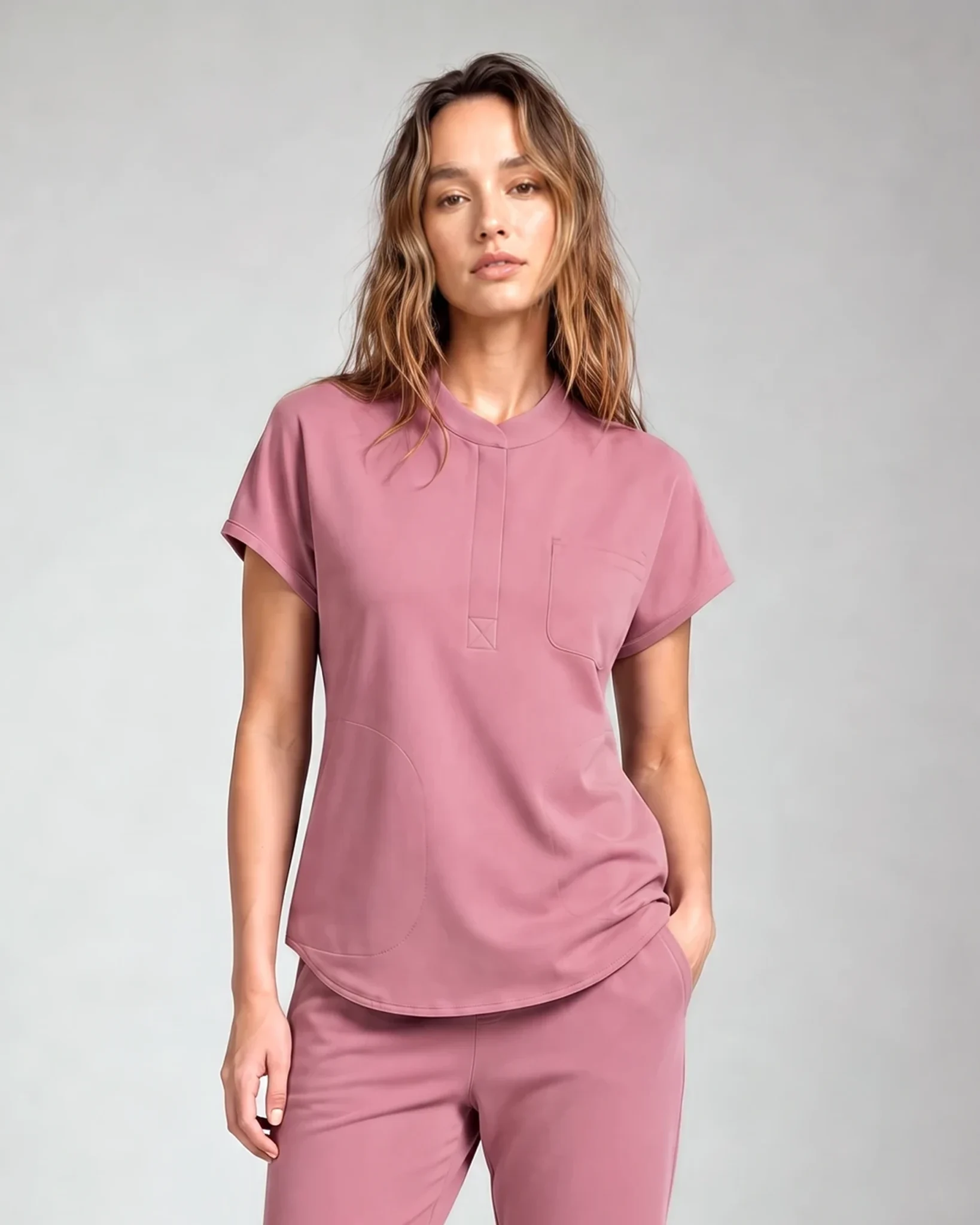

Scrub Colors Guide: Meanings, Color Chart, and How to Choose
Scrub colors do not follow one universal code. A hospital, school, dental office, or clinic may assign colors locally, so the written dress code takes priority. When color is open, compare the exact named shade on the same garment before you choose.
If you are buying for nursing school rather than an employer, check the current program handbook for color, shoes, identification, patches, underlayers, and placement-site overrides. A list from another school does not control your purchase.
“Navy,” “ceil blue,” “graphite,” and “burgundy” sound precise, but color names are not an industry-wide matching system. Two brands can use the same name for visibly different shades, and one employer may assign navy to a role that another employer dresses in gray.
Use this guide in order: confirm the rule, understand the color family, compare real garment photos, check the top and pant together, and then choose the product and size.
Do scrub colors have universal meanings?
No. There is no single national scrub color code that assigns one color to every nurse, dental assistant, hygienist, technician, or physician.
Some organizations use color to help patients and staff distinguish roles. Others choose one color for an entire location, allow a short approved palette, or leave the decision to the wearer. The same color can therefore mean different things in different workplaces.
If a handbook says “navy,” do not substitute royal blue because both are blue. If a manager sends a photo instead of a color name, ask for the approved product link or a physical reference. A screenshot viewed on two phones is not a reliable color standard.
The safest question is specific: “Is there an assigned scrub color for my role, and is there an approved brand or shade name?” That question is more useful than a generic list of what different scrub colors supposedly mean.
Color should be one role cue, not the only cue
Research published by the Pennsylvania Patient Safety Authority says color can support rapid recognition, but relying on color alone is insufficient when lighting, stress, visual overload, or differences in color perception affect interpretation.
Where the workplace permits it, pair color with another readable cue: a current name and role, an ID badge, a department label, or clear unit signage. Check visibility seated and standing with the usual lanyard or outer layer. A role marker hidden by a jacket does not solve the identification problem.
This is not a reason to add an unapproved patch or title. The organization still decides which identification methods are permitted and how they should appear.
Scrub color chart: compare the main color families
The chart below is a visual map, not a role assignment. It helps place common scrub colors into families before you compare the exact garment.
| Color | Plain-language family |
|---|---|
| Black | Deep neutral |
| Navy | Deep blue |
| Graphite | Dark gray |
| Hunter Green | Deep green |
| Ceil Blue | Light blue |
| Royal Blue | Clear mid-blue |
| Burgundy | Deep red-purple |
| Mauve | Muted purple-pink |
| Caramel | Warm brown |
| Greige | Gray-beige |
Dark Harbor, Emerald Green, and Moss sit between more familiar color names. Their names alone cannot establish the exact undertone, so use the current product photo and selector as the final catalog reference.
See six colors on one consistent scrub set
The comparison below keeps the garment family and front-facing presentation consistent. This reduces the visual noise created by mixing different models, poses, fits, and backgrounds.
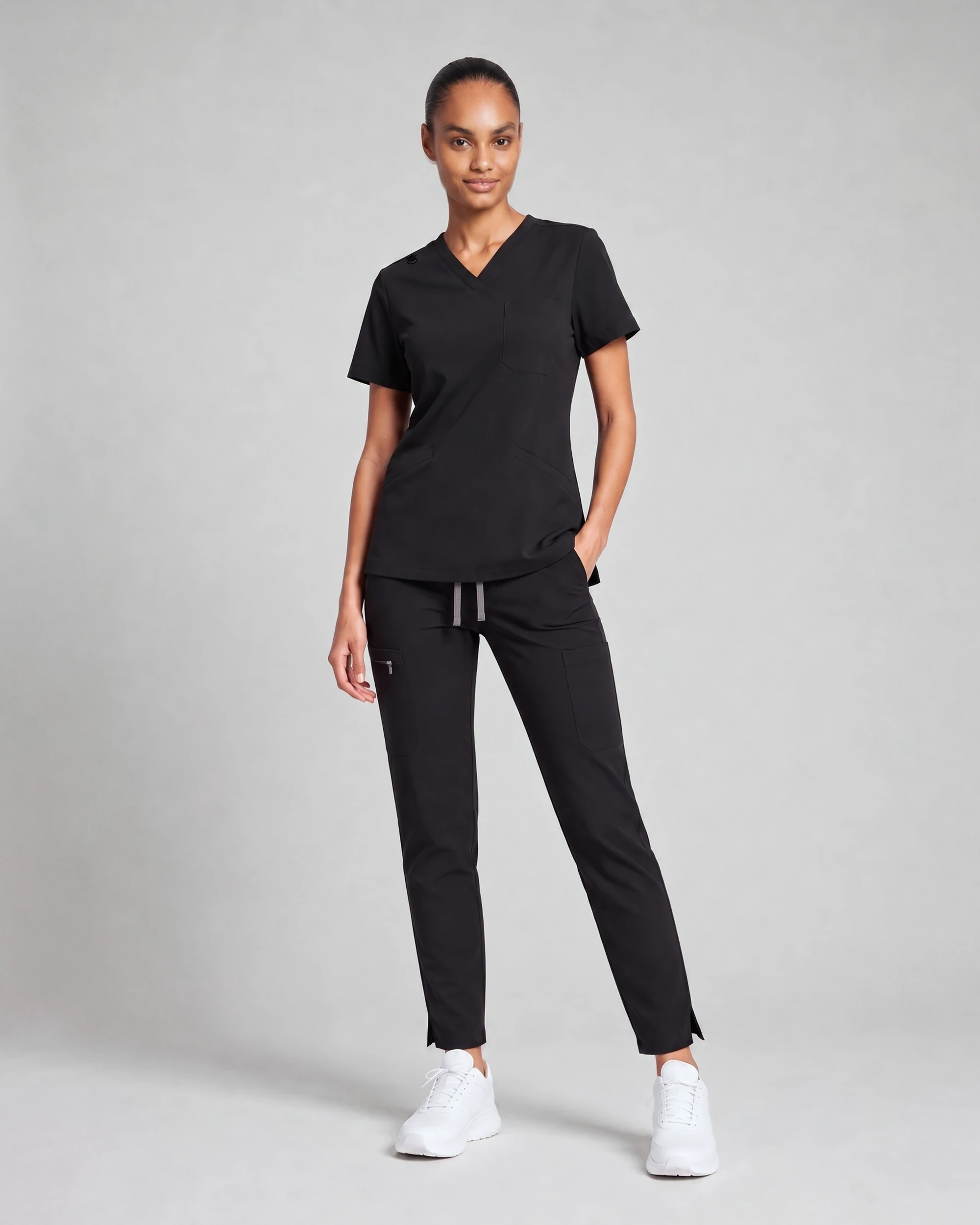
Black
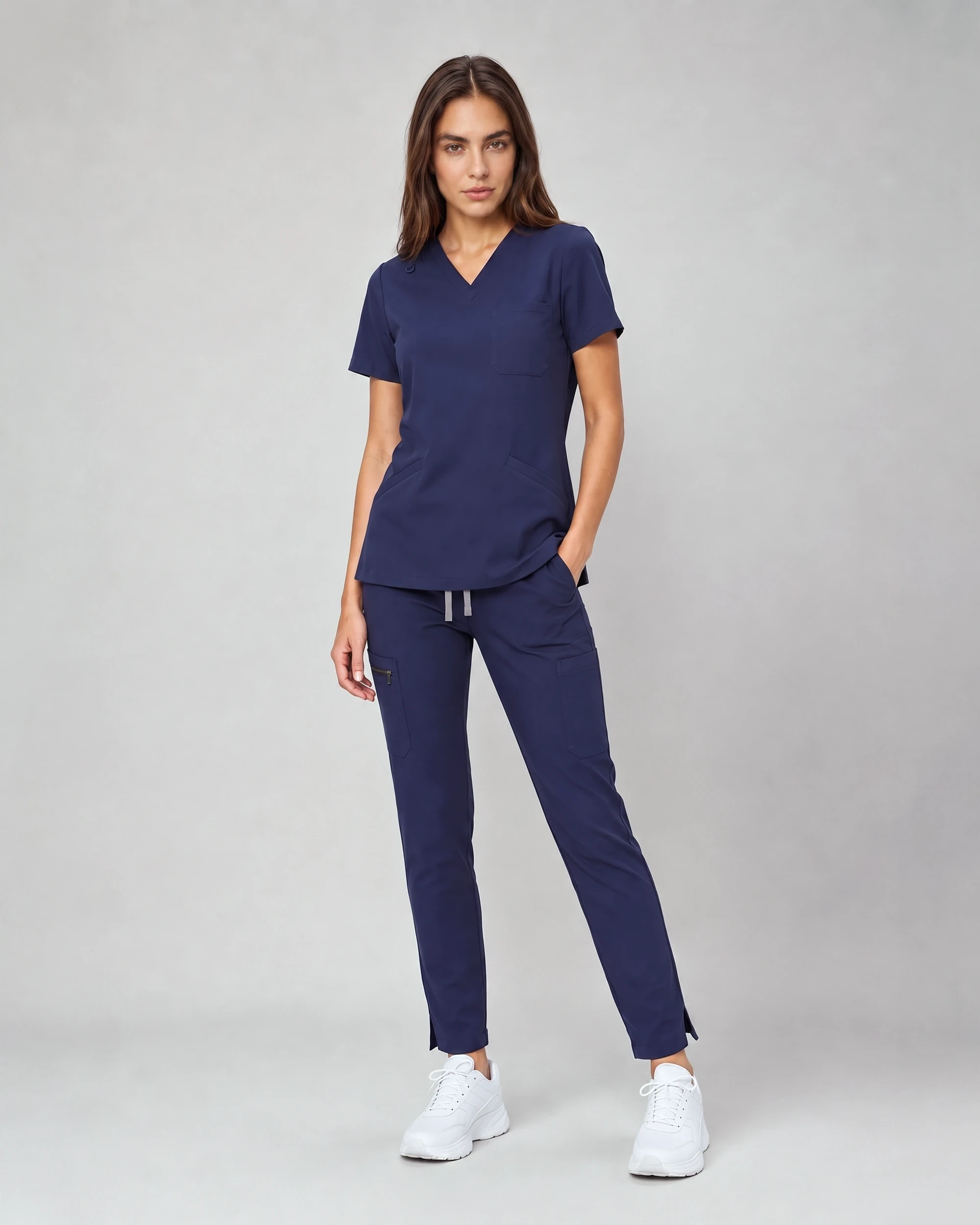
Navy
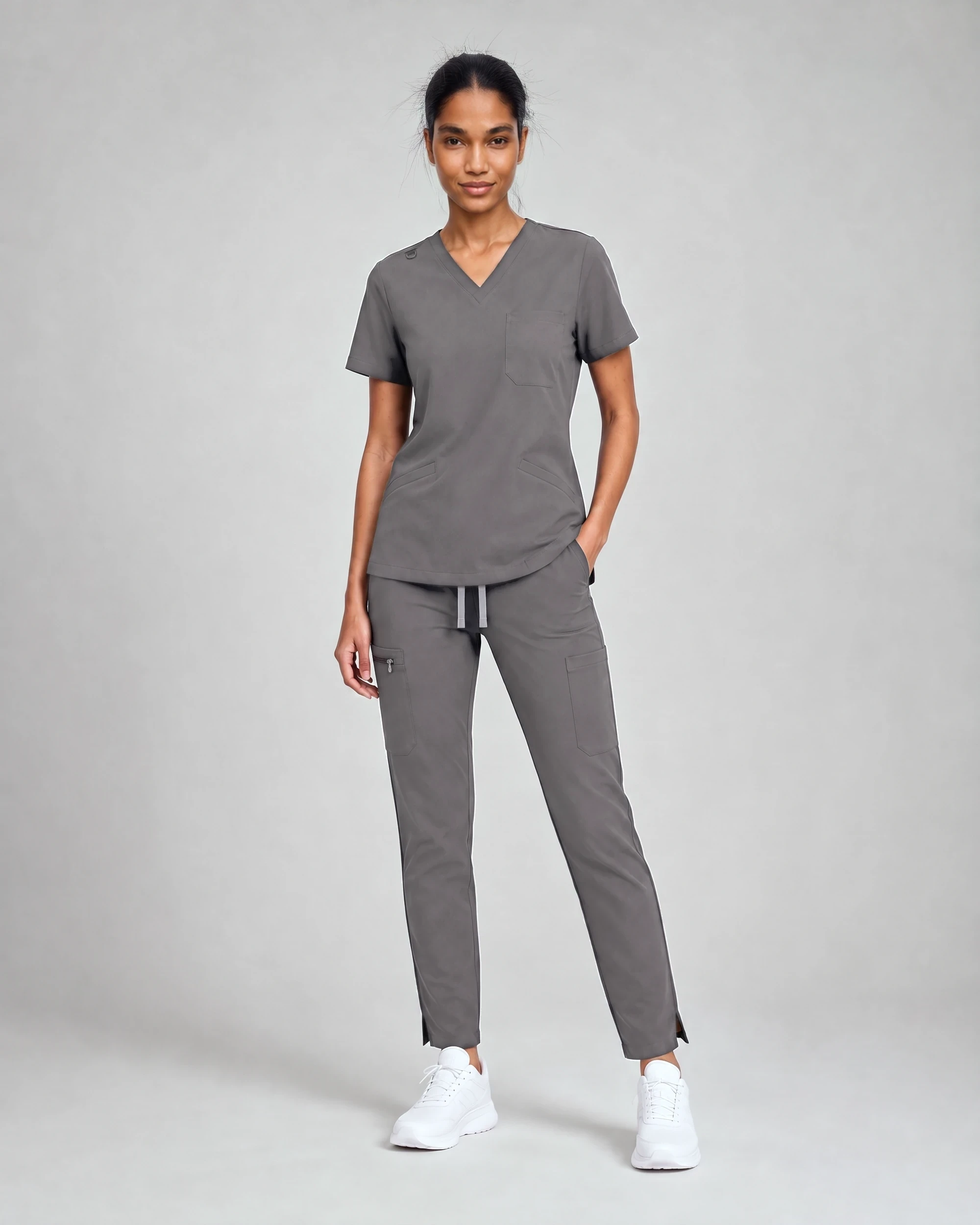
Graphite
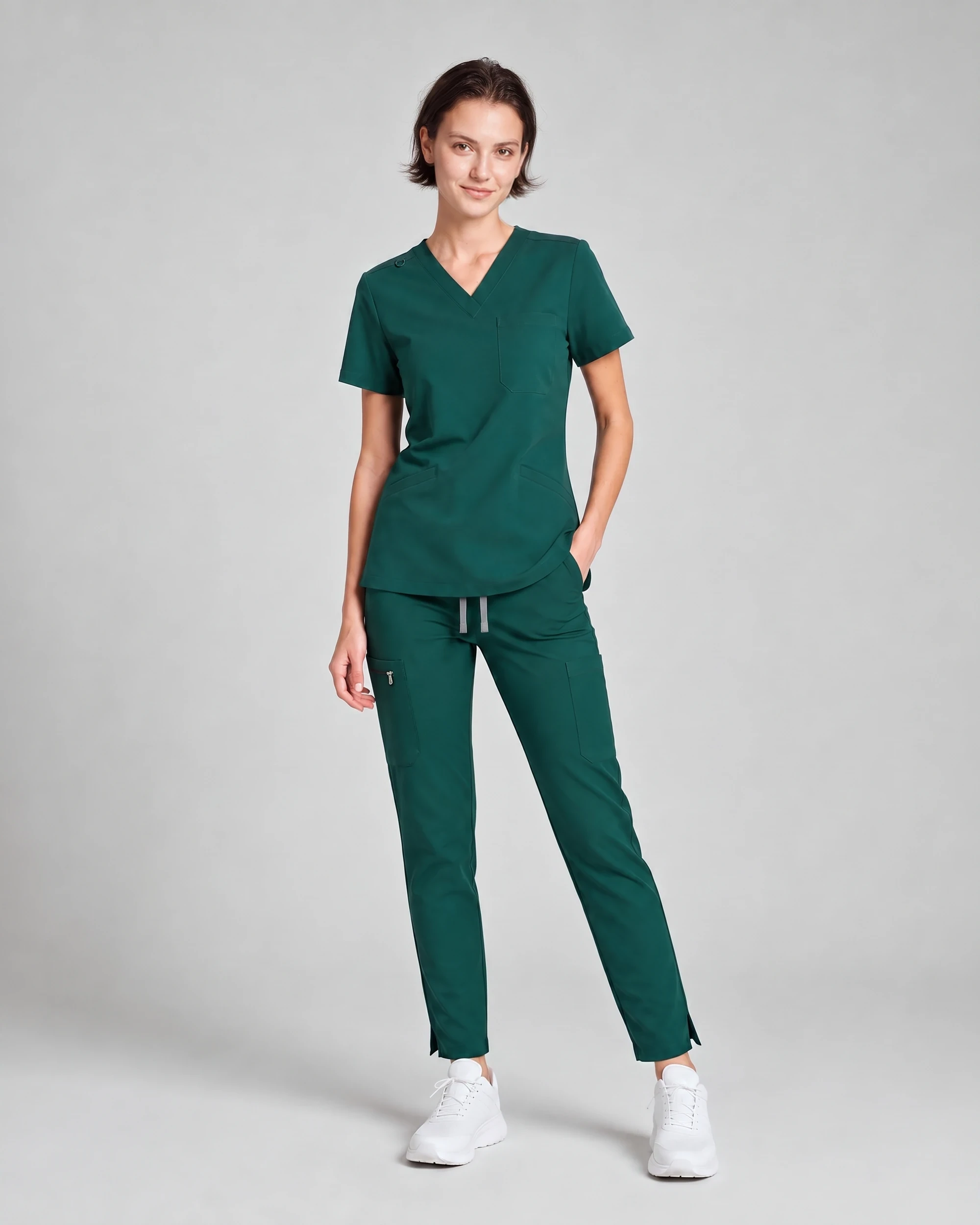
Hunter Green
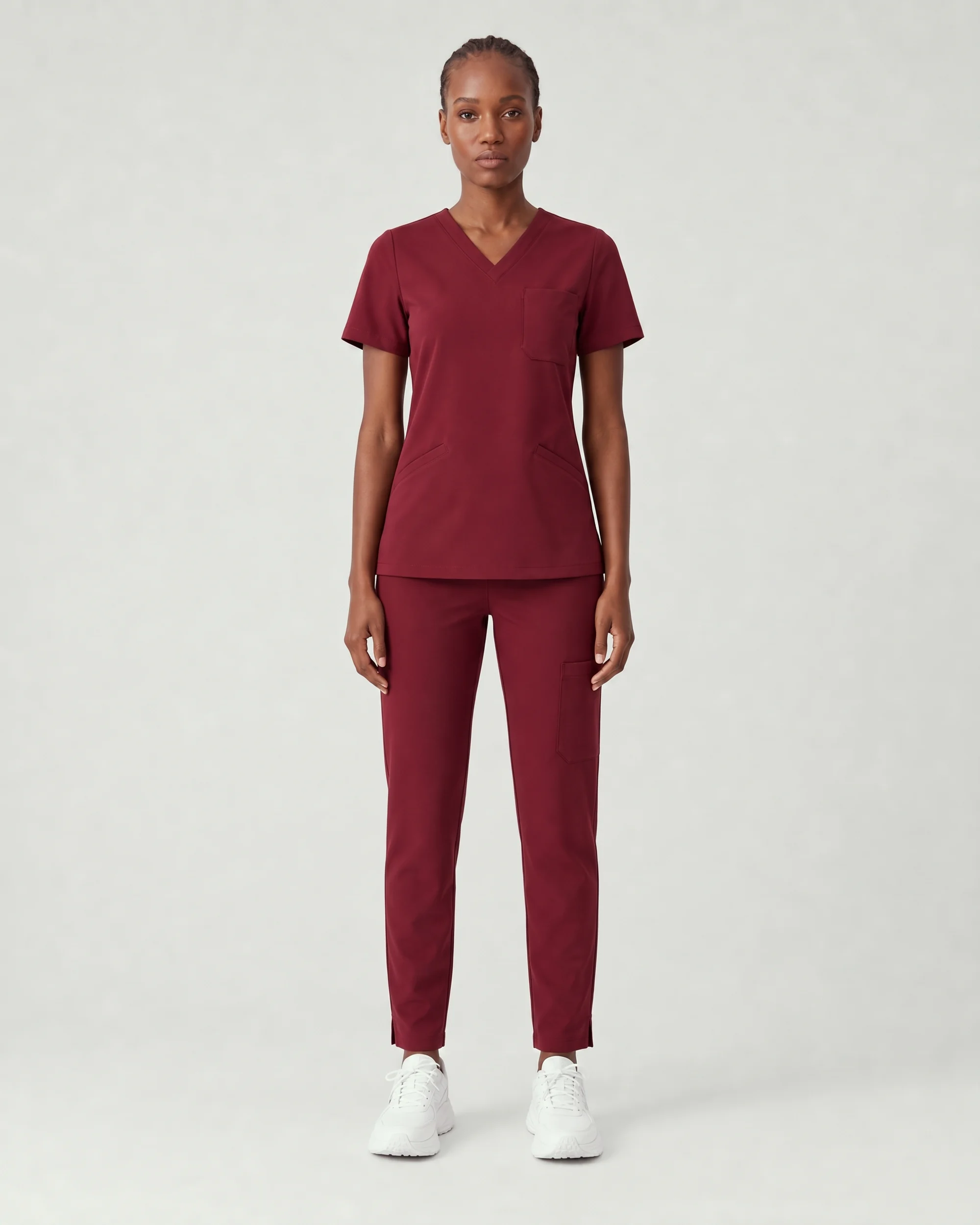
Burgundy
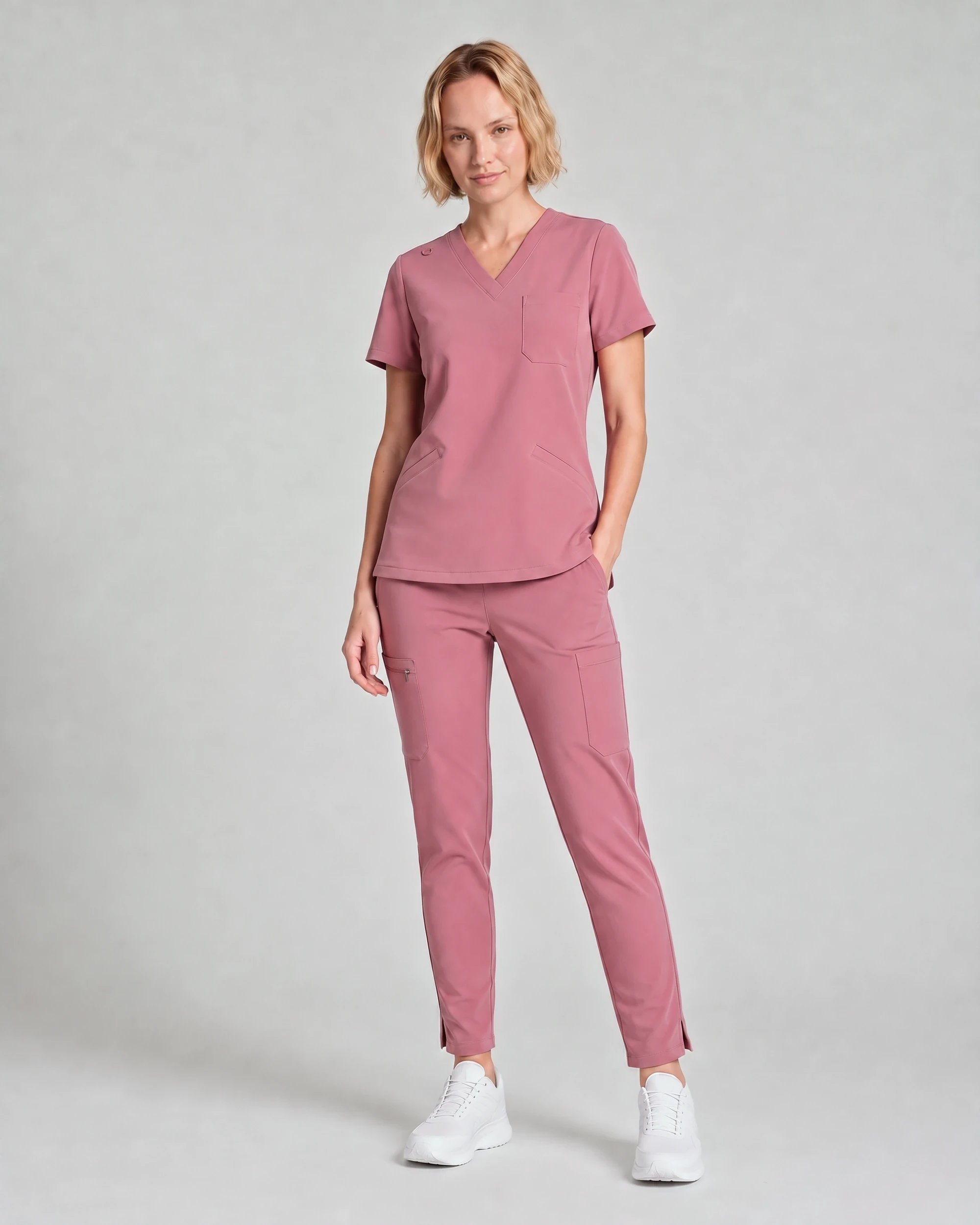
Mauve
The six images show the same current women’s Core set family in the same front-facing format. Even in a controlled grid, screen brightness and color profiles can shift what you see, so the photos can narrow a choice but cannot override an employer’s approved sample.
How to choose a scrub color when you have a choice
Start with the written rule
Check the employee handbook, school instructions, onboarding email, or uniform portal. Look for the exact color name, whether tops and pants must match, whether underscrubs are restricted, whether a logo or patch is required, and whether the pieces must come from an approved seller.
If the instructions conflict, ask before ordering. “Any blue” and “navy” are not the same requirement.
Compare the exact shade, not the category
Color families are useful for browsing, but they do not establish a match. Navy and indigo may overlap in conversation while appearing different side by side. Charcoal, pewter, and graphite are all gray-family names, yet their depth and undertone vary by seller.
For a closer blue-and-green comparison, see Ceil Blue vs. Navy vs. Hunter Green scrubs. Keep that comparison separate from a required workplace shade: similarity is not approval.
Check that the color exists in the fit you want
Do not choose from a sitewide swatch and assume every silhouette carries it. Start on the specific product page, select the color, and confirm that the product image and active selector refer to the same named variant.
This matters when buying for a team. Pick the product family and color before collecting sizes; otherwise, people may submit sizes for different silhouettes that do not share the same palette.
Check the top and pant as a pair
If the workplace requires a uniform set, start with the same named color within the same product family. Then compare the actual top and pant together under the same neutral light before removing tags or approving a team order.
A matching color name across brands, product families, fabrics, or production lots is not proof of a visual match. Fabric texture, dye, lighting, and production batch can affect the final appearance. A shared product family removes some variables, but the physical pair remains the useful check.
For team orders and later reorders, record the product style, color name, and production-lot reference when the seller can provide it. Ask the seller to compare replacement pieces with the approved uniform rather than assuming a saved color name resolves every batch difference.
Close shade names that cause confusion
Navy vs. indigo
Both belong to the deep-blue family. “Indigo” may lean more saturated or violet, but the name is not standardized. Compare the actual garments rather than treating the words as interchangeable.
Burgundy vs. wine
Both describe deep red tones that can lean purple or brown. A workplace that specifies burgundy may reject a visibly different wine shade, so use the approved reference.
Graphite vs. charcoal vs. pewter
These are gray-family names, not fixed formulas. Graphite and charcoal are often used for darker grays, while pewter may appear lighter, but the individual product photo is the meaningful comparison.
Hunter Green vs. Moss vs. Emerald Green
Emerald Green, Hunter Green, and Moss appear as separate color names in the current LumiScrubs catalog. They should not be substituted for one another when a precise color is required; compare the exact product and approved reference.
Use this guide for shade; use role pages for the job
This page owns general color meanings, shade families, and matching checks. A role page should answer the job-specific questions around movement, pockets, coverage, layers, and workplace rules.
- Nursing school: use the current program handbook and ask the placement contact when two instructions conflict.
- Shadowing or an interview: confirm with the host whether scrubs are expected at all before choosing a color.
- Dental assistant work: use the dental assistant scrub guide for chairside movement, storage, coverage, and clinic rules.
- Dental hygiene: use the dental hygienist scrub guide for seated reach, neckline, pockets, and laundering questions.
- Nursing or veterinary work: use the nurse scrub guide or veterinary scrub guide after the local color rule is known.
These pages do not replace an employer, school, or placement-site policy; they separate general color intent from role-specific buying decisions.
LumiScrubs colors by current product family
This table shows where each current color name can be selected. It is a catalog map, not a promise that pieces from different families or production lots will match.
| Product family | Current color names |
|---|---|
| Lumi Core Scrub Set — Women’s | Black, Navy, Graphite, Hunter Green, Burgundy, Mauve |
| Lumi Motion Scrub Set — Women’s | Caramel, Greige, Emerald Green, Mauve |
| Lumi Core Scrub Set — Men’s | Black, Navy, Graphite, Hunter Green, Burgundy, Dark Harbor, Ceil Blue, Emerald Green, Royal Blue |
| Lumi Motion Scrub Set — Men’s | Black, Navy, Dark Harbor, Moss, Ceil Blue, Royal Blue |
Color availability can change. Confirm the active color and size selectors on the product page before ordering.
Scrub color FAQ
What do different scrub colors mean?
They may identify roles or departments inside one organization, but there is no universal meaning that applies everywhere. The current employer, school, or placement site defines the rule.
Who wears gray or black scrubs?
There is no single profession assigned to gray or black nationwide. If either color appears in a dress code, confirm the exact shade and role mapping locally.
What is the best scrub color for men?
There is no separate best color for men. Start with the workplace rule, then choose from the colors available in the preferred men’s fit.
Do scrub tops and pants have to match?
Only if the workplace or school requires a matching set. When they need to match, start within one product family and compare the physical pieces together; the color name alone is not enough.
Why does a scrub color look different online?
Lighting, camera processing, background color, and screen settings can change the appearance. Consistent product photos reduce those variables but cannot replace an approved physical sample.
What should I wear for shadowing or an interview?
First confirm whether scrubs are expected at all. Ask whether the visit is conversation-only or includes observation or hands-on tasks, then follow the host’s written clothing instructions.
Once the rule is clear, shop LumiScrubs by current color and fit.