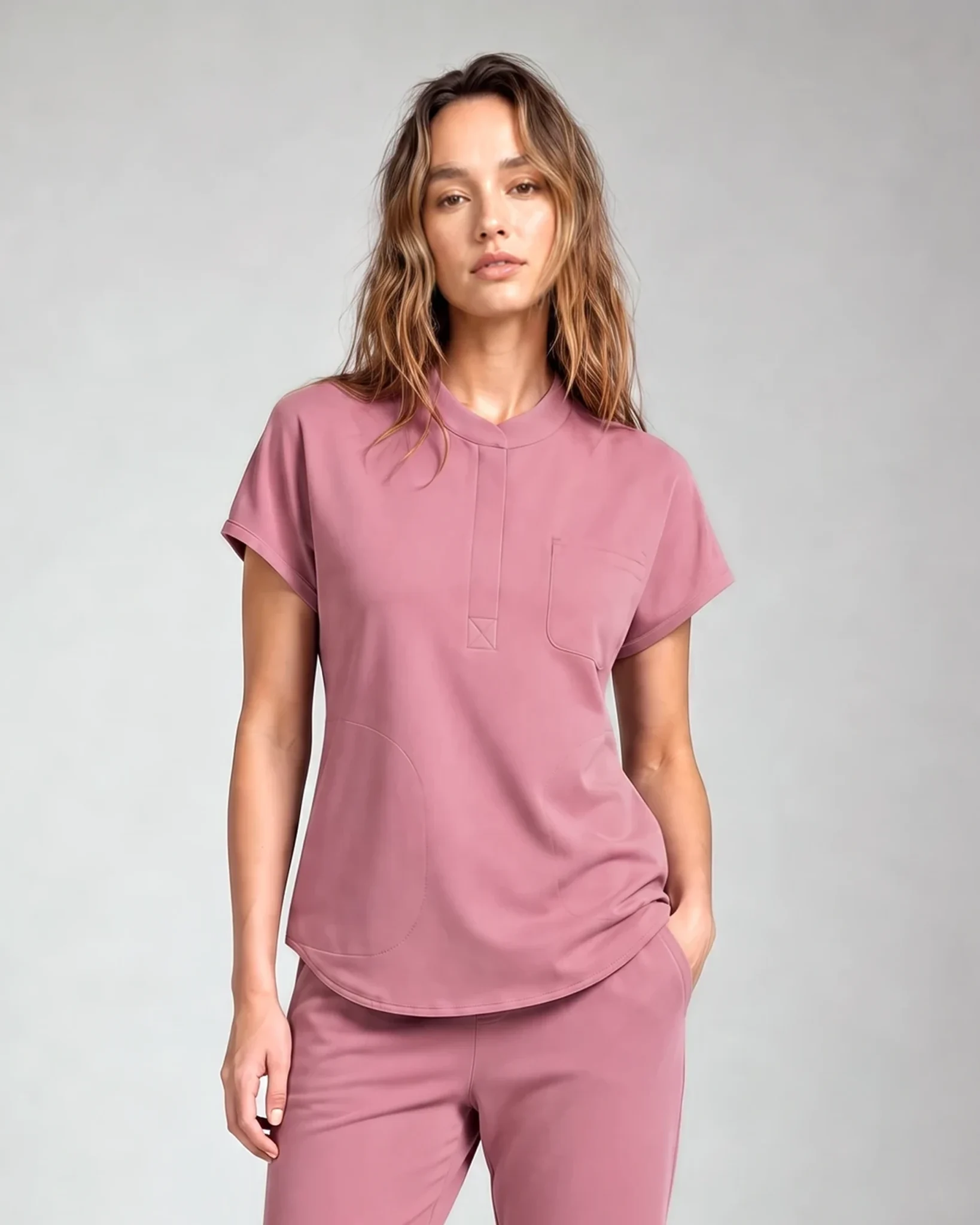

What to wear to shadow a veterinarian depends on the host’s rules and the service you will observe. Ask before buying anything: a small-animal practice may request scrubs or business-casual clothing, while an equine or farm visit may require coveralls and washable boots. The host’s answer—not a color guess or a generic packing list—controls the outfit.
That message prevents two avoidable mistakes: arriving in scrubs when the site expected business clothes, or wearing ordinary shoes for a day that includes large animals or field travel. Sources and product pages in this guide were checked on August 28, 2026.
Send one precise question before the visit
Do not ask only, “Are scrubs okay?” That can leave the footwear, outerwear, color, and changing plan unresolved. Send a question that lets your contact answer the whole decision at once:
I’m looking forward to shadowing. Could you confirm what I should wear, including shoes and any required outer layer? Will the day stay in the small-animal practice, or include large animals, a farm visit, or another work area?
If the reply is brief, follow up instead of filling the gap yourself. Confirm:
- scrubs, business-casual clothing, or another dress category;
- required color, matching top and pant, or visible logo;
- closed-toe shoes, washable boots, or another specified shoe;
- lab coat, coveralls, or an item supplied on arrival;
- rules for hair, jewelry, fragrance, nails, phone use, and identification;
- whether you need a clean change of clothes;
- where an outer layer should be removed after field or animal contact.
Cornell’s current hospital attire policy separates business clothing and a lab jacket for its companion-animal hospital, blue scrubs for surgery, and coveralls with sturdy washable boots for equine, farm-animal, and ambulatory services. Virginia Tech’s current required-apparel page lists scrubs for students but requires coveralls and rubber over-the-shoe boots for large-animal handling labs. These are rules for those schools, not universal instructions; they show how sharply the answer can change within veterinary training.
You can read the source details in the Cornell attire policy and the Virginia Tech required-apparel guide. Your own host still has the final word.
Let the host’s answer choose the outfit
Use the reply as a decision tree. Arrive in the requested category and do not bring gear the site did not ask for.
| If the host says | Build the outfit around | Confirm before leaving home |
|---|---|---|
| “Wear scrubs” | A clean top and pant in the required color, plus the specified shoes | Whether joggers, visible base layers, logos, and mixed top/pant sizes are allowed |
| “Business casual” | Simple clothing that stays in place when sitting, standing, and bending | Whether a jacket, tie, skirt length, or site-provided coat is expected |
| “Bring coveralls and boots” | The exact outerwear and footwear description from the host | Material, color, over-the-shoe fit, cleaning plan, and whether a spare set is needed |
| “We will provide what you need” | The requested arrival outfit and shoes | What is supplied, what size information is needed, and where you will change |
| “We may go to the farm” | The more specific field requirement, not the easier indoor option | Whether the itinerary is definite, what travels with you, and how used outerwear is handled |
“Clean and professional” is not a complete dress code. If that is the entire response, ask which dress category and shoe type the contact wants.
Test the outfit for observation-day movement
Once the category is settled, try the full outfit with the intended shoes and permitted layer. Keep tags attached to anything new. Use a short movement check:
- Sit without the neckline opening or the back hem riding above the waistband.
- Stand, turn, and walk without stepping on the pant hem.
- Crouch once and rise without pulling the top or pant back into place.
- Reach forward as if viewing a screen or work surface without tight pulling across the upper back.
- Put on the allowed coat or coverall and check that the base outfit does not bunch underneath.
- Wear the shoes indoors long enough to notice heel lift, pressure, or unstable footing.
This is a clothing check, not a promise that the outfit is suitable for handling animals or performing a task. During shadowing, follow the host’s instructions about where to stand, what may be touched, and when to move.
If scrubs are required, use the LumiScrubs fit and size guide as a starting point, then judge the top and pant separately through the checks above. A label that looks right on paper does not answer whether the neckline, rise, thigh, hem, or cuff stays where you need it.
Treat shoes and outerwear as separate decisions
Shoes should never be inferred from the word “scrubs.” Ask for the exact type. A small-animal practice may give one answer, while a barn, farm, or mixed itinerary may give another.
For any requested boot, confirm whether it must be washable, rubber, or worn over another shoe. Also ask whether the site has a cleaning station and whether used outerwear leaves in a separate bag. Do not copy one university’s boot rule into a private practice visit; copy the rule your host gives you.
If your contact says a normal closed-toe shoe is acceptable, test the actual pair. Check that it stays on while walking and does not need constant adjustment. Bring a second pair only when the host or itinerary creates a reason for it.
Carry less than you think
Shadowing is observation, so begin with the host’s list rather than a worker’s pocket loadout. Ask whether you may carry a small notebook and pen, and where your phone should stay. If photographs or notes are restricted, follow that instruction without trying to create a workaround.
Do not arrive with scissors, treats, instruments, a stethoscope, or animal-handling supplies unless the site specifically requested them. Identification, contact details, arrival instructions, and one permitted note-taking method are a better default.
Pocket count matters only after the site permits the item. Place each allowed object in the intended pocket, then sit, walk, and crouch once. Notice whether the object presses into the body, pulls the garment, or approaches the opening. Move it or leave it off-body if the result is distracting.
If the host confirms scrubs, compare construction—not veterinary claims
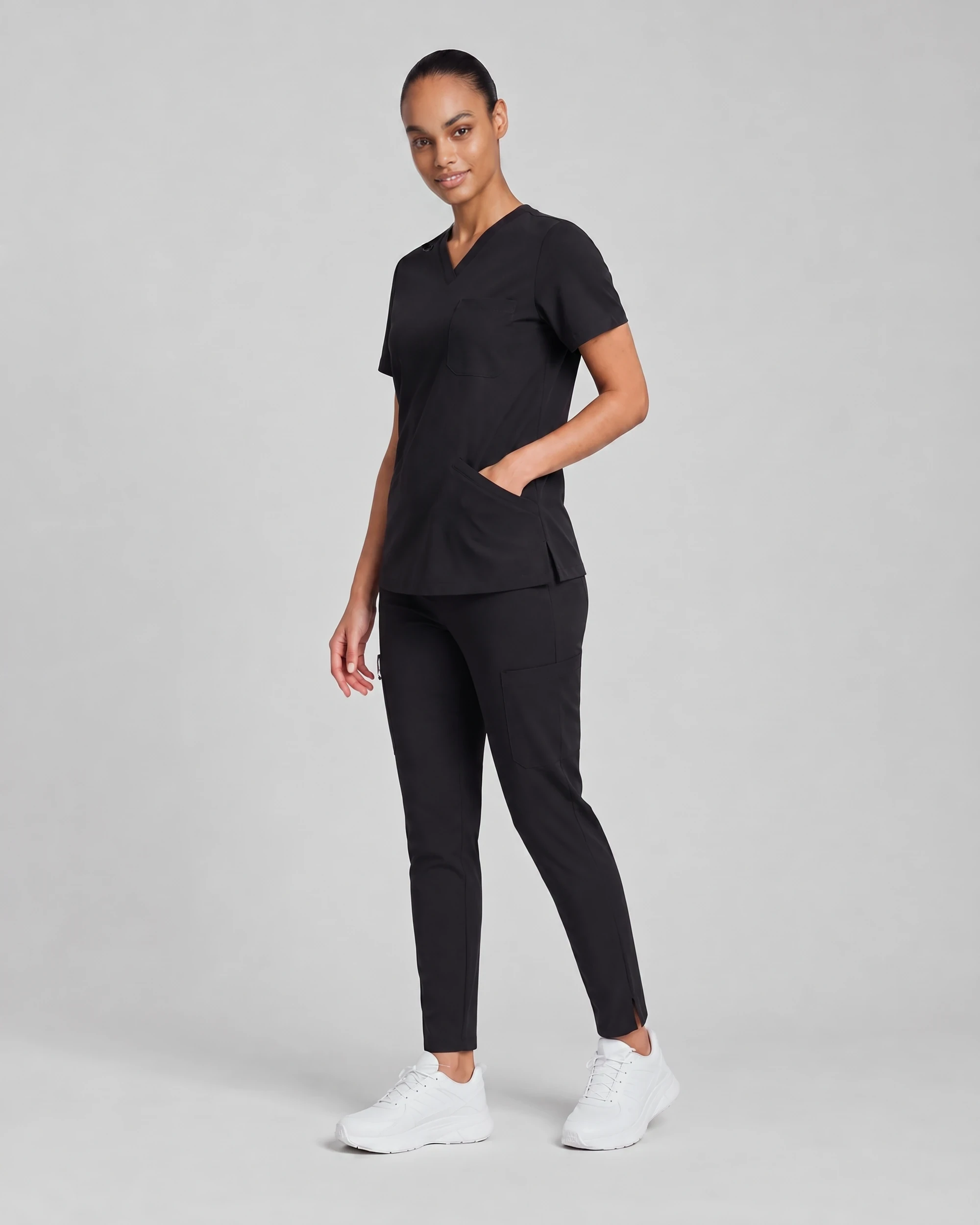
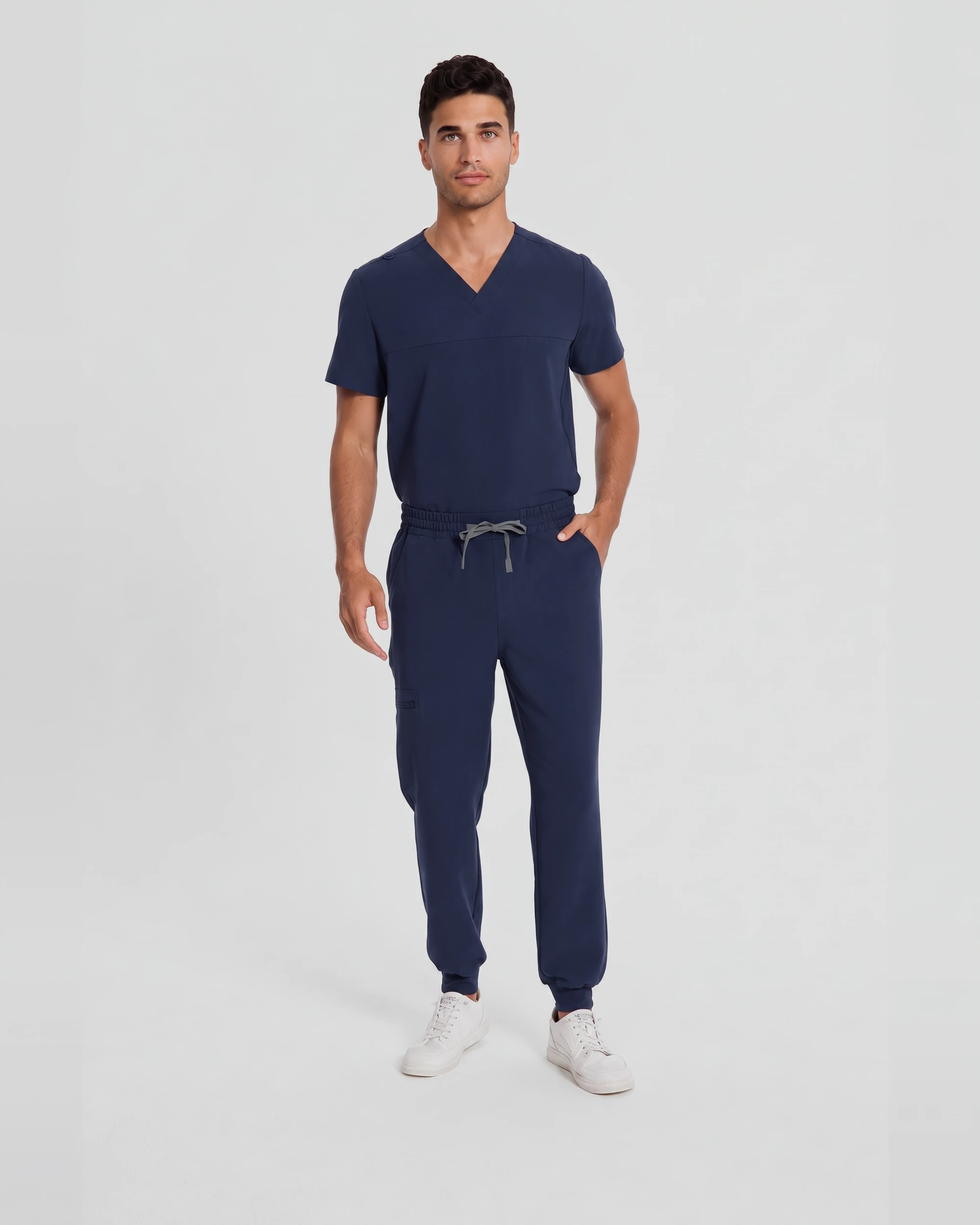
LumiScrubs publishes this guide and sells the scrub sets linked below. The current women’s Core page lists a three-pocket V-neck top with a nine-pocket straight-leg pant, and it allows the top and pant sizes to be selected separately at the set price. The current men’s Motion page lists a V-neck top with a tapered, cuffed jogger, and it also allows separate top and pant size selection at the set price.
Those are construction and ordering facts. They do not establish permission from a host, fit on a particular body, pocket retention, protection, or performance around animals.
 View women’s Core colors and sizes →
Women’s Core image: the V-neck, visible top pockets, straight-leg silhouette, and ankle side slit can be inspected. The photo does not prove fit, movement, pocket capacity, permission, or task suitability.
 View men’s Motion colors and sizes →
Men’s Motion image: the V-neck, drawcord waistband, tapered leg, and ankle cuff can be inspected. The photo does not prove fit, range of motion, pocket retention, permission, or task suitability.
If your host has confirmed that standard scrubs are the right category, browse the current veterinary scrub collection and compare one straight-leg and one jogger option against the written rule.
For repeated veterinary work rather than a single observation day, use the separate vet scrubs workday guide. It covers longer-term fit, pockets, hair visibility, pant shape, and a clean first-order trial without changing this page’s shadowing-day purpose.
First U.S. order: one free size exchange. One eligible item or set. Request within 30 days of delivery. Return required; arranged standard shipping both ways covered. See full terms.
Run a five-minute departure check
Read the host’s message once more and verify each item against it:
- The dress category, color, and shoes match the answer you received.
- Any lab coat, coverall, badge, or outer layer is confirmed as supplied or packed.
- The full outfit passes a sit, walk, crouch, reach, and layer check.
- Hair and accessories follow the stated rule and stay out of the way.
- Your phone is silenced and your note-taking plan is permitted.
- You know whether the day includes small animals, large animals, a farm, or travel between settings.
- You have the address, arrival time, parking instructions, and contact name.
- You know what to do with footwear or outerwear after the visit.
If one line is still a guess, message the host. Preparation is visible in the questions you settled, not in how closely you copied a veterinarian’s wardrobe.
Frequently asked questions
Can I wear scrubs to shadow a veterinarian?
Wear scrubs only when the host says they are the correct dress category. Some services use scrubs, while others use business clothing, a lab coat, coveralls, or a site-supplied layer.
What color scrubs should I wear for vet shadowing?
Use the exact color the host gives you. If any solid color is allowed, choose from the garments you already own before buying a shade that may not be useful later.
Can I wear sneakers when shadowing a vet?
Ask for the required shoe type. A normal closed-toe shoe may be accepted for one visit, while a large-animal or field itinerary may call for a specific washable boot.
Should I bring a stethoscope or other equipment?
Bring equipment only when the host requests it. Confirm whether a small notebook and pen are permitted, and keep your phone stored according to the site’s rules.
What if the visit includes both small and large animals?
Ask the host which outfit controls and whether you need a clean change, coveralls, different footwear, or a separate bag for used outerwear. Do not assume one indoor outfit covers the full itinerary.