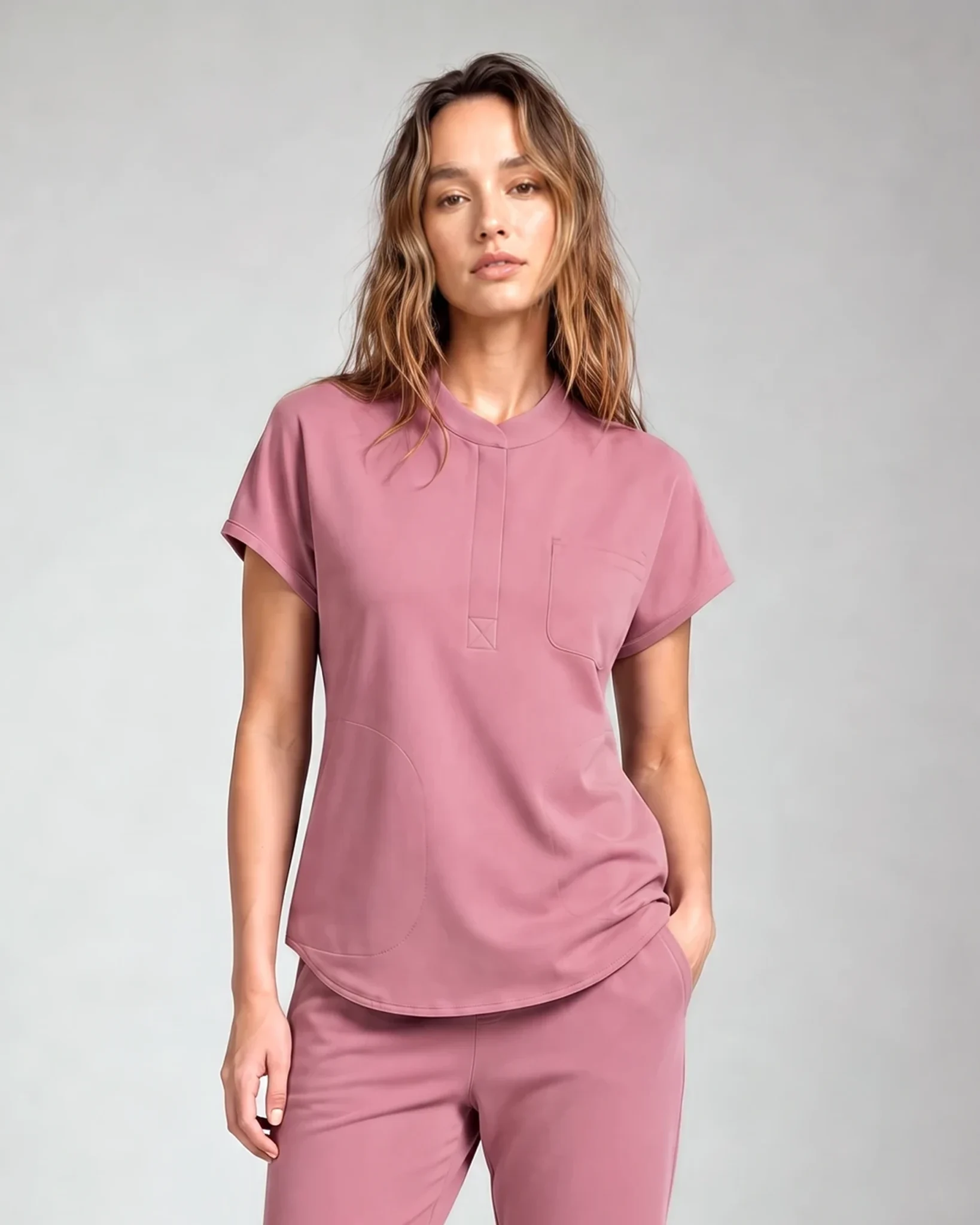

For a first nursing job, buy only enough scrubs to cover orientation and your first confirmed shifts. Wait until you know the unit color policy, laundry rhythm, temperature, pocket needs, and preferred fit before building a larger rotation.
The expensive mistake is not owning too few sets on day one. It is buying several sets that conflict with the dress code or feel wrong after a full shift.
Before you buy anything
Ask your recruiter, manager, or educator for the written uniform rules. Do not rely on a photo from the hospital website or a classmate’s experience on another unit.
Confirm:
- required color and whether shades must match;
- whether the employer provides any garments;
- whether joggers, underscrubs, jackets, or visible base layers are allowed;
- footwear requirements;
- logo, name, or role-identification rules;
- laundry or changing requirements;
- the exact attire expected for orientation.
If an answer is missing, ask before ordering. “Professional scrubs” is not a complete color or style specification.
If you are buying for nursing-school clinicals rather than a confirmed job, check the Clinical Attire Policy Index before using this work-rotation checklist. School policies can regulate patches, shoes, underlayers, and pant styles as well as color.
Decide your starting quantity from your schedule
There is no universal number every new nurse needs. Use a simple planning rule:
starting sets = shifts between laundry days + one clean backup
If you work three shifts before your next laundry day, that plan suggests four wearable sets. If orientation clothes differ from floor scrubs, count them separately. If your employer supplies or launders uniforms, your personal need may be smaller.
Buy the first set early enough to complete a clean indoor fit check. Once the size and dress code are confirmed, add the remaining sets. This reduces the chance of multiplying one bad fit across an entire rotation.
Fit-check the first set before committing
Keep the tags attached and reproduce the movements you expect at work:
- Reach forward and overhead.
- Sit for several minutes.
- Stand without pulling up the waistband.
- Squat and check the rise, seat, thighs, and knees.
- Walk in your work shoes and check the hem.
- Put safe stand-ins in the pockets and repeat the movement test.
Check coverage as carefully as comfort. A top should stay below the waistband when reaching, and a pant should remain secure when sitting and bending.
Use the Fit & Size Help page to compare your measurements with the current LumiScrubs size charts.
Build a small, useful rotation
Once the first set passes, choose the rest of the rotation around laundry and actual unit rules.
Start with the approved color
Do not add a “fun” color until you know it is allowed. If the unit requires one shade, buy from the same product line where possible so the tops and pants are less likely to look mismatched.
Choose one reliable silhouette first
Your first week is not the best time to experiment with several different cuts. Start with the pant and top that passed your movement test. After a few shifts, you will know whether you want a different neckline, more secure storage, a cuffed hem, or a straighter leg.
Add a layer only if the workplace allows it
Some units run cold, but a visible underscrub or jacket may be restricted. Confirm the rule before adding a base layer. If permitted, choose a close-fitting layer that does not interfere with movement or sleeve requirements.
Keep one clean backup ready
The backup is for a delayed laundry load, a spill before leaving home, or an unexpected schedule change. It should be fully wearable and dress-code compliant, not the set you already avoid.
Shoes and accessories: verify before spending
Footwear rules vary. Check whether your site requires a closed toe, closed heel, specific material, or a particular color. Comfort matters, but the employer rule comes first.
For badge reels, scissors, lights, compression socks, or other accessories, wait until orientation explains what is supplied and what is allowed. A popular checklist cannot know your unit’s infection-control or equipment policy.
What to add after the first few shifts
After several real shifts, review what the first set taught you:
- Did the waistband stay secure while sitting and walking?
- Did the top maintain coverage when reaching?
- Were the pockets in useful locations?
- Did the hem work with your shoes?
- Did you need another approved layer?
- How often can you realistically do laundry?
- Which set did you reach for first, and why?
Then add pieces that solve observed problems. Do not buy a sixth version of a feature you did not use.
Avoid these new-grad buying mistakes
- Buying before the unit color is confirmed.
- Ordering the same size in every brand without reading the chart.
- Washing before the tags-on fit decision is complete.
- Choosing a pocket count without testing pocket placement.
- Assuming orientation attire and floor attire are identical.
- Buying a full rotation from one untested cut.
- Personalizing a garment before fit is final.
Eligible non-personalized LumiScrubs items can be returned within 30 days when they are unworn, unwashed, and in original packaging. Review the current Shipping & Returns policy before removing tags or laundering.
A practical first-job order
If the dress code permits it, begin with one complete set in the required color and fit-check it. Then order enough matching pieces to cover the shifts between laundry days plus one backup.
The Lumi Core Scrub Set for Women is one current place to compare a complete coordinated set. If your top and pant measurements land in different sizes, compare separates instead of forcing both halves into one size.
Your goal is not to look fully stocked on day one. It is to start with a small rotation that meets the rules, moves properly, and can be expanded using evidence from your own shifts.
Frequently asked questions
How many scrub sets should a new nurse buy?
Start with the number of shifts between laundry days plus one clean backup, then adjust for employer-supplied uniforms and your actual schedule. Confirm one set before buying the full rotation.
Should I buy scrubs before orientation?
Only after the employer confirms the required color, style, and orientation attire. If the instructions are vague, ask the recruiter or unit educator.
Can I personalize my first set?
Wait until the size, color, and employer requirement are final. Personalized garments can have different return terms.